Contemporary Luxury Authentication Expert
Luxury accessories authenticator. Covers small leather goods, belts, and eyewear.
Published September 2026 · Contact
Why the Numéro Dix Is Hard to Check
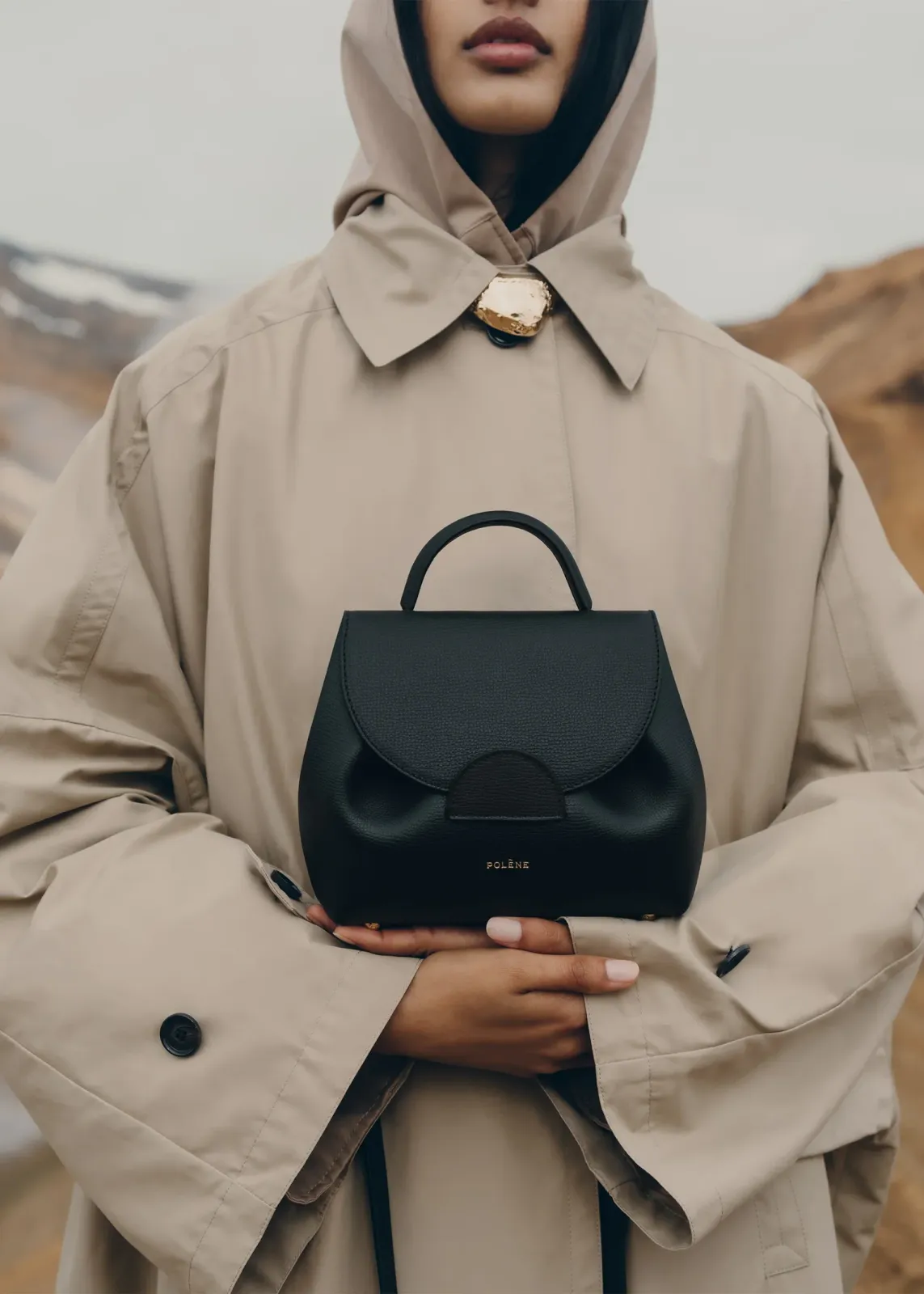
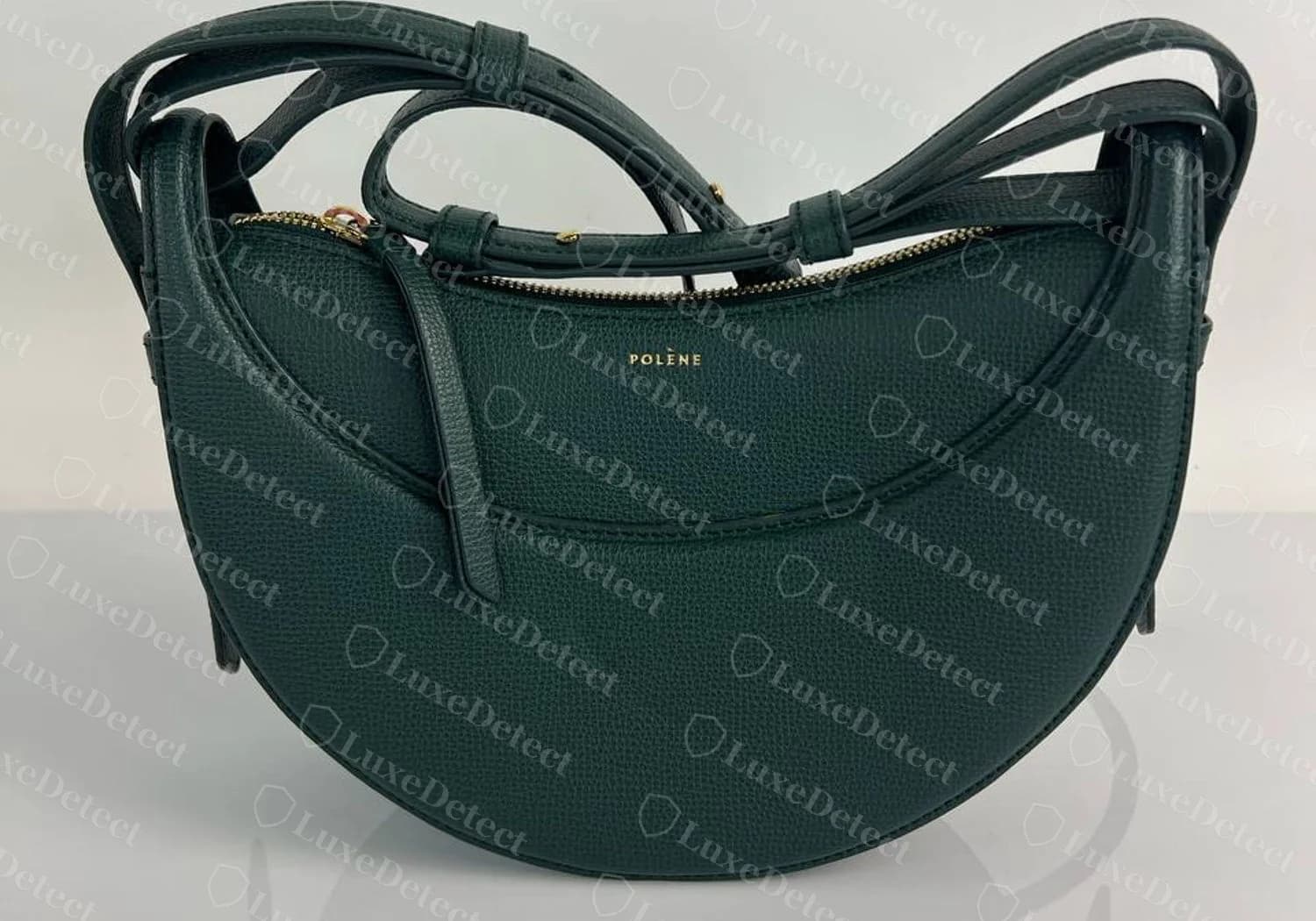
The Numéro Dix is Polène's half-moon shoulder bag: a flat crescent body, a curved front pocket that follows the shape of the bag, a zip across the top, and a long adjustable strap that knots through loops at each end. It has no flap, no clasp and almost no hardware. That makes it quick to copy. There's very little on the outside to get wrong.
It's also one of the most counterfeited Polène models we see. Across our Polène order archive, the Dix is the single largest group of confirmed fakes, and the copies are good. This guide doesn't give you a list of tells that catch a fake Dix, because we didn't find one that held up. It shows what a genuine Dix looks like, what the fakes we examined copied, and where checking a Dix yourself stops working.
Worth knowing
This guide is built from LuxeDetect's own Polène orders. We opened every record's photos rather than trusting the listing title, since many fakes and genuine bags were listed as "Polene Umi" or just "Handbags". We identified 8 confirmed-authentic and 25 confirmed-counterfeit Numéro Dix bags. We tested each detail below against both groups. None of them was on every genuine bag and missing from the fakes, so we don't rate any of them as a reliable tell. For the brand as a whole, see our [general Polène authentication guide](/blog/authenticate-polene-bag-guide).
Identify the Model First
Listings mix up Polène's curved bags. Before checking anything, make sure the bag is actually a Dix:
- Numéro Dix: a flat half-moon body, a curved front pocket seam running parallel to the top edge, a top zip, and a strap that threads through loops on both ends. "POLÈNE" is foil-stamped small and centered above the pocket seam.
- Tonca: also crescent-shaped, but the body is soft and slouchy, pinched into a fold at one side, with a large open metal hook where the strap attaches. Several fakes listed as "Dix" in our archive were Toncas.
- Umi: a soft, rounded shoulder bag with a zip and a different strap, often listed alongside the Dix.
The Front Stamp
On every genuine Dix we reviewed, "POLÈNE" is foil-stamped in small, widely spaced capitals, centered on the upper panel above the curved pocket seam. The È carries a clear grave accent. The foil is gold on most colors.
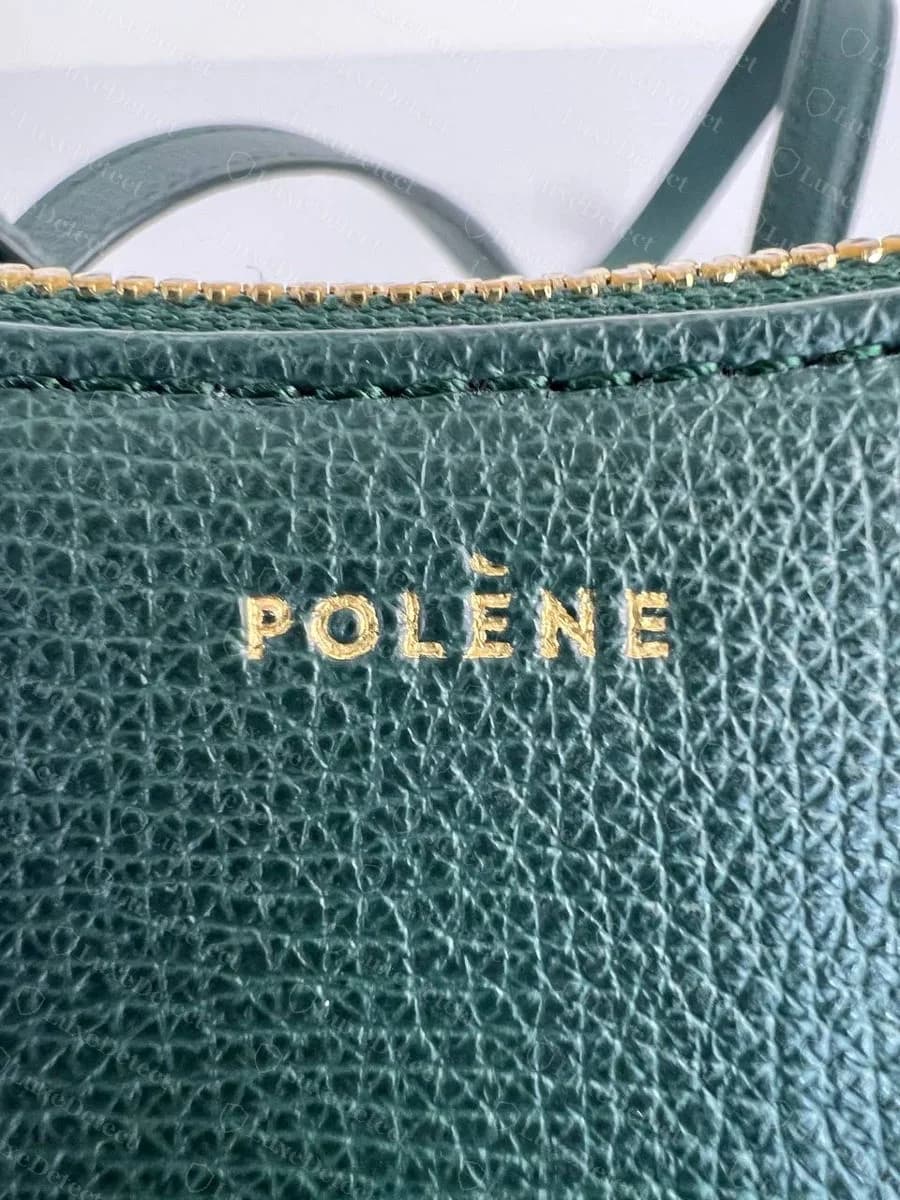
The fakes we examined put the same stamp in the same place, with the accent and similar spacing. On a few fakes the foil looked heavier or slightly uneven, but some genuine stamps are uneven too, especially on textured leather. We don't treat the front stamp as a tell.
The Interior Leather Tab
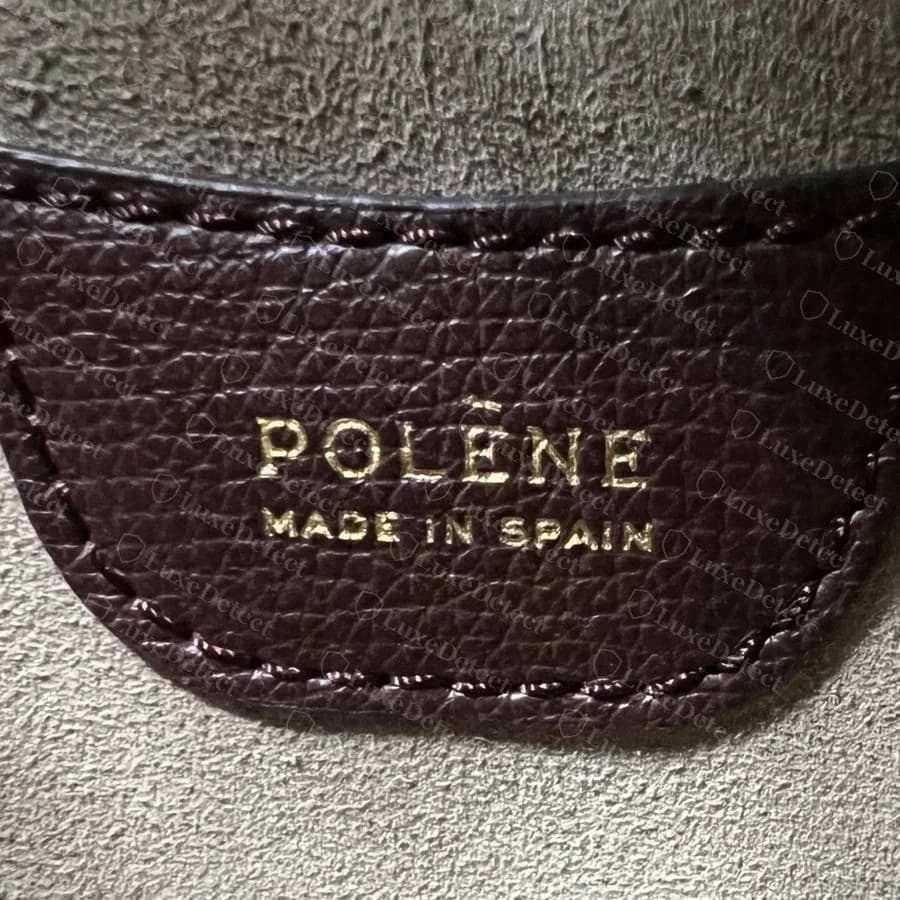
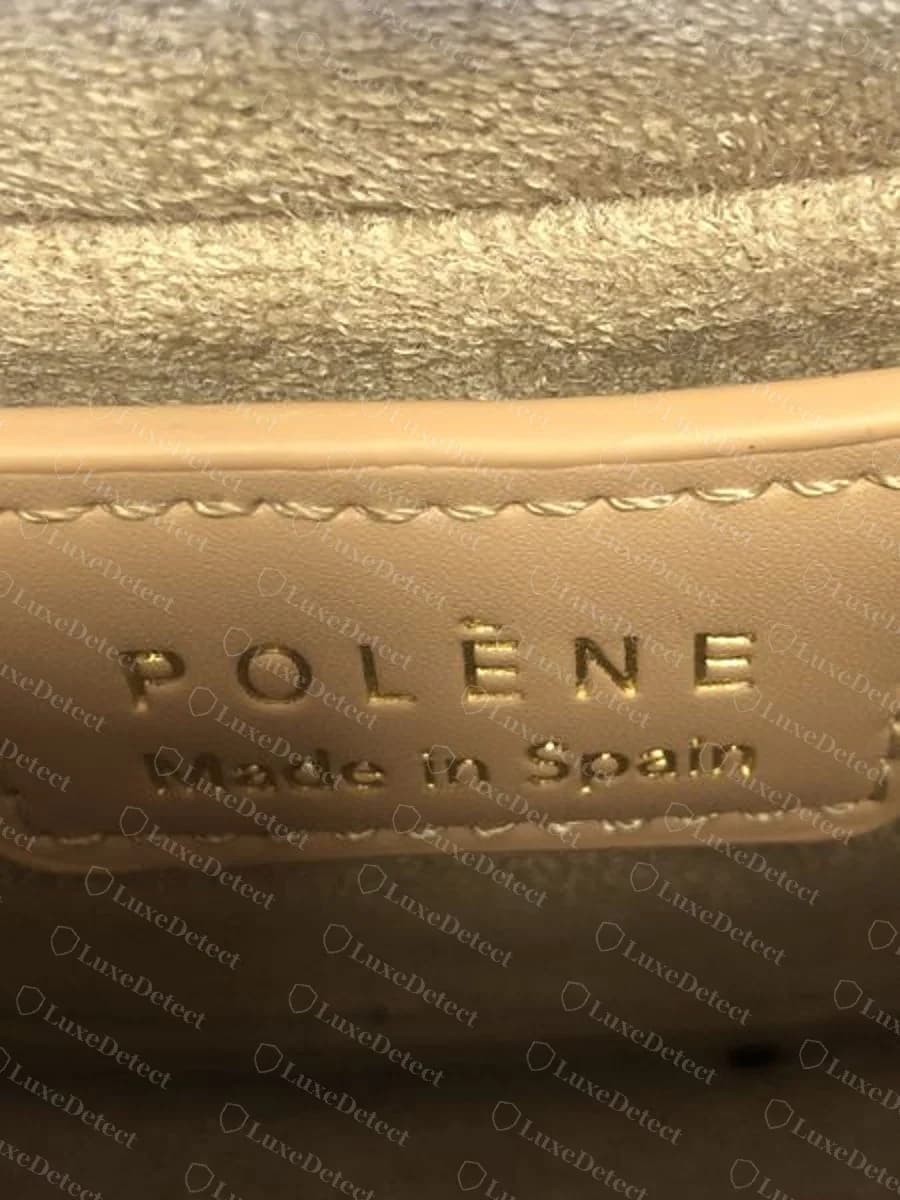
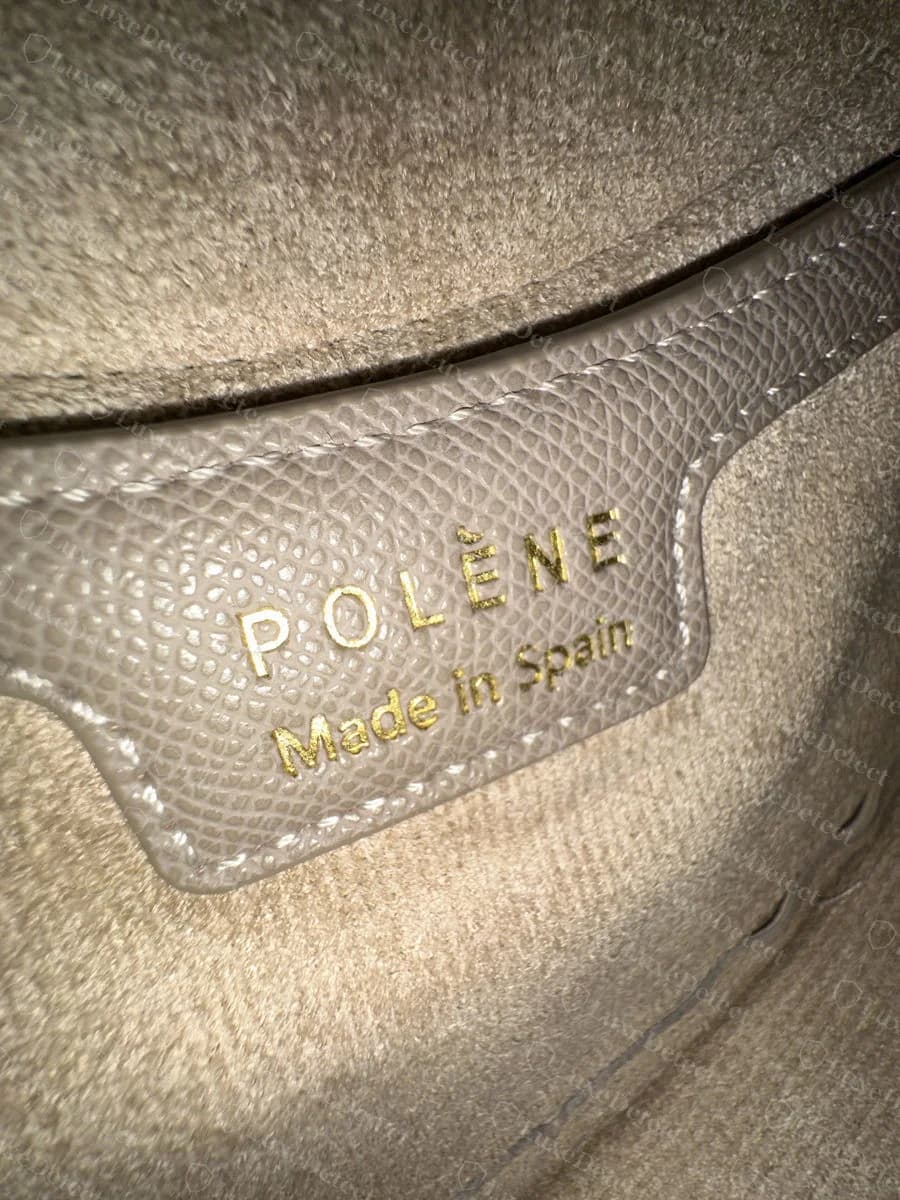
Inside, a leather tab is stitched along the top edge of the lining, below the zip. It is foil-stamped "POLÈNE" over a line saying where the bag was made. Every genuine Dix we could read says Spain. None says France.
Genuine Dix bags use two formats for the second line. Four of the eight say "MADE IN SPAIN" in small capitals. The other four say "Made in Spain" in mixed case. The shape of the tab also varies: some are a rounded tongue, others a straight strip with a raised center.
Worth knowing
Don't judge a Dix by whether its tab says "MADE IN SPAIN" or "Made in Spain". Both appear on genuine bags from the same period, and most of the fakes we examined used the mixed-case version, which matches genuine bags.
The Strap Studs
The strap adjusts on small round studs. On every genuine Dix where we could see one clearly (six of the eight), the stud cap is engraved "POLÈNE" twice around its edge, the two words facing each other. The metal matches the zip and the foil.
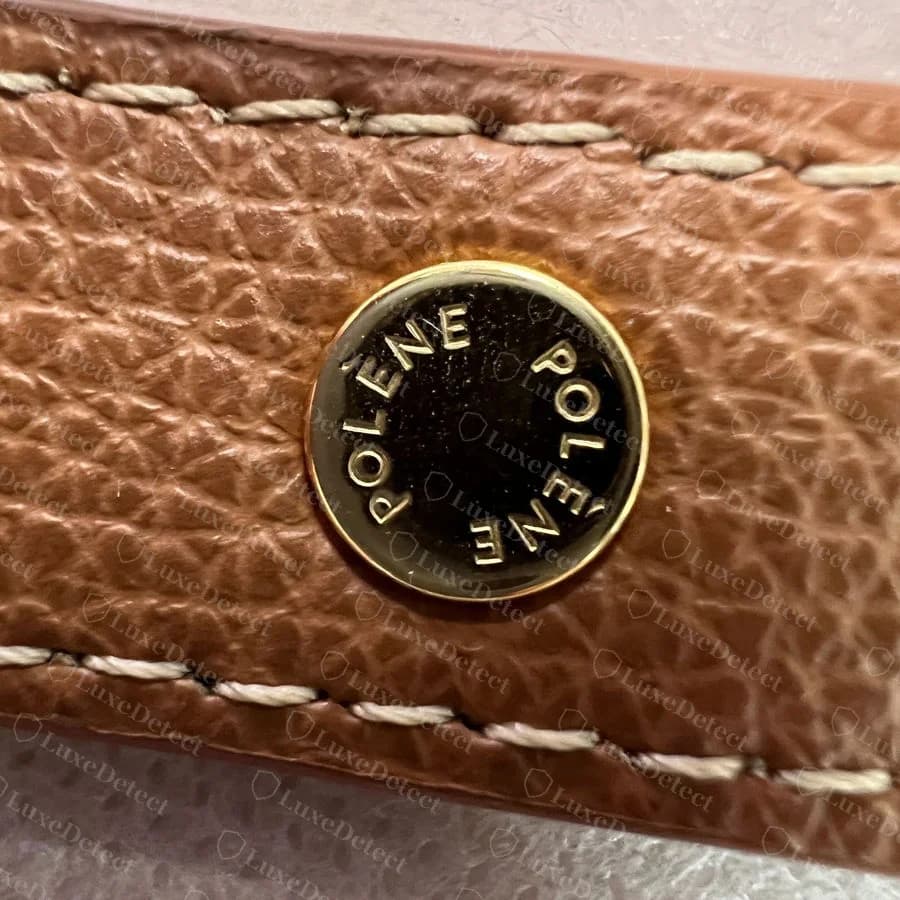
Fourteen of the fakes showed their studs clearly, and all fourteen had the same double engraving. It rules out a crude copy, nothing more.
The Fabric Label and Its Number
Most genuine Polène bags also have a small white fabric label sewn into a lining seam, reading "POLÈNE", "Made in Spain" and a number. On the one genuine Dix where we could read it, the label is a woven fold reading "POLÈNE / MADE IN SPAIN", with the number, 457209, on the reverse.
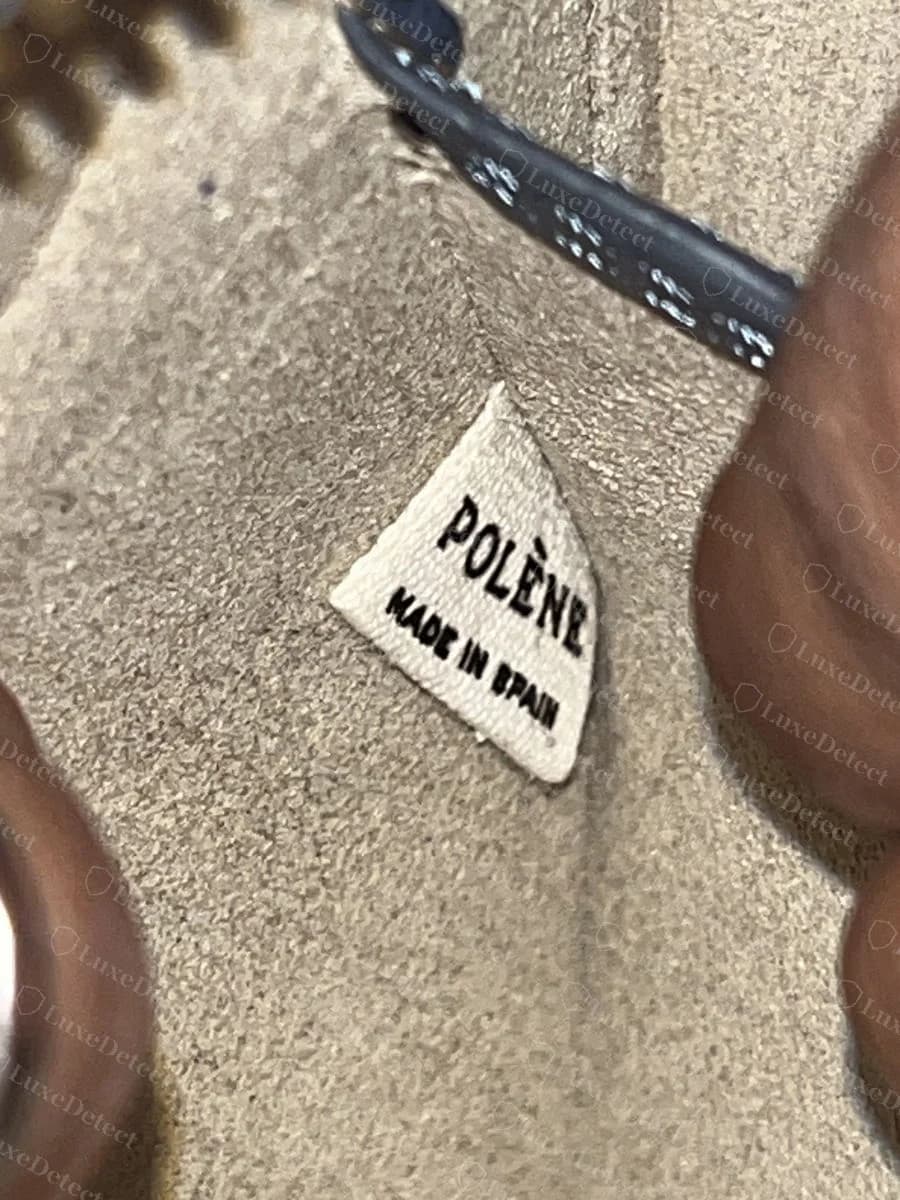
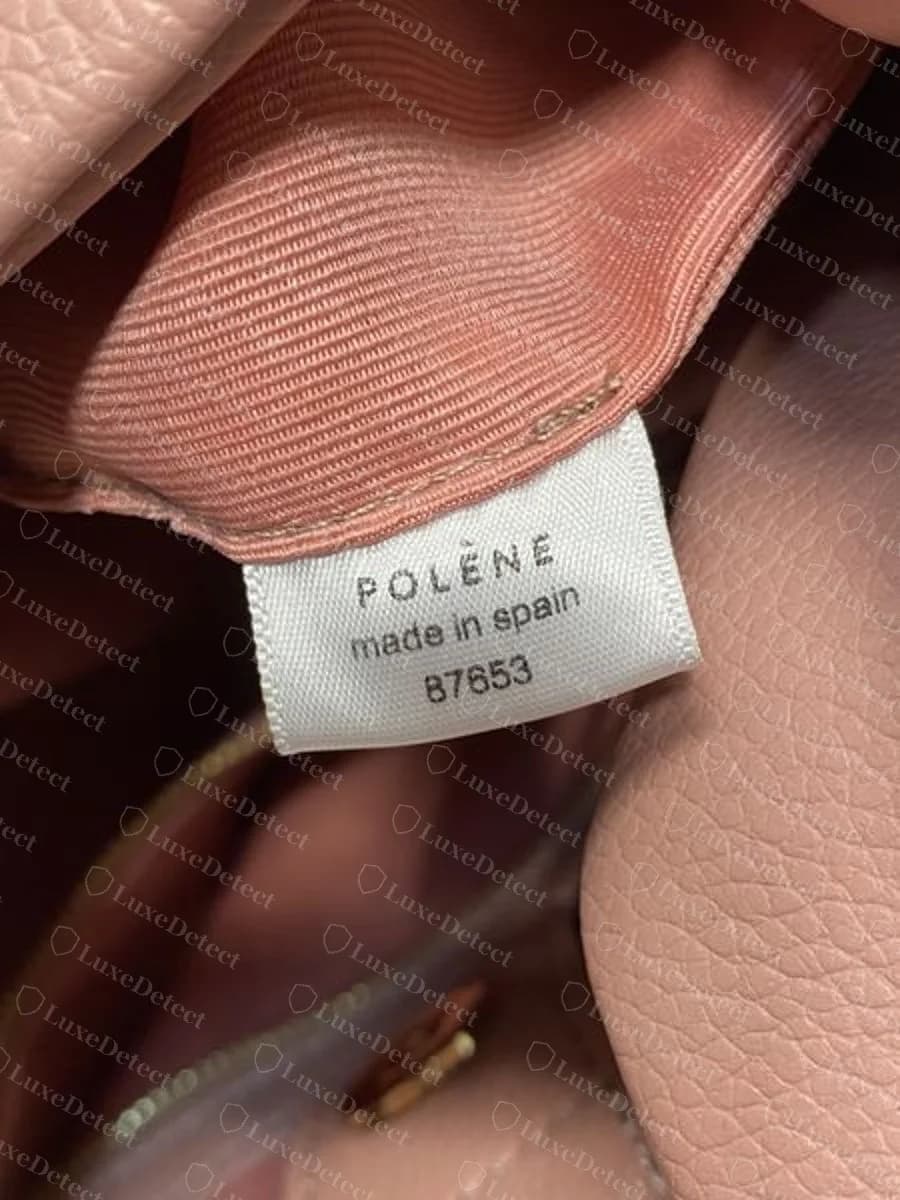
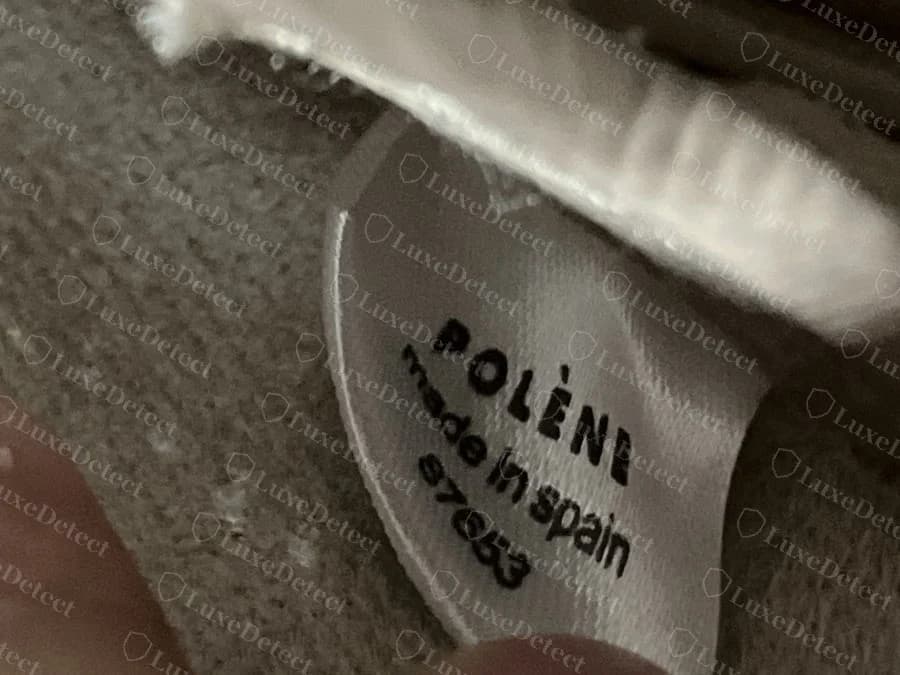
This is where the fakes surprised us. Twelve of the 25 fake Dix bags showed a readable fabric label, and only two numbers came up:
- 87653, printed "POLÈNE / made in spain / 87653", on eight fakes.
- 11554, printed "POLÈNE / Made In Spain / 11554", on four fakes.
We found 87653 on two genuine Polène bags as well (neither a Dix), in the same lowercase layout. The counterfeiters appear to have copied a real label.
Worth knowing
We haven't seen 11554, or its "Made In Spain" with a capital I, on any genuine Polène in our archive. That makes it worth a closer look, but it isn't proof: four examples isn't enough to rule it out. And 87653 on its own tells you nothing, since it appears on genuine bags too. Polène doesn't publish what these numbers mean, and we can't decode them.
Packaging and Paperwork
A new genuine Dix we reviewed came with a cream dust bag printed "POLÈNE", a leather care booklet, and a cream card printed "NUMÉRO dix" in gold, with "dix" in script.
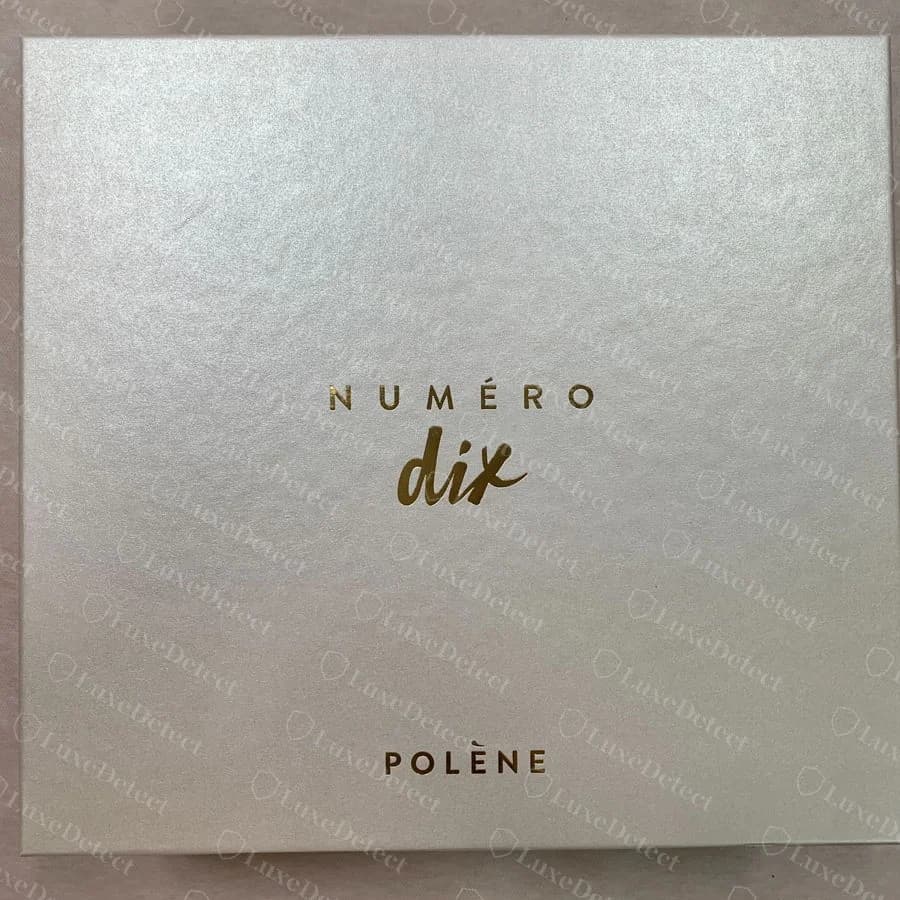
The fakes came with the same things. One had the same "NUMÉRO dix" card. Others had the old white Polène hang tag listing "Cuir de veau pleine fleur italien", identical in layout to the tag on a genuine 2023 Dix. Two came in cream boxes with a barcode label reading "NUMERO DIX" and a color name.
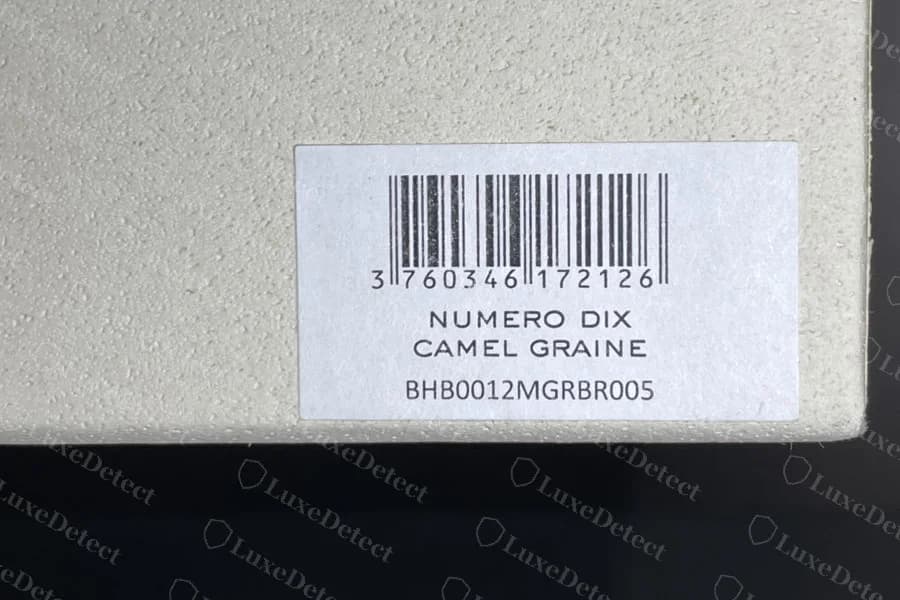
Packaging is context, not evidence. A fake Dix can arrive with a Polène card, tag, dust bag and box.
The Fakes That Passed Our Checks
It's worth being direct about this. We looked for a difference that would let a buyer catch a fake Dix from listing photos, and the details above all failed:
- Interior tab: the fakes had the right wording, the right country, and the same two formats genuine bags use.
- Front stamp: same position, same accent, similar spacing.
- Strap studs: same double engraving.
- Fabric label: the most common fake label carries a number that also appears on genuine bags.
- Packaging: model card, hang tag, dust bag and box, all copied.
A few things came up only on fakes, but not often enough to call them tells. Three black fakes had bright white contrast stitching; the one genuine black Dix we saw had black stitching, but one bag isn't a rule. Four fakes had the 11554 label. Beyond that, the fakes' differences were in the leather, the edge paint and the evenness of the stitching, which need a genuine bag next to them to judge.
When to Get a Professional Opinion
With the Dix, the visible details are rarely the problem. The question is whether the leather, the foil depth, the edge finish and the stitching match a genuine bag, and that takes experience and reference photos. If you're unsure, LuxeDetect's handbag authentication starts at $25 with a 24-hour turnaround, and faster options are available. Send clear photos of the front, the interior tab, the fabric label (both sides), the strap studs, the zip pull and the edges, and you'll get a written verdict you can show a seller or use to request a refund.
FAQ
How can I tell if my Polène Numéro Dix is real?
Check that it's actually a Dix, then compare the front stamp, interior tab, strap studs and fabric label with a genuine example. A mismatch is a reason to worry. A match doesn't prove much, because the fakes we examined copied all of these details. For a verdict, get a professional authentication.
Is a Polène Numéro Dix made in France or Spain?
Every genuine Dix in our archive says Spain, on both the leather tab and the fabric label. So do the fakes. The country on the label doesn't separate them.
Should the tab say "MADE IN SPAIN" or "Made in Spain"?
Both. We've verified genuine Dix bags with each format, so the case of the lettering isn't a sign either way.
What does the number on a Polène fabric label mean?
Polène hasn't published what it means, and we can't decode it. We've seen many different numbers on genuine bags. The number 87653 appears on both genuine bags and on eight of the fake Dix bags we examined, so a familiar number isn't evidence that a bag is real.
Does a Numéro Dix card or box prove the bag is genuine?
No. The fakes we examined came with the same "NUMÉRO dix" card, the older Polène hang tag, dust bags and barcode-labelled boxes. Packaging only helps if something on it contradicts the bag.