Apparel and Streetwear Authentication Specialist
Streetwear authentication specialist. Focuses on print quality, tagging, and seasonal production codes.
Published September 2026 · Contact
Why Burberry Shirts and Polos Get Faked So Heavily
Burberry's coats and check scarves get the attention, but the volume of counterfeits sits in the everyday pieces — the dress shirts, the pique polos, the Brit and London knitwear. They are cheap to copy, they carry the check and the Equestrian Knight where a buyer expects to see them, and a $300–$500 shirt is an easy impulse buy on a marketplace listing. The archive of authentication requests bears it out: Burberry clothing is one of the largest single categories we see, and shirts are the bulk of it.
The good news is that the details Burberry fixes — the engraved buttons, the woven neck label, the knight embroidery, and the way the inside of a collar or placket is finished — are consistent and checkable. Cheap fakes miss all four. Better fakes get the check and the cut close and fail on the button engraving, the label weave, and the finishing. This guide runs the checks in the order of what each one settles.
What to check, ranked by reliability
| Checkpoint | Reliability | What it tells you |
|---|---|---|
| The Buttons | ★★★★★ | Shallow, mushy "BURBERRY" engraving with letters running together, on a cloudy resin, is a reliable fail. |
| The Woven Neck Label | ★★★★★ | A blurry weave with fuzzy letter edges, or raw fraying label edges, is a fake tell on its own. |
| The Equestrian Knight Device | ★★★★★ | A blobby, illegible knight with merged legs, loose threads, and a puckered ground is a fast fail; a neat one is only supporting. |
| Collar, Placket and Interior Finishing | ★★★★★ | Fraying past the overlock, rough buttonholes, and wandering topstitch support a verdict — the overlock itself does not. |
| Fabric and Colour | ★★★★★ | Thin limp cloth or an uneven dye flags a fake; a printed check on a facing that should be woven is a red flag. |
Use our free Burberry Style Code Checker to decode the style code on your Burberry care label.
Check My Style Code →What This Guide Covers
The checks below are common to Burberry's shirts, polos, and cotton knitwear. Two related pieces have their own dedicated guides:
- The Burberry trench coat guide — gabardine, check lining, trench-specific hardware.
- The Burberry check scarf guide — cashmere, woven check, fringe.
- The Burberry style code guide — reading the alphanumeric code on the care label.
A note on the name: "Burberrys" with an S is the house name used until the late 1990s, so genuine vintage shirts and polos legitimately read "Burberrys" or "Burberrys of London" on the button and the label. "Burberry", "Burberry London", and "Burberry Brit" are later. The name on its own is not a fake tell — what matters is that it is consistent with the piece's age and that the execution is clean.
The Buttons
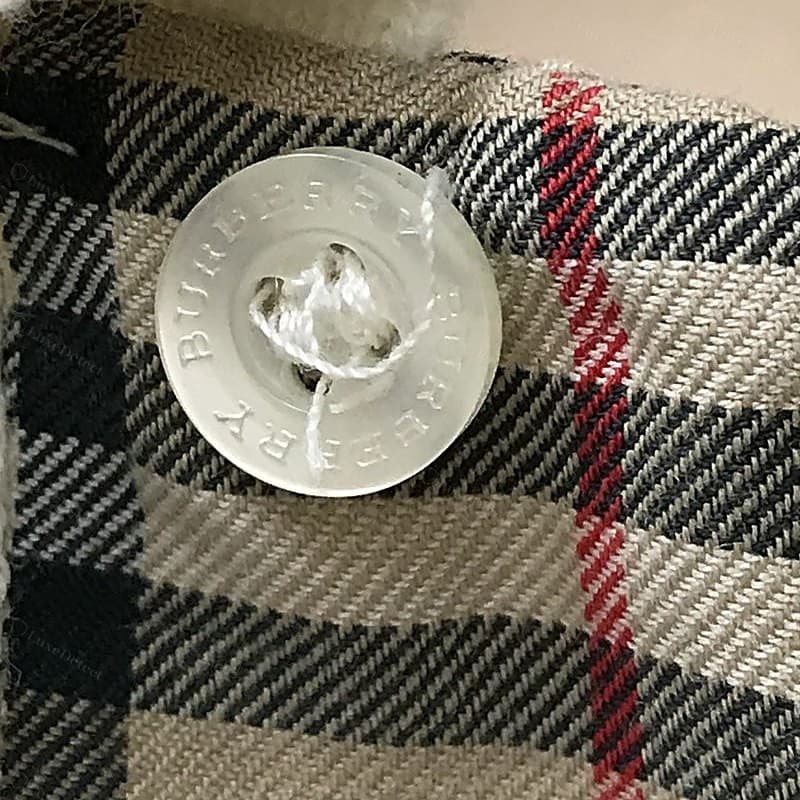
Burberry buttons are a fixed specification and the fastest tell on a shirt or polo.
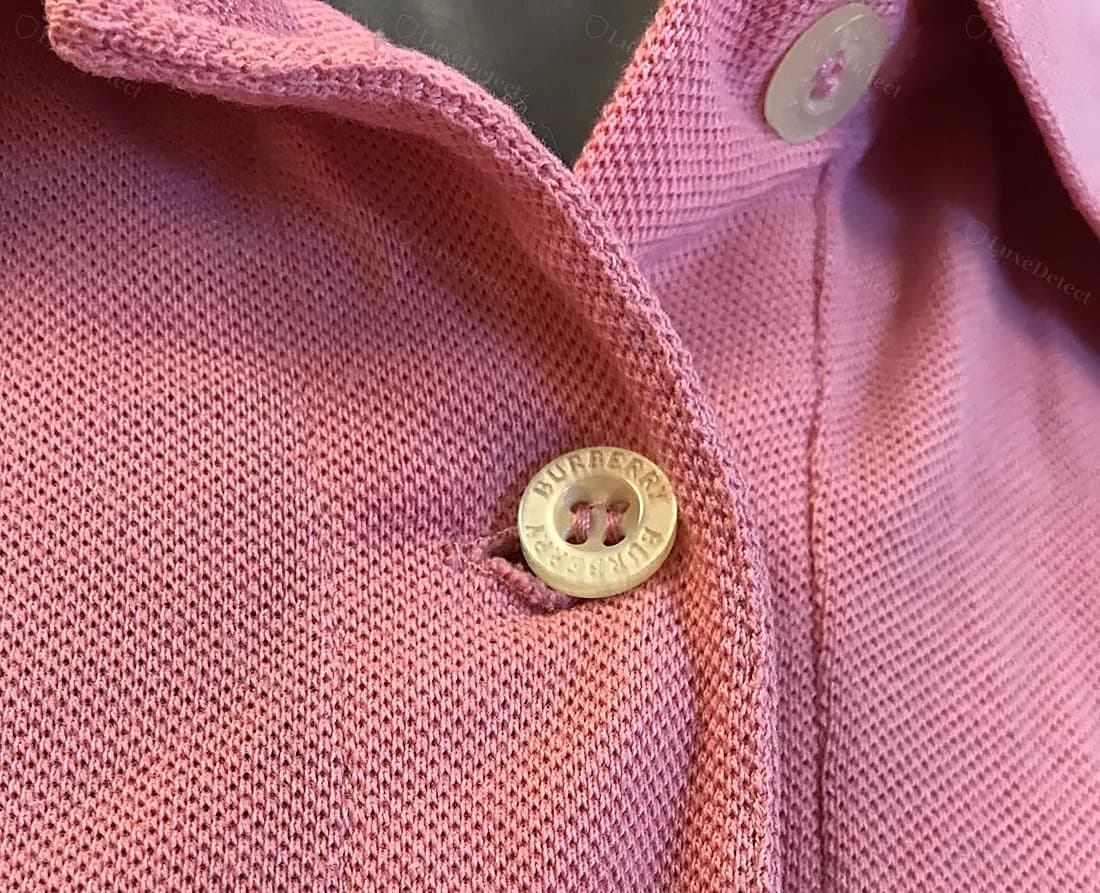
Genuine buttons are moulded in a cream or pearlised resin, with "BURBERRY" (or "BURBERRYS" on vintage) engraved twice around the rim in the house serif, facing each other. The engraving is crisp and evenly cut, the letters clean and consistent in depth. Metal buttons on some polos and shirts carry the same double-name ring, brushed or polished, cleanly stamped. Buttons are sewn on tightly with a neat cross-stitch in matching thread, no loose tails.
Fakes show engraving that is shallow, mushy, or unevenly cut, letters that vary in weight or run into each other, a resin that looks cloudy or glassy rather than a clean pearlised cream, and sloppy attachment — a loose button, a wrong-colour thread, thread whiskers left long.
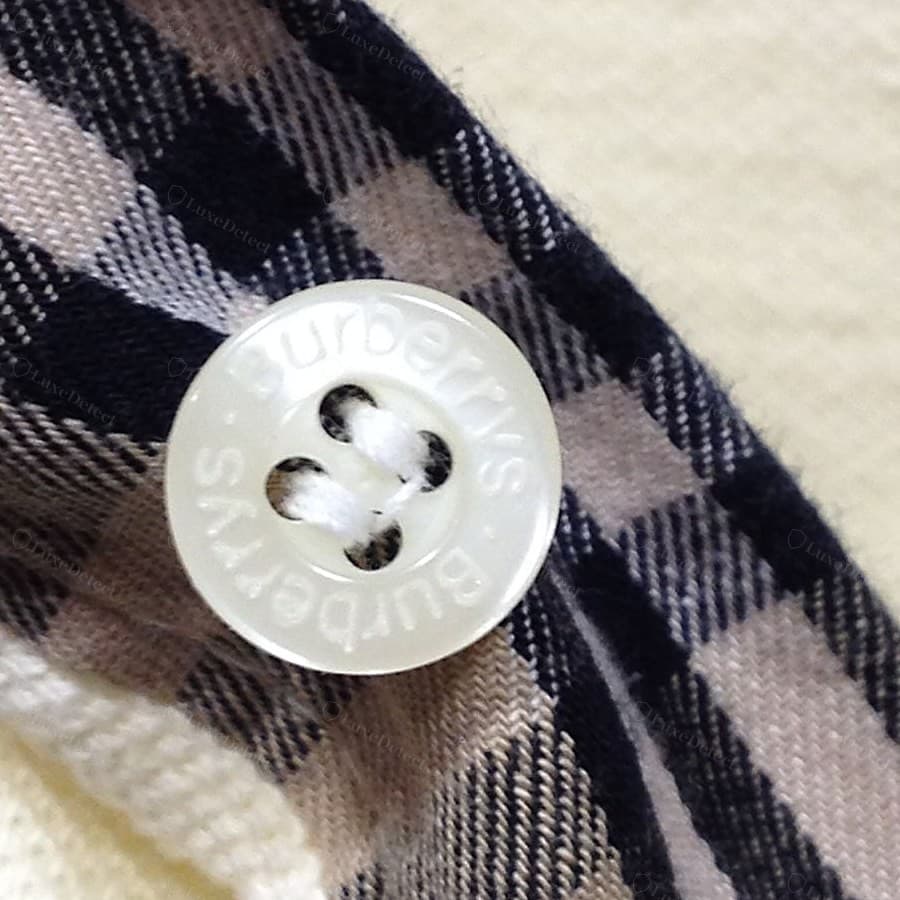
| Element | Authentic | Counterfeit |
|---|---|---|
| Engraving | Crisp, evenly cut, letters consistent depth | Shallow, mushy, uneven letter weight |
| Name ring | "BURBERRY" (or "BURBERRYS" vintage) twice, house serif | Right words, wrong execution — soft or crowded |
| Resin | Clean pearlised cream | Cloudy, glassy, or dead white |
| Attachment | Tight cross-stitch, matched thread, no tails | Loose, wrong thread, whiskers left long |
Red flag
Button engraving that is shallow and mushy with letters running together, on a cloudy or glassy resin. Burberry engraves this to a fixed depth in a specific serif; a soft, crowded ring is a reliable fail.
The Woven Neck Label
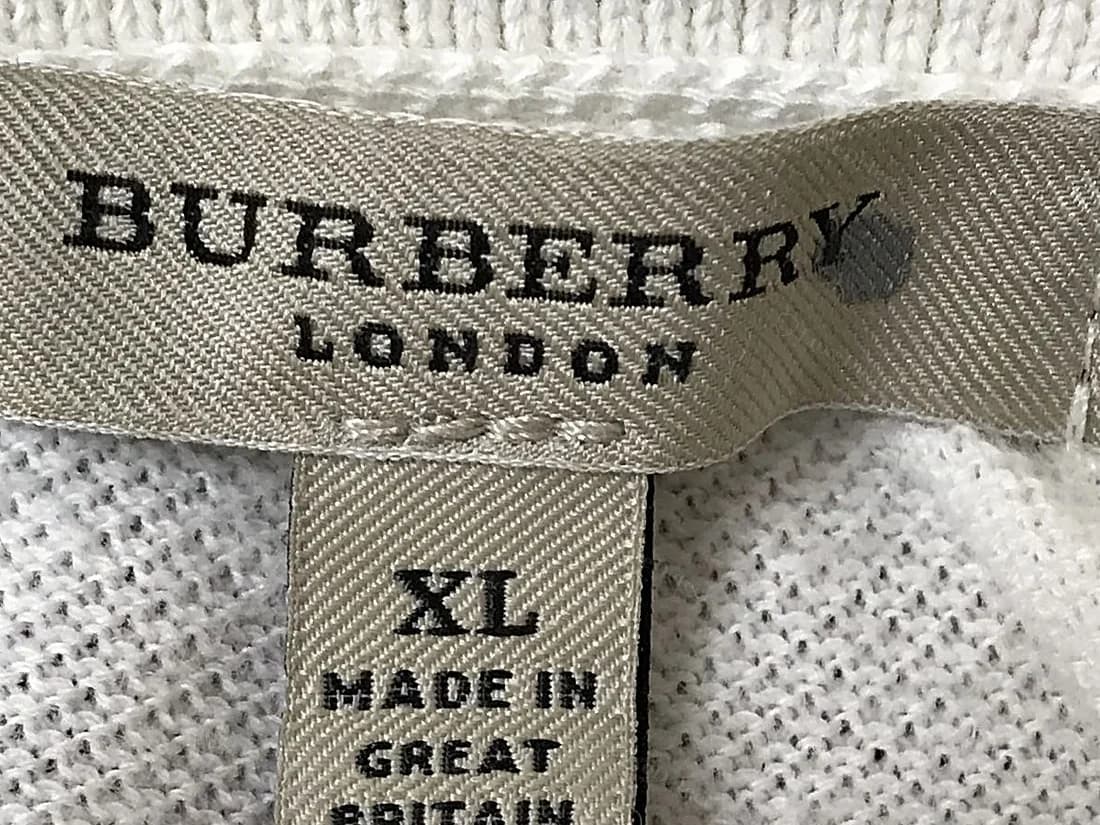
The main label at the back of the neck is woven, not printed, and its weave quality is a strong check.
On a genuine piece the label is densely woven with the wordmark — "BURBERRY LONDON", "BURBERRY BRIT", or the older "Burberrys" styling — sharp, the letters clean-edged with no fuzz, in the correct house serif for the era. It is sewn in flat and square on all four sides (or top and bottom) with even stitching, no puckering, and the edges are clean-cut, not fraying. A smaller tab below gives the size and country of manufacture — Burberry uses several (Great Britain, Turkey, Hong Kong, Portugal, and others across eras and lines), so the origin varies legitimately; what matters is that the tab is woven to the same quality and the printing is sharp.
Fakes show a label with a looser or blurry weave, letters that are fuzzy at the edges or slightly wrong in shape, a condensed or off serif, crooked attachment, and raw or fraying label edges. The size/origin tab is often thinner, printed rather than woven, or in a different typeface from the main label.
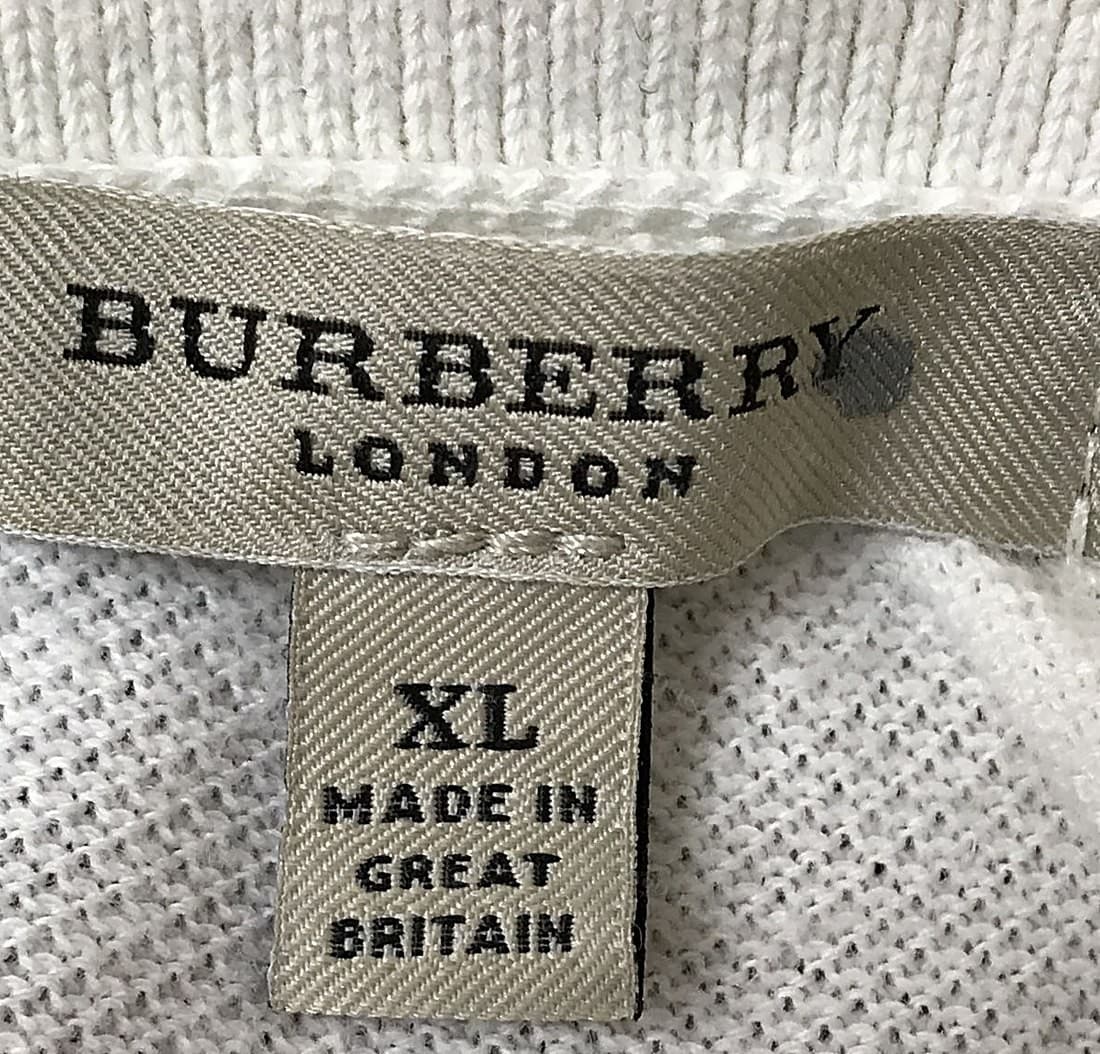
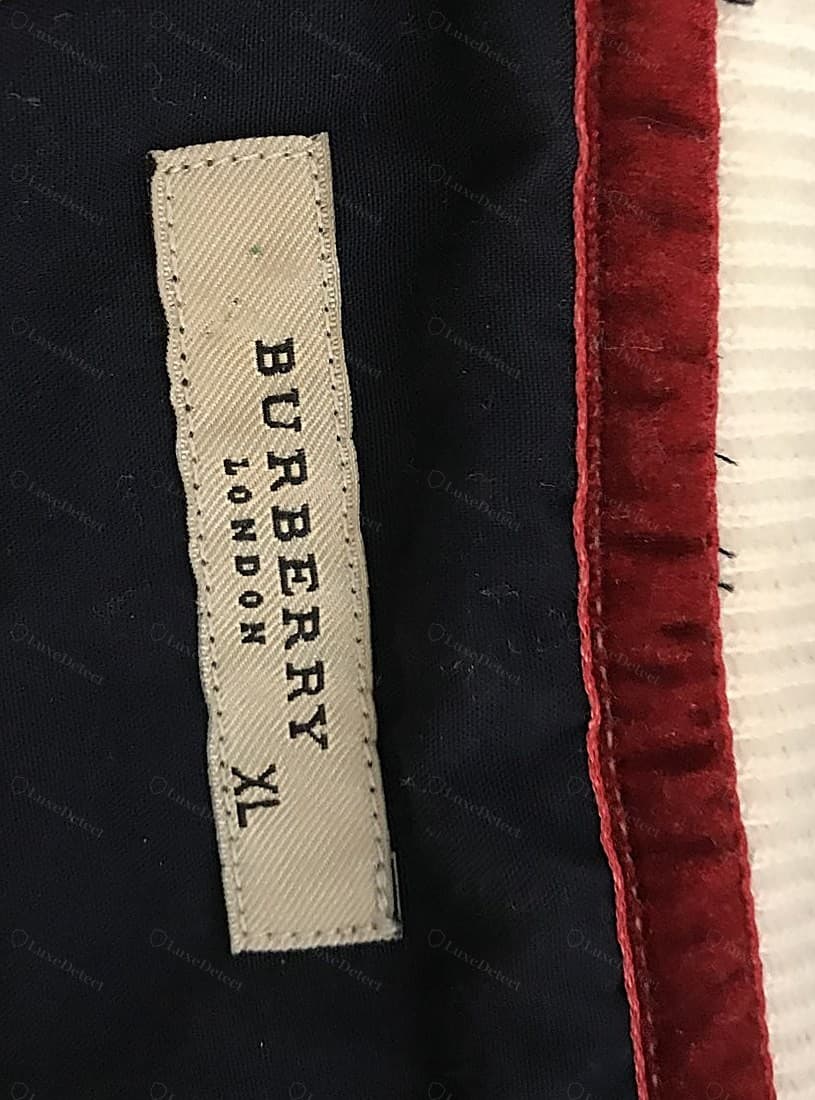
| Element | Authentic | Counterfeit |
|---|---|---|
| Weave | Dense, letters sharp and clean-edged | Looser or blurry, fuzzy letter edges |
| Typeface | Correct house serif for the era | Condensed, off serif, wrong letter shapes |
| Attachment | Sewn flat and square, even stitching, no pucker | Crooked, uneven, puckered |
| Label edges | Clean-cut, not fraying | Raw, fraying |
| Size / origin tab | Woven to match, sharp printing, a country Burberry uses | Thin, printed, different typeface |
Red flag
A main label with a blurry weave and fuzzy letter edges, or edges that are raw and fraying. The genuine label is a dense, sharp weave sewn in clean; a soft, fraying label is a fake tell on its own.
The Equestrian Knight Device
Many Burberry shirts and polos carry the Equestrian Knight Device (EKD) — the knight on a charging horse with a lance and a pennant — embroidered on the chest, usually tonal or in a contrast thread.
On a genuine piece the EKD is small but readable: you can pick out the horse's legs, the rider, the lance, and the pennant as distinct elements. The stitching is dense and even, the outline clean, the thread tension consistent so the motif sits flat without puckering the fabric. On the current logo the "PRORSUM" banner (where present) is legible.
Fakes reduce the knight to a blob. The horse's legs merge, the lance breaks up or disappears, the rider is a lump, the stitch density is uneven, and loose thread ends are left hanging. The embroidery often puckers the fabric because the tension is wrong.
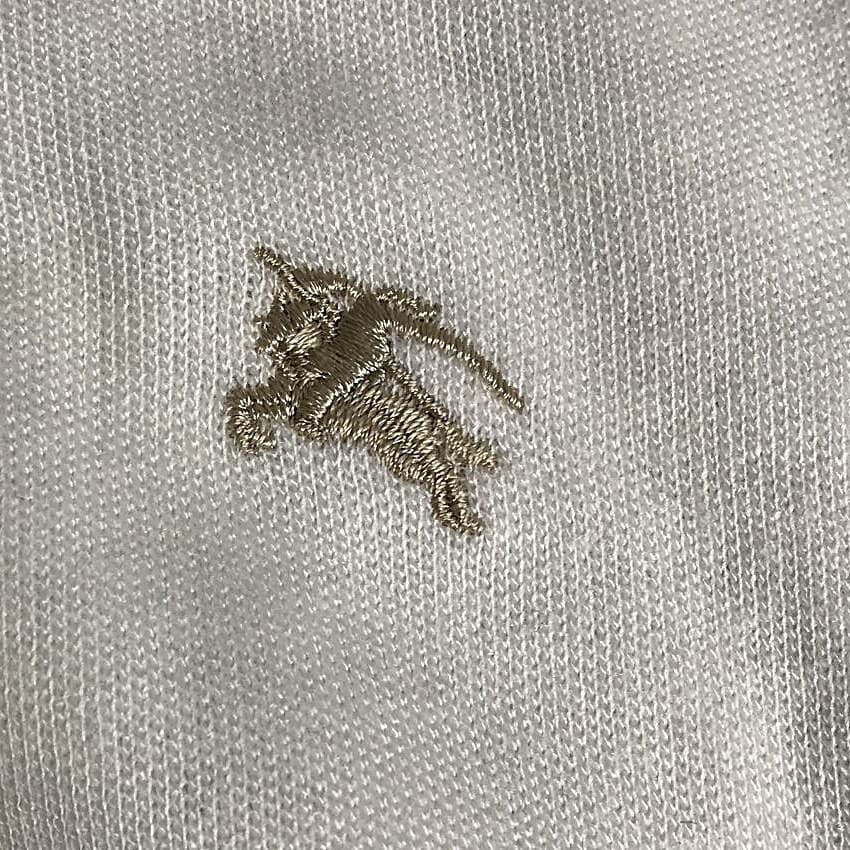
Worth knowing
A neat-looking EKD does not confirm a piece on its own — better fakes get the outline close. But a blobby, illegible knight where you cannot separate the horse's legs from the rider, with loose threads and a puckered ground, is a fast fail. Judge it against the buttons and the label rather than in isolation.
Collar, Placket and Interior Finishing
Burberry finishes the inside of a shirt or polo cleanly, and the contrast between a genuine and a fake is often clearest here.
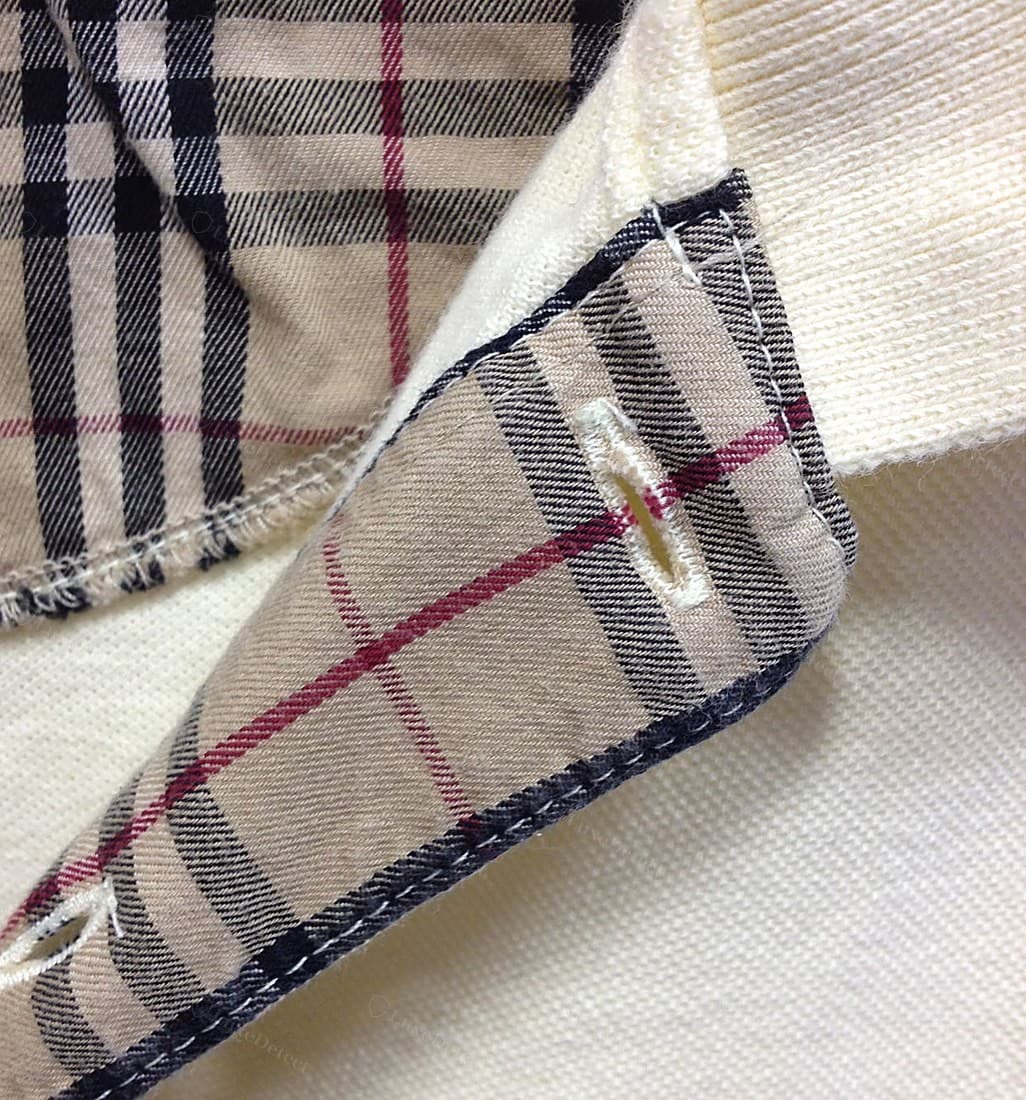
On a genuine piece the inner collar band and placket facing — frequently cut in the house check — are attached with neat, straight topstitching, the seam allowances tidy, the buttonholes cut cleanly and densely stitched with no loose thread. The collar rolls without a hard crease, and where a check facing is used the pattern is cut square and the edges are bound or turned, not left raw.
Fakes show whiskered, fraying seam allowances past the overlock, buttonholes cut roughly with loose thread pulling out of the bar-tack, wandering topstitch, and a check facing applied crooked or with raw edges. The collar often has a hard pressed crease rather than a soft roll.
| Element | Authentic | Counterfeit |
|---|---|---|
| Seam allowances | Tidy, bound or turned, no whiskers | Whiskered, fraying past the overlock |
| Buttonholes | Cleanly cut, densely stitched, no loose thread | Rough cut, loose thread, weak bar-tack |
| Topstitch | Straight, even length | Wandering, uneven |
| Check facing | Cut square, edges finished | Crooked, raw edges |
| Collar roll | Soft roll, no hard crease | Hard pressed crease |
Worth knowing
An overlocked seam is not itself a fake tell — it is standard garment construction, and genuine Burberry uses it. The tell is fraying past the overlock, rough buttonholes, and wandering stitch. Read this alongside the buttons and label.
Fabric and Colour
Genuine Burberry shirting is a crisp, tightly woven cotton or cotton blend with an even hand and a deep, consistent dye. Polos are a substantial pique with a defined texture. Knitwear is a dense, even gauge. The check, where it appears on a facing or trim, is woven with the correct stripe proportions and the thin red line in the right weight.
Fakes tend to a thinner, looser cloth with a slightly uneven dye, a limp pique with a flat texture, or a loose knit gauge. A printed check on a facing or trim where it should be woven — no pattern on the reverse — is a red flag.
| Element | Authentic | Counterfeit |
|---|---|---|
| Shirting | Crisp, tight weave, even hand, deep even dye | Thinner, looser, uneven dye |
| Pique | Substantial, defined texture | Limp, flat |
| Check trim | Woven, correct proportions, right red-line weight | Printed, blank reverse, proportions off |
Quick Authentication Checklist
- Loupe a button — "BURBERRY" (or "BURBERRYS" vintage) engraved twice, crisp and evenly cut, on a clean pearlised resin, tight cross-stitch
- Read the neck label — densely woven, sharp clean-edged letters in the house serif, sewn flat, edges not fraying
- Check the size/origin tab — woven to match, sharp printing, a country Burberry uses (origin varies legitimately)
- Look at the Equestrian Knight — small but readable, horse legs and lance and rider distinct, no loose threads or puckering
- Turn the collar and placket — tidy seam allowances, cleanly cut buttonholes, straight topstitch, soft collar roll
- Feel the cloth — crisp tight shirting, substantial pique, or dense knit; any check trim woven, not printed
- Confirm the name ("Burberrys" vs "Burberry") is consistent with the piece's claimed age
Two or more failures means walk away. Shallow, mushy button engraving, or a blurry fraying neck label, is on its own sufficient.
When to Get a Professional Opinion
Cheap fakes fail on the button engraving and the label weave on sight. The harder cases are the better replicas that use a decent cotton, get the check facing close, and fit a plausible woven label — there the decision comes down to the exact button engraving under a loupe, the label weave density, the knight embroidery, and the interior finishing.
If you are buying online and anything about the buttons, the label, or the finishing looks off, get a second opinion before the money moves. LuxeDetect authenticates Burberry from $15 with a verdict and Certificate of Authenticity within 24 hours. Send a button close-up, the neck label and the size/origin tab straight on, the Equestrian Knight embroidery, and the inside of the collar and placket.
FAQ
What is the fastest way to spot a fake Burberry shirt?
The buttons and the neck label. Genuine buttons have "BURBERRY" engraved twice around the rim in a specific serif, crisply and evenly cut, on a clean pearlised resin. The neck label is a dense woven weave with sharp, clean-edged letters, sewn in flat with edges that do not fray. Shallow mushy button engraving or a blurry fraying label is a fast fail.
Does a real Burberry shirt say "Burberry" or "Burberrys"?
Both, depending on age. "Burberrys" with an S was the house name until the late 1990s, so genuine vintage shirts and polos read "Burberrys" or "Burberrys of London". Later pieces read "Burberry", "Burberry London", or "Burberry Brit". The name on its own is not a fake tell — it just needs to be consistent with the piece's age.
Where are Burberry shirts and polos made?
In several countries across eras and product lines — Great Britain, Turkey, Hong Kong, Portugal, and others. The origin is on the small tab below the neck label. Because Burberry legitimately uses multiple countries, the origin alone does not prove or disprove a piece; check that the tab is woven and printed to the same quality as the main label.
What should the Equestrian Knight embroidery look like on a real Burberry?
Small but readable. On a genuine piece you can pick out the horse's legs, the rider, the lance, and the pennant as distinct elements, the stitching dense and even, the motif sitting flat. Fakes reduce it to a lumpy blob with the legs merged and the lance broken up, often with loose threads and a puckered ground.
Is an overlocked interior seam a sign of a fake Burberry?
No. An overlocked (serged) seam allowance is standard garment construction and genuine Burberry uses it. The fake tell is fraying and whiskering past the overlock, buttonholes cut roughly with loose thread, and wandering topstitch — poor finishing, not the overlock itself.
Can I authenticate Burberry clothing from photos?
Yes. Clear photos of a button close-up, the neck label and origin tab, the Equestrian Knight embroidery, and the inside of the collar and placket cover the marks that decide it: the button engraving, the label weave, the knight and the finishing. Better replicas copy the look of a woven label, so compare each mark against a verified piece rather than relying on one. For a high-value item, use a professional service.