Vintage Luxury & Handbag Authentication Specialist
Handbag authentication specialist. Has reviewed submissions across Hermès, Chanel, Louis Vuitton, and Dior since 2019.
Last updated August 2026 · Published April 2026 · Contact
Why Vintage Louis Vuitton Has Never Been More Desirable
Louis Vuitton has been crafting covetable bags since 1854. While the brand's current lineup commands eye-watering retail prices, the vintage market offers a compelling alternative: genuine craftsmanship, discontinued styles, and — in many cases — better leather quality than what's produced today.
But the vintage LV market is also rife with fakes, aging gracefully alongside authentic pieces. Knowing how to tell them apart is essential before spending $500 to $5,000+ on a pre-owned piece.
Use our free LV Date Code Checker to instantly decode your bag's factory and production year.
Check My Date Code →What Counts as "Vintage" Louis Vuitton?
In the resale market, "vintage" LV generally refers to pieces made before 1990. Bags from the 1990s and early 2000s are often called "pre-loved" or "classic" rather than truly vintage. The most sought-after vintage pieces date from the 1960s through the 1980s — an era when LV bags were produced in limited volumes, largely in France, with notably supple leather trim.
Key vintage eras:
- Pre-1980s: The rarest pieces, often without date codes. Leather trim is deeply patinated, canvas is soft and flexible.
- 1980–1990: Date codes introduced (1982). Still predominantly French manufacture. Exceptional leather quality.
- 1991–2000: Production expanded globally. Date codes shifted format. Still considered classic by collectors.
---
The Most Collectible Vintage Louis Vuitton Styles
Speedy 25 and 30 (1932–present)
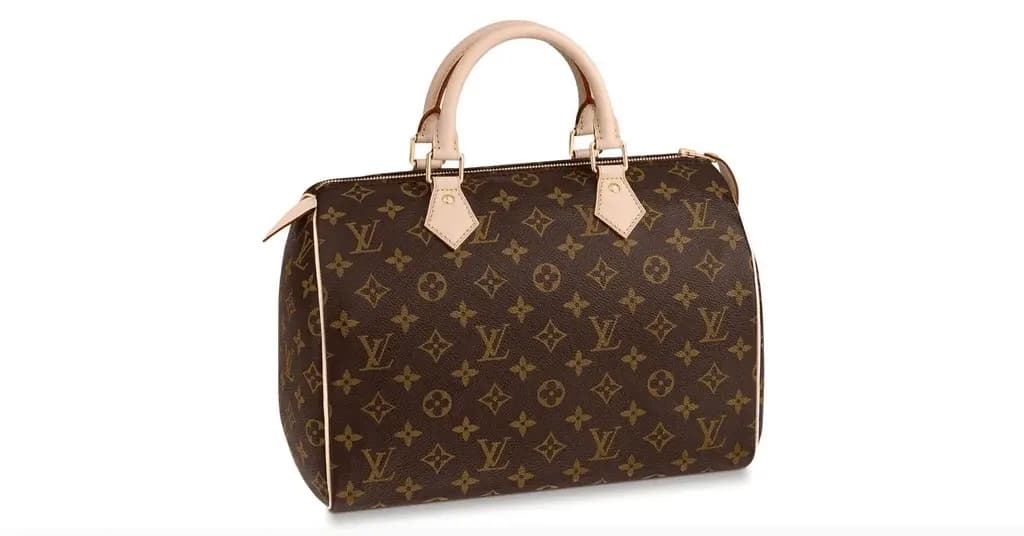
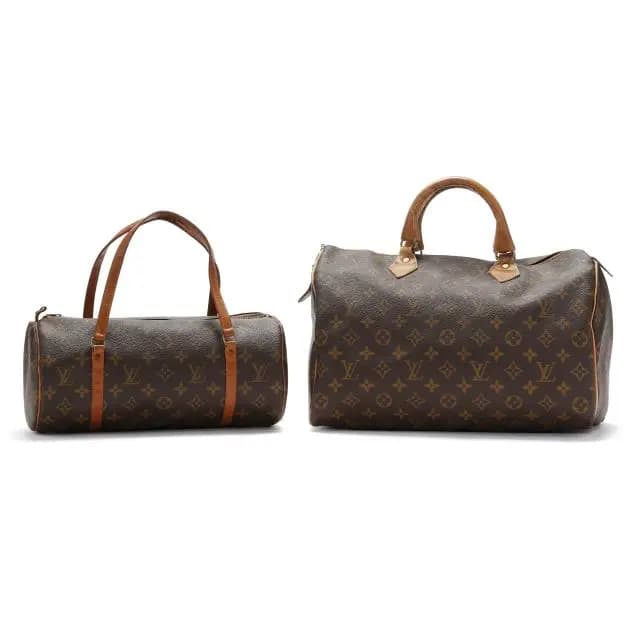
The Speedy is the quintessential LV shape — originally created as a smaller version of the Keepall for Audrey Hepburn. Vintage Speedys from the 1970s–80s have softer canvas and richer, more deeply toned vachetta leather than modern versions.
What to look for: Hand-stitching near the zipper ends, original brass zippers (not gold-tone), supple vachetta handles with even honey-gold patina.
Keepall 45 and 50 (1924–present)
The travel duffel that started it all. Vintage Keepalls are particularly prized because early examples feature a more substantial canvas weight and deeply burnished corners.
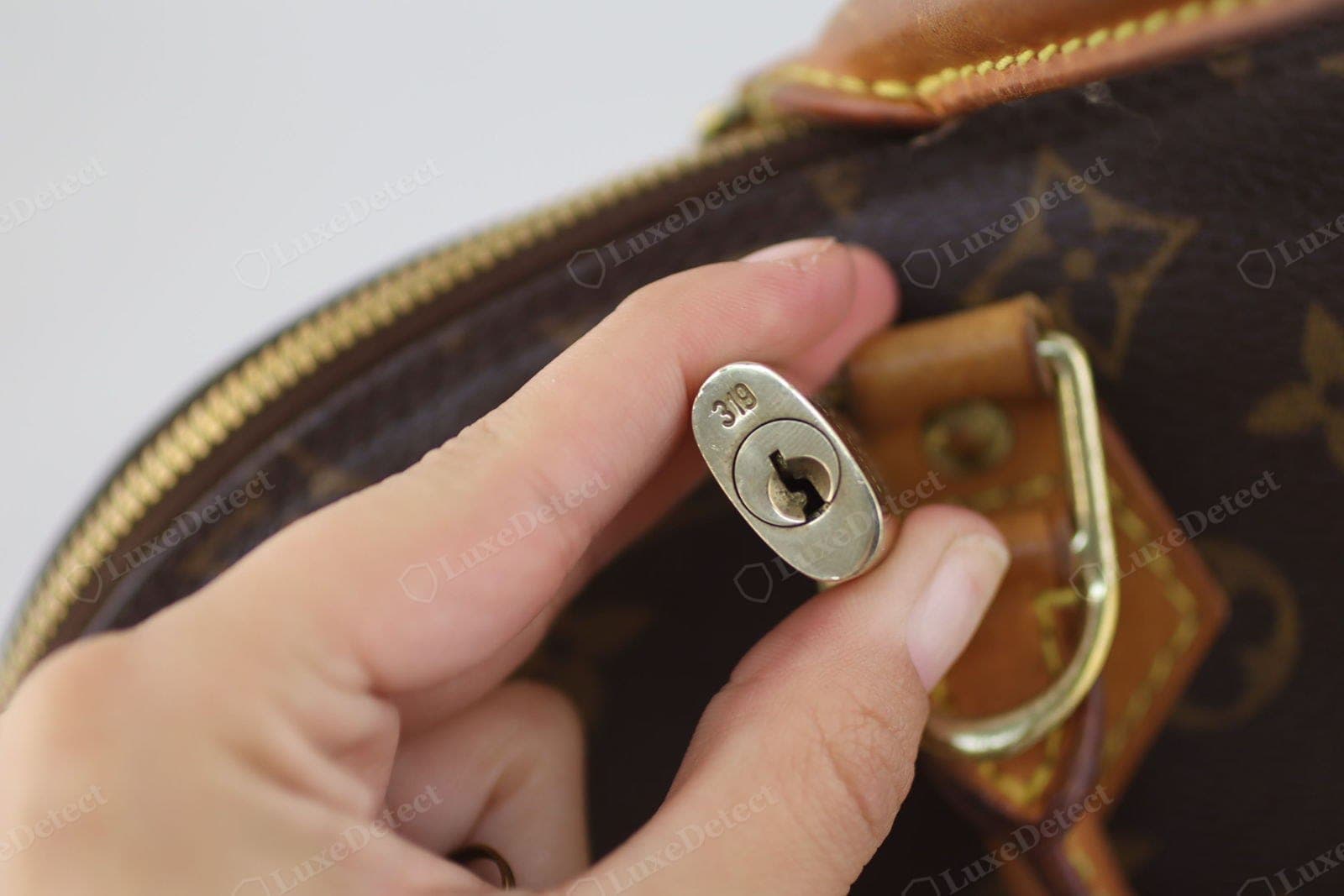
Collector note: A Keepall with a padlock and key in good condition commands a significant premium.
Papillon (1966–2010, discontinued)
The cylindrical Papillon is among the most iconic discontinued LV shapes. Discontinued in 2010, it's now only available on the secondary market. The 26 and 30 sizes are most common; the 19 is rarest.
What to look for: Perfectly circular end caps, intact leather drawstring, symmetrical monogram placement.
Noe (1932–present, vintage versions pre-1990)
Originally designed in 1932 to carry five Champagne bottles, the Noe has a distinctive drawstring bucket silhouette. Vintage Noes feature a single leather handle and a soft, unstructured canvas body.
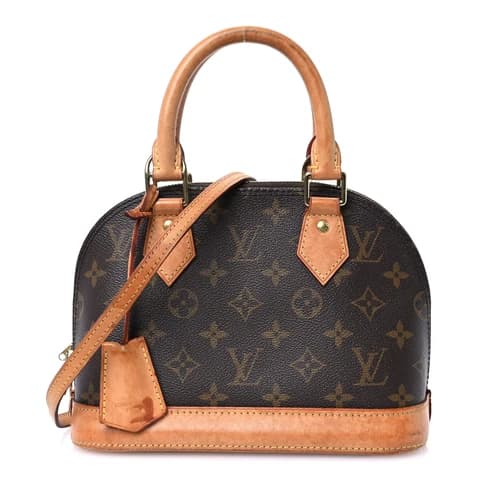
Alma (1934–present, vintage versions pre-2000)
The Alma's structured trapezoid shape was inspired by the Pont de l'Alma in Paris. Vintage Almas feature solid brass hardware and more substantial construction than contemporary versions.
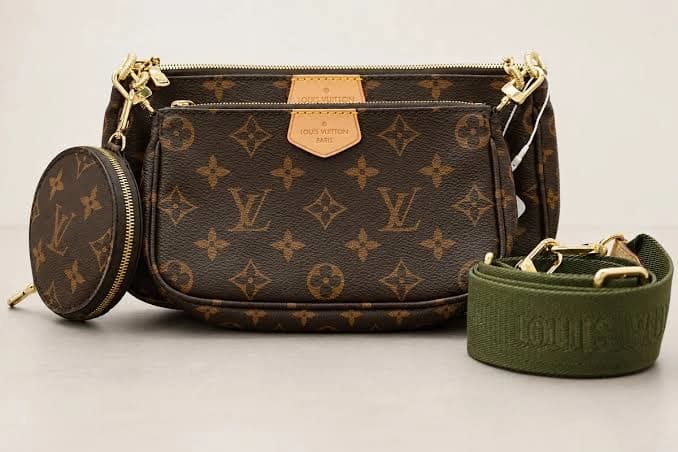
Pochette Accessoires (1992–present)
While not ancient, early Pochettes from the 1990s are highly sought after — particularly because the wrist strap is included (later versions often separated). They make ideal entry-level vintage LV pieces.
---
How to Authenticate a Vintage Louis Vuitton Bag
Authenticating vintage LV requires different knowledge than authenticating a current-season piece. Counterfeits from the 1990s exist, but so do authentic bags that look imperfect by modern standards because standards evolved.
Date Codes
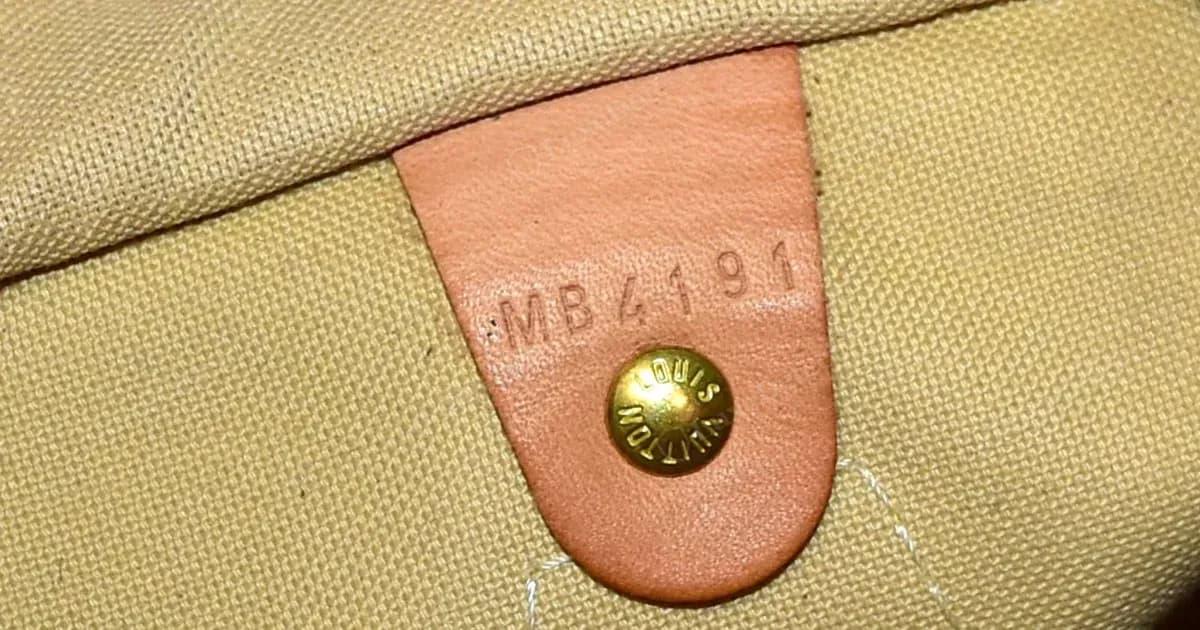
Louis Vuitton introduced date codes in 1982. Any bag claiming to be from before 1982 will not have one — this is normal for genuine vintage pieces, not a red flag.
Date code formats by era:
| Era | Format | Example |
|---|---|---|
| 1982–1989 | 3–4 digits only | 864 = August 1984 |
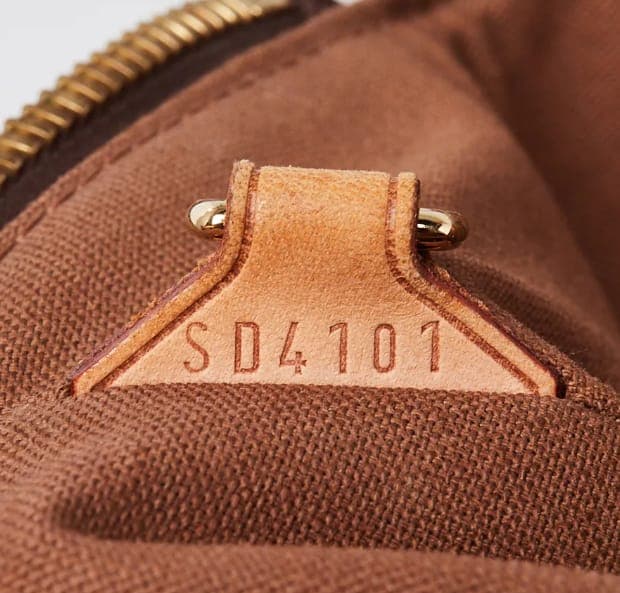
| 1990–2006 | 2 letters + 4 digits | SD0049 = SD factory, week 04, 1999 |
| 2007–2021 | 2 letters + 4 digits (different logic) | TH1028 = TH factory, week 10, 2028 |
Reading post-1990 codes: The letters identify the manufacturing country and factory. The numbers alternate: 1st and 3rd digits = week of year; 2nd and 4th digits = year.
So SD4051 = factory SD (France/Asnières), week 45, year 2001.
#### When the Code Doesn't Match Any Database
One thing vintage buyers frequently encounter: you enter a code into a lookup tool and get no result — or a result that doesn't seem to match the bag's stated age. This is more common than people expect, and doesn't automatically mean the bag is fake.
A few legitimate reasons a vintage date code won't appear in standard databases:
- Early 1982–1989 numeric-only codes were never systematically catalogued. A code like `864` means August 1984, but many online tools only support the post-1990 letter-digit format and will simply return no result.
- Factory codes that were retired — LV has opened and closed facilities over the decades. Some letter combinations (particularly from French ateliers active in the 1980s–90s) appear in authenticated bags but are absent from commonly circulated lists.
- Transitional-era codes (late 1980s to early 1990s) sometimes use a hybrid format that falls between the two major systems. These are poorly documented and often mismatch lookup tools.
- Prototype or repair-centre stamps — certain bags that went through LV's own repair atelier received secondary stamps that don't follow the standard production format at all.
The practical upshot: a code that produces no database result is not a red flag on its own. What matters is whether the code's implied date aligns with the bag's physical characteristics — canvas softness, hardware style, lining material, and heat stamp typography. A bag that carries a code dated 1993 but has 1970s-era construction is worth scrutinising; a bag whose code draws a blank but whose every physical detail checks out is almost certainly genuine.
Use our free Louis Vuitton date code checker to decode the letter-digit format, identify the factory, and cross-reference the production year against the bag you're holding. If the result is inconclusive or the code predates the tool's coverage, a full professional authentication is the safest next step.
Canvas Quality
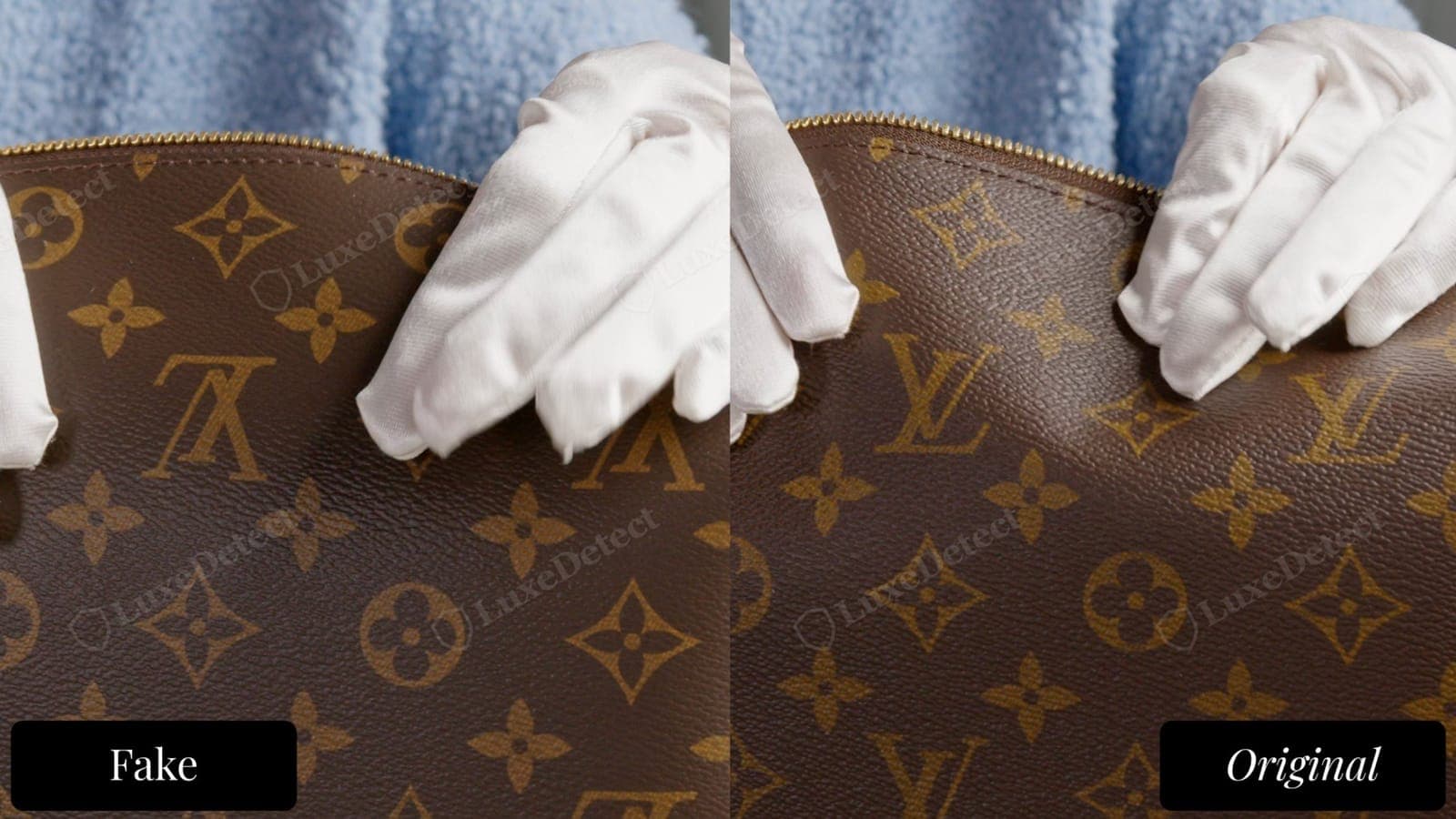
Authentic vintage Louis Vuitton canvas is coated cotton, not PVC or vinyl. It should feel slightly waxy but never plasticky. Hold the canvas up to light — genuine canvas has a slightly irregular weave visible at the edges.
Red flags:
- Canvas that feels stiff and plastic-like
- Monogram flowers or LV initials that are uneven in size or spacing
- Canvas that appears printed rather than woven (look at the cut edges)
Vachetta Leather Trim
Vachetta (undyed natural cowhide) is the defining material on monogram canvas LV bags. Authentic vachetta:
- Starts as pale cream and develops a warm honey-to-deep-caramel patina over time
- Is smooth, not grainy or textured like the fake counterparts
- Develops patina evenly — handles darken from hand oils, bases from surface contact
On vintage bags, deep, even patina is expected and desirable. Uneven patina (very dark in one spot, pale elsewhere) can indicate replaced trim or a fake.
Hardware
Vintage LV hardware should be solid brass — heavy and substantial. Check:
- Zipper pulls: Authentic bags use YKK or LV-engraved zippers on vintage pieces. Pull tabs should be weighty.
- D-rings and S-locks: Should feel solid, not hollow.
- Padlocks (if included): Vintage LV padlocks are heavy brass, stamped "Louis Vuitton Paris" on the reverse, with a serial number.
Stitching
Louis Vuitton uses 5 stitches per centimeter as a benchmark. Count the stitches along a straight seam — on authentic bags they are perfectly even, tight, and consistent in length. Thread color on monogram canvas should be a warm mustard-yellow.
Vintage note: Hand-stitching was more common on older pieces, particularly near zipper ends and handle attachments. Slight irregularities in hand-stitched sections are normal on genuine vintage bags.
Interior Lining and Stamps
Most vintage LV bags feature:
- Alcantara (suede-like) or coated canvas interior lining
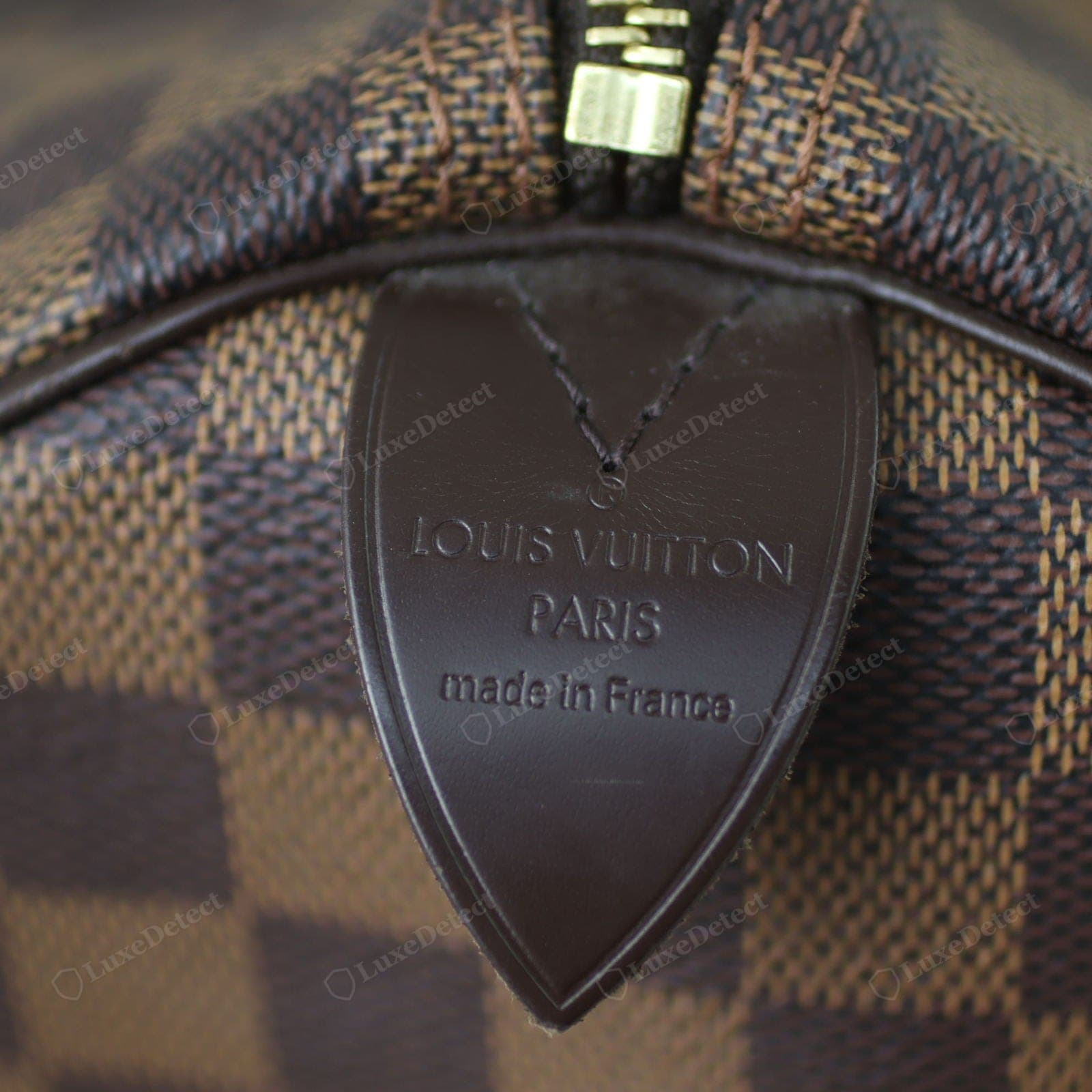
- A heat stamp on the interior leather tab reading "Louis Vuitton Paris / Made in France" (or other country)
The heat stamp should be deeply and evenly impressed — not superficial or smudged. "Made in France" is correct for most vintage pieces; "Made in USA," "Made in Spain," or "Made in Germany" also appear on authentic vintage bags.
---
Condition Grades Explained
When shopping vintage LV, condition grades vary by platform. Here's a rough translation:
| Grade | What It Means |
|---|---|
| Pristine / Mint | Near-perfect, minimal to no signs of use |
| Excellent | Light wear, minor scuffs, original hardware intact |
| Very Good | Moderate wear, may have patina, hardware may show use |
| Good | Visible wear, some fading or surface marks |
| Fair | Heavy wear, best for display or parts |
Patina is not a flaw. Deep vachetta patina is the hallmark of a well-loved authentic bag, and many collectors specifically seek it out.
---
What to Pay for Vintage LV
Prices vary widely based on style, condition, and rarity. Rough 2026 market benchmarks:
| Style | Fair Condition | Excellent Condition | Near Mint |
|---|---|---|---|
| Speedy 25 | $300–$450 | $500–$700 | $800–$1,200 |
| Speedy 30 | $350–$500 | $550–$800 | $900–$1,400 |
| Neverfull MM | $400–$600 | $700–$950 | $1,100–$1,600 |
| Keepall 45 | $500–$750 | $900–$1,300 | $1,500–$2,200 |
| Papillon 30 | $400–$600 | $700–$1,000 | $1,200–$1,800 |
| Alma PM | $450–$650 | $750–$1,100 | $1,300–$2,000 |
| Noe (pre-1990) | $350–$550 | $600–$900 | $1,100–$1,700 |
Rare, discontinued, or limited-edition pieces command significant premiums beyond these benchmarks.
---
Red Flags to Walk Away From
- Missing date code on a post-1982 bag — not necessarily fake, but warrants deeper scrutiny
- Canvas with very uniform, machine-perfect appearance — authentic canvas has slight variation
- Zipper that catches or feels cheap — LV zippers glide smoothly
- Extreme pricing below market — if a deal seems too good, it almost always is
- No provenance or paperwork — vintage bags rarely have paperwork, but sellers should know where the bag came from
- Heat stamp that's barely visible or uneven — a key authentication marker
---
Should You Get a Vintage LV Authenticated Before Buying?
Yes — especially for pieces over $500. A professional authentication opinion costs a fraction of the risk, and a Certificate of Authenticity adds resale value if you ever sell.
LuxeDetect's expert team authenticates vintage Louis Vuitton bags entirely from photos. Submit clear images of the date code, heat stamp, canvas, hardware, and stitching for a comprehensive verdict — typically within 24 hours.
Conclusion
Vintage Louis Vuitton is one of the most rewarding areas of the pre-owned luxury market: pieces that hold their value, improve with age, and carry genuine heritage. The key to buying well is knowing what era you're shopping, reading date codes confidently, and understanding that authentic vintage bags look different from brand-new ones.
When in doubt, authentication pays for itself.
Related guides
More Louis Vuitton authentication references:
FAQ
Can a genuine vintage Louis Vuitton bag have no date code?
Yes. Louis Vuitton only introduced date codes in 1982. Any bag produced before that — and there are many authentic pieces from the 1950s, 60s, and 70s in circulation — will have no date code at all. A missing date code on a pre-1982 bag is completely normal. What matters on those pieces is the canvas quality, hardware style, heat stamp typography, and construction details consistent with the stated era.
What does it mean when a date code doesn't appear in any online lookup tool?
It usually means the code predates the tool's database, or the tool doesn't support the older 3–4 digit format used before 1990. Very early letter-only codes from 1982–1989 are particularly poorly documented in online databases. A code that draws a blank is not automatically a red flag — cross-reference it against the bag's physical characteristics instead. If the implied production date is consistent with the bag's canvas, hardware, and leather, it's almost certainly genuine.
Is heavy patina on vachetta leather a sign of a fake?
No — it's the opposite. Deep, even honey-to-caramel patina on vachetta handles and trim is the hallmark of a well-used authentic bag. Fakers rarely bother to accurately replicate genuine aged patina because it's extremely difficult to do convincingly. Be suspicious of vintage bags with unusually pale, almost-new-looking vachetta, or bags with suspiciously uneven darkening (very dark in one spot, pale elsewhere), which can indicate replaced trim.
Are vintage Louis Vuitton bags still being faked?
Yes, but the fakes from the 1980s–2000s are notably worse than contemporary superfakes. Most vintage LV counterfeits have obvious canvas printing issues (colors too saturated, monogram flowers unevenly sized), hardware that feels hollow, and heat stamps that are superficial or smudged. Genuine vintage bags have canvas that looks embedded rather than printed, substantial brass hardware, and deeply impressed stamps. The bar for vintage fakes is lower than for modern ones, but they still circulate widely on resale platforms.
Do discontinued styles like the Papillon hold their value?
Discontinued styles generally hold or appreciate in value precisely because Louis Vuitton no longer produces them. The Papillon is a good example: discontinued in 2010, it's only available on the secondary market and prices have risen accordingly. Limited production volumes during the vintage era also mean genuine scarcity. However, condition is critical — a Papillon in Fair condition will stagnate, while one in Excellent condition will track the broader vintage LV market upward.
Should I clean or restore a vintage LV bag before selling?
Generally no — unless it's a professional restoration. Amateur cleaning attempts often damage canvas coatings or lighten patina in ways that reduce value and can raise authenticity questions. If the bag needs meaningful work, use a specialist luxury goods restorer who understands vintage LV materials. For minor surface dust, a slightly damp cloth on the canvas is safe. Leave the vachetta alone unless there's active mold — most buyers prefer honest natural patina to an over-cleaned bag.