Handbag Authentication Specialist
Handbag authentication specialist. Has reviewed submissions across Hermès, Chanel, Louis Vuitton, and Dior since 2019.
Published October 2026 · Contact
Why Kate Spade Wallets Don't Share One Look
A Kate Spade wallet is one of the most common ways people first own the brand: zip-around accordions, bifolds with a snap, continentals, slim card cases, coin purses and wristlets that double as small clutches. The brand has sold all of them for decades, across full-price boutiques, katespade.com and a large outlet network, in saffiano leather, pebbled leather, patent, glitter PVC and nylon.
That range is the whole difficulty. A wallet from one line can look nothing like a wallet from another and still be entirely genuine: one has raised metal lettering, another a small plate on a plain face, another only a tiny enamel spade. Looking for "the" Kate Spade logo gets you nowhere. What works is learning each system as a family, then checking that your wallet is a clean, consistent example of the one it claims to be.
Worth knowing
This guide is built from genuine Kate Spade wallets and wristlets in our order archive. We have far fewer confirmed counterfeit wallets than genuine ones, and we have not found a construction tell that holds up against genuine wallets of the same type and era. So this guide shows what genuine looks like and says plainly what photos cannot settle. Our [Kate Spade handbag guide](/blog/authenticate-kate-spade-guide) covers the bag side, including the one hang tag we have seen copied onto several fakes.
The Exterior Mark: Four Common Systems on Genuine Wallets
Raised metal letters
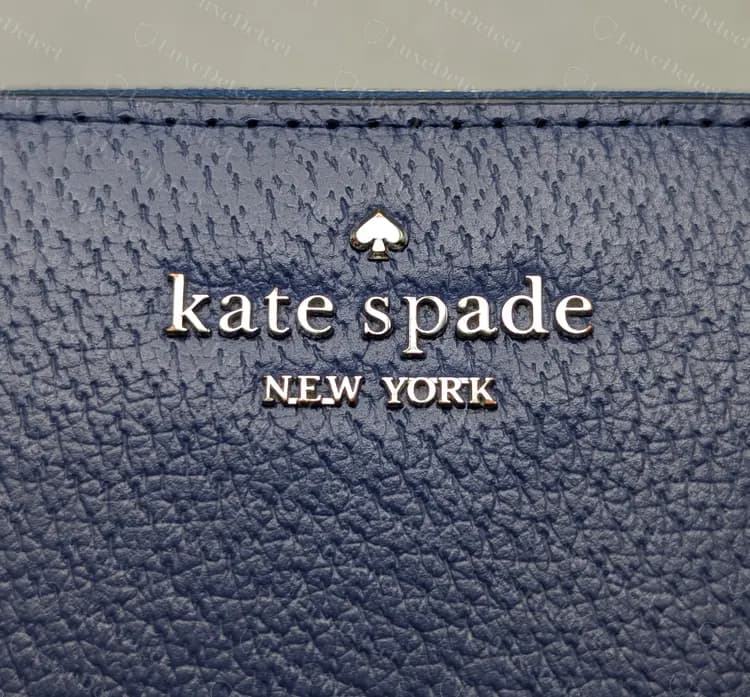
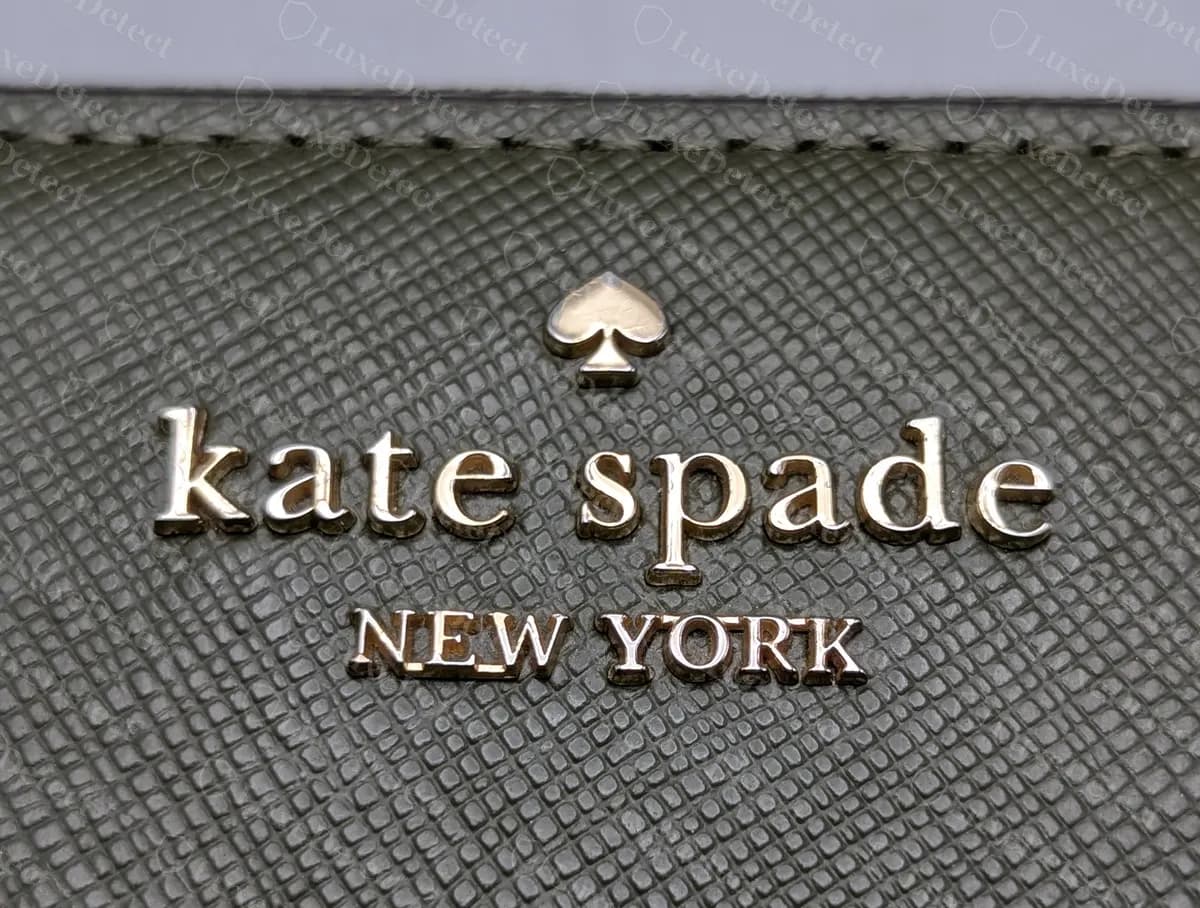
Many recent zip-around and bifold wallets carry individual metal letters applied straight to the leather: a small spade on top, "kate spade" in a lowercase serif typeface, "NEW YORK" in small capitals beneath. Seen on several genuine wallets in saffiano and grained leather. The letters sit crisp and evenly spaced, each with a clean polished edge, and the leather around them is undisturbed. Because the letters are raised, they catch light differently from every angle, which is why one photo from straight on is rarely enough.
The rectangular metal plate
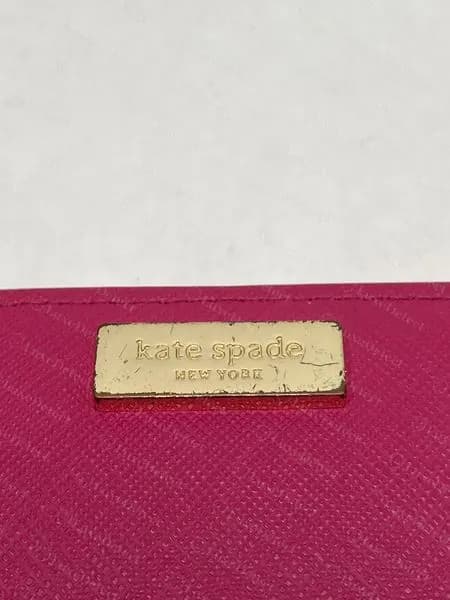
Many wallets carry a small gold-tone plate engraved "kate spade" over "NEW YORK". Plates vary by line. This one is mounted flat with no visible rivets, and shows ordinary surface wear and a fine scratch, which is normal on a wallet handled for years. Light wear is not a warning sign by itself.
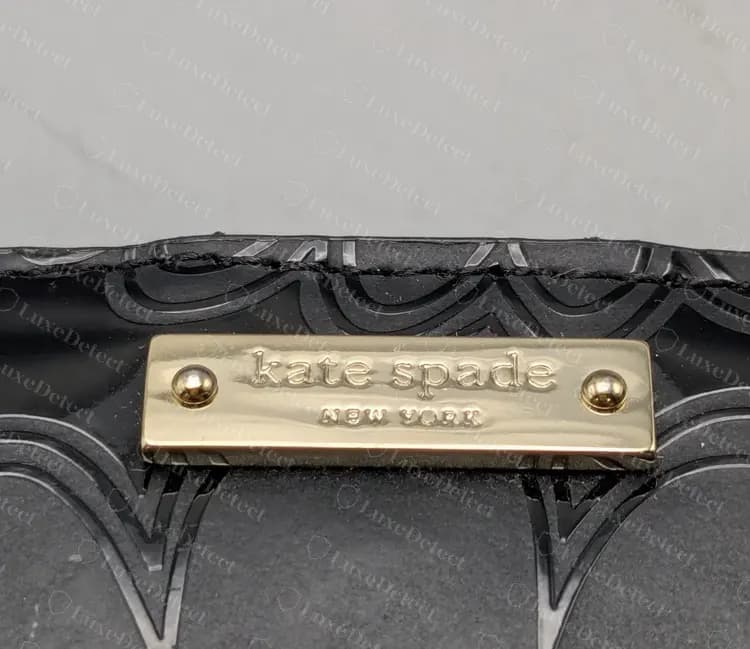
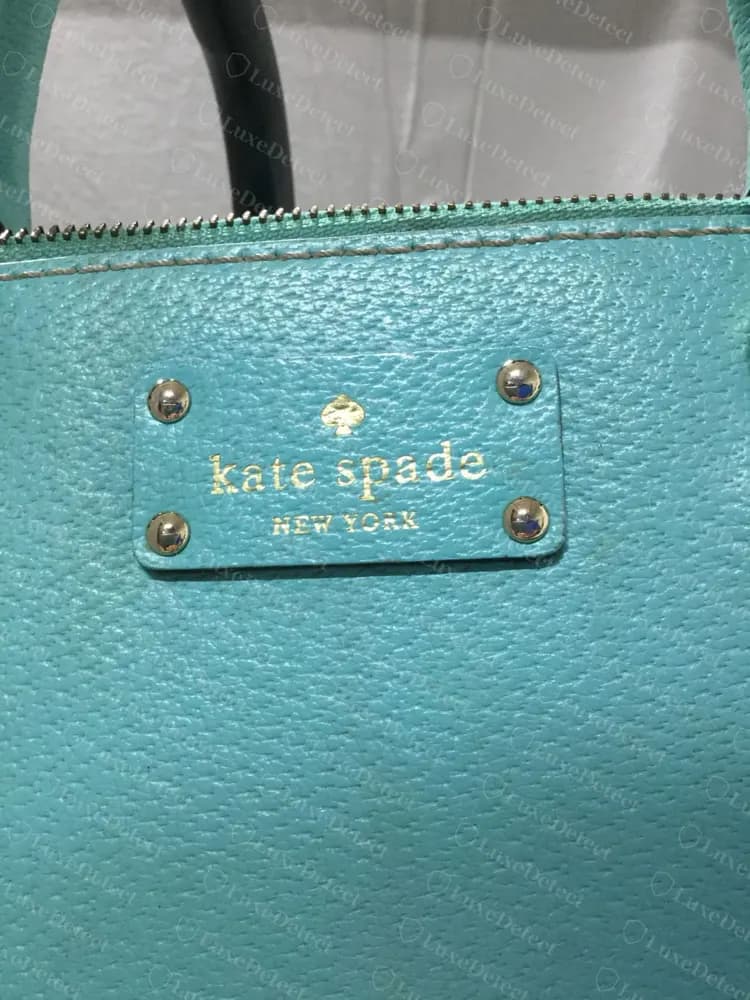
Other lines use a plate held by rivets: two domed rivets, one at each end, as on this patent bifold, or four rivets, one in each corner, on several other genuine wallets. Same wording, a different build. Plates with and without rivets both turned up on genuine wallets. Compare your wallet to others from the same line and year, not to a different collection.
The small enamel spade
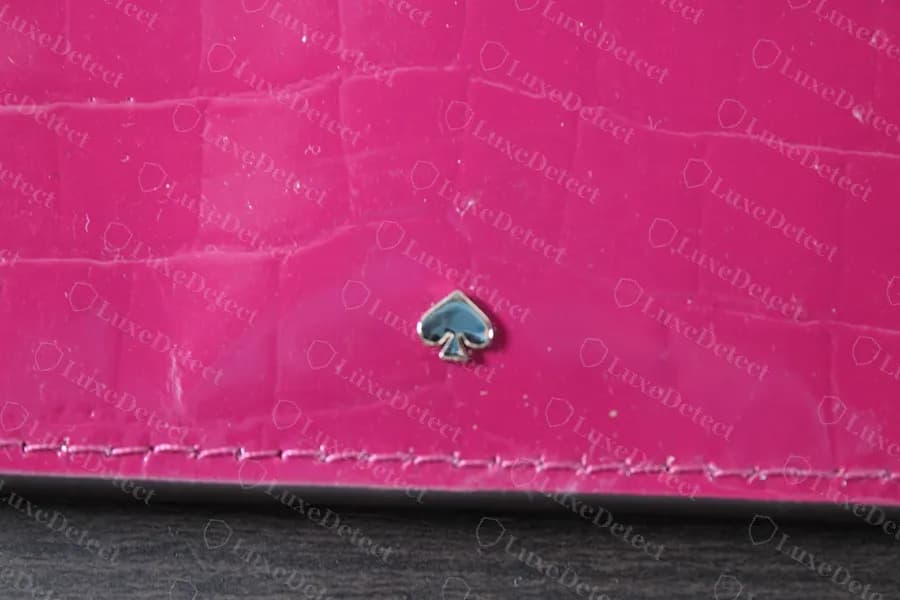
Some wallets show no name at all on the front, only a small spade, often enamel-filled in a contrasting colour. Here it is blue on pink croc-embossed patent. We saw this on one wallet in this form, though small spade icons on wallets and wristlets are widely used. A missing wordmark on the front is not unusual for this system; the name is then on the interior.
The printed or foil wordmark
A fourth system prints or foils "kate spade NEW YORK" flat onto the leather, in gold or tone on tone. It is common on the front of the wallet as well as inside, near the card slots. The same rule applies: the lettering is evenly inked, fully filled and aligned with the wallet's edges. Foil and print are the details counterfeiters copy most closely, so a good-looking one only tells you the format is right.
The Interior Tag: Three Labels You Will See
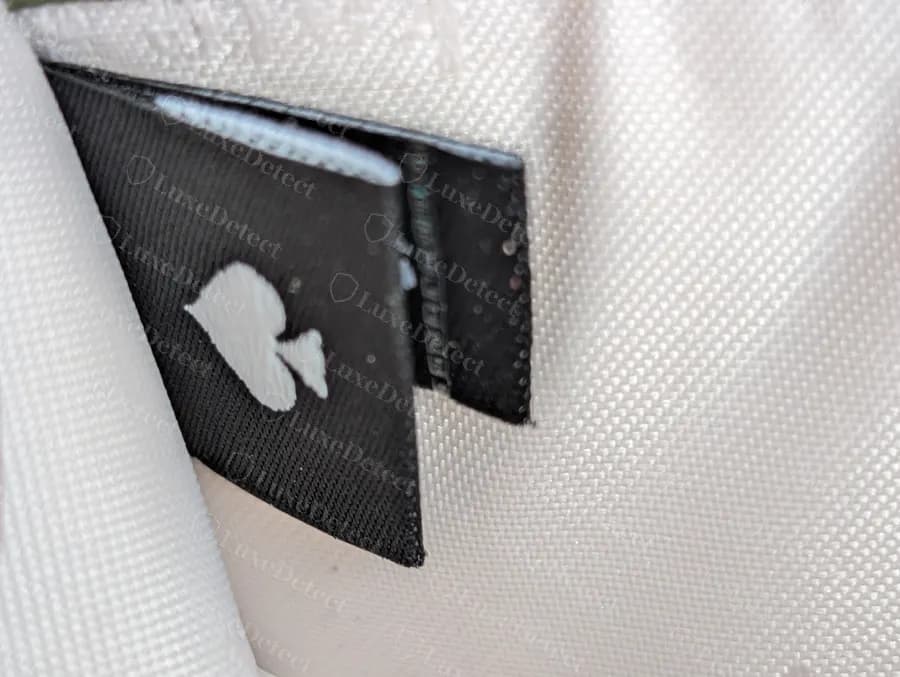
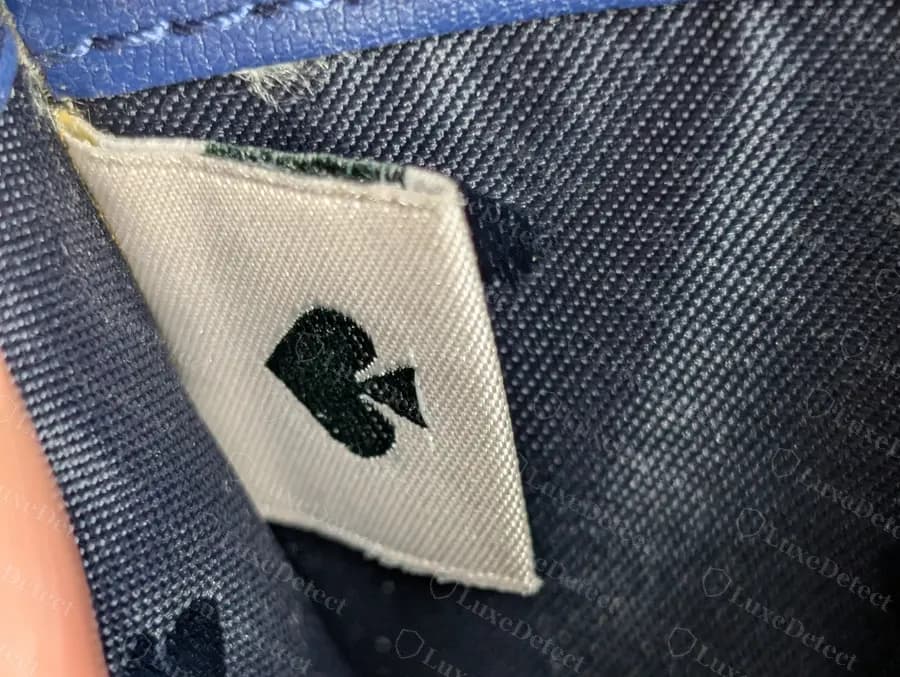
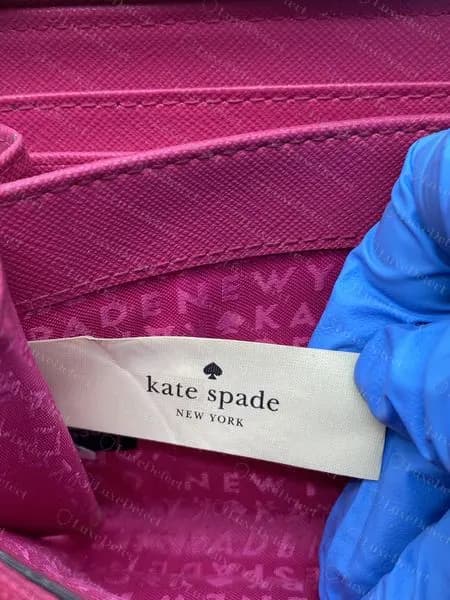
Inside genuine wallets we saw woven tags such as black with a white spade, cream with a dark spade only, or cream with the full "kate spade NEW YORK" wordmark and a spade above. The first two, one on a pale lining and one on a navy lining, each turned up on more than one genuine wallet; the full-wordmark label turned up on several. A wallet can show more than one. The weave is fine and even, the printing legible without magnification, and the label is sewn flat into a seam with no puckering. Which label you find depends on the line. A matching label does not prove a wallet is real, because counterfeit wallets carry spade labels too.
Lining Prints and Hardware
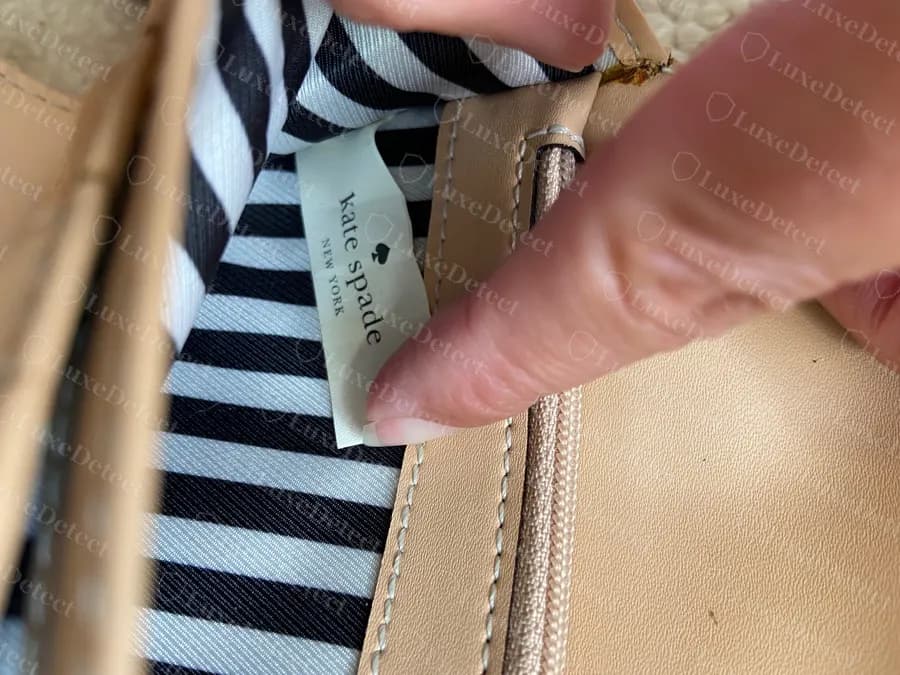
The lining is where Kate Spade lines differ most. We saw repeating "kate spade new york" lettering, printed tone on tone in pink, in cream and in black, navy and white stripes, and plain satin. On the lettering prints the words run in several directions and are cut off at the edges of each pocket, as a repeating printed fabric would be. Wallets from a line that uses plain lining are as genuine as printed ones.
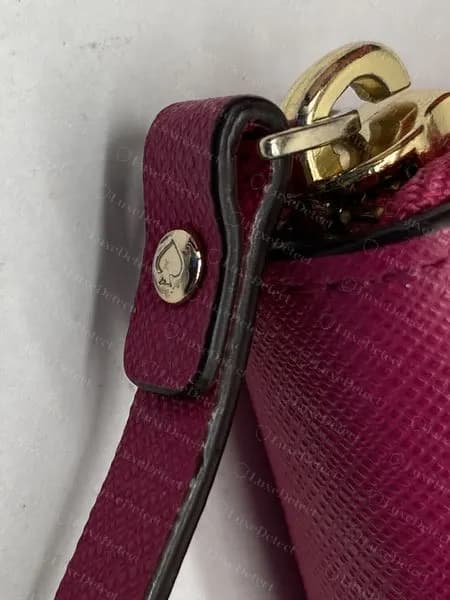
Small hardware often carries the spade too. On wristlets, look at the strap rivet and the ring: here the rivet is engraved with a spade, the strap edge is evenly finished and the ring is gold-tone metal. Zip sliders and pull tabs vary by line, so judge them by finish and by whether the zipper runs smoothly, not by one fixed design.
The Sewn Style Tag and the Care Label
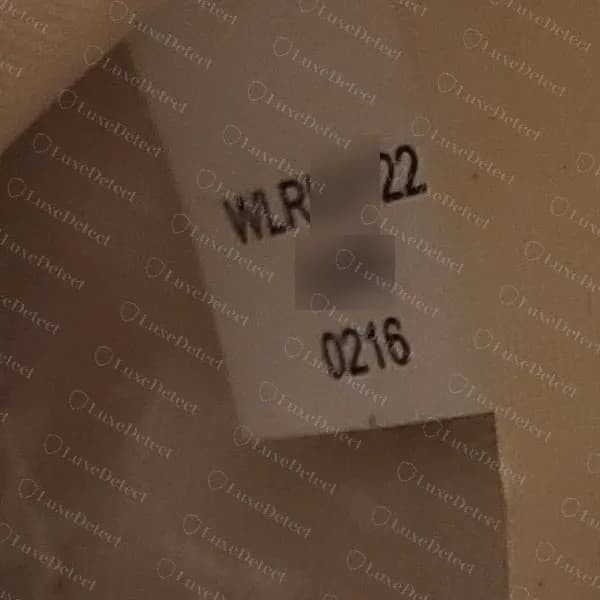
Many wallets carry a small white fabric tag, often stacked behind the woven label, that prints a style number, a factory code and, from 2013, a production date. This one begins with a W followed by letters for the outlet and for a wallet, and its date line reads 0216, February 2016. The middle of the number is blurred here. Our Kate Spade style number decoder explains each line, including which letters mean outlet or full price, and that this is a style number shared by every wallet in that colour run, not a serial.
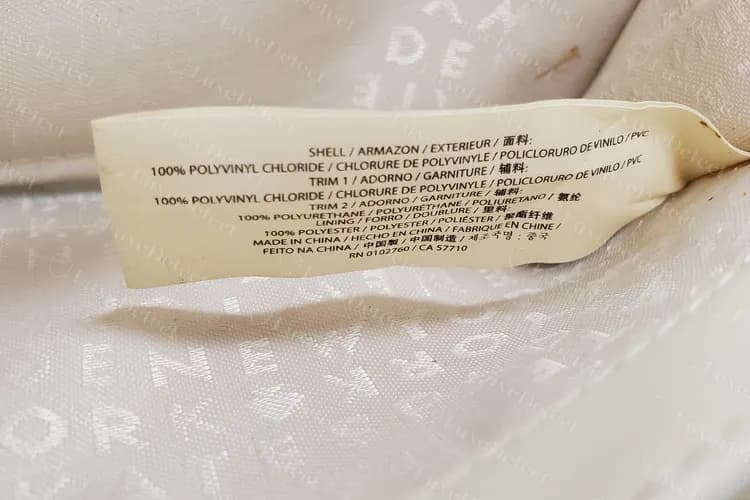
The care label lists the shell, trim and lining materials in several languages, plus a registration number and the country of manufacture. This wallet says China, which is common. Kate Spade has made wallets in many countries over the years, so the country of manufacture does not separate real from fake.
Outlet or Full Price
On wallets made until about 2024, the first letter of the style number answers this: P for the full-price line, W for the Kate Spade outlet. The letters after it say what kind of item it is, with WR and LR for wallets and small leather goods. Later K-codes do not carry the channel, and the paper hang tag does. A W wallet is not a fake: it is a sales channel. We did not find a plate, letter or lining detail that reliably tells an outlet wallet from a full-price one in photos, so use the tag and hang tag, not the hardware.
What Photos Cannot Prove
Counterfeiters copy exactly the parts this guide describes: the wordmark, the woven label, the style tag with a real style number on a correctly laid-out tag. A clean, plausible match is where a check starts, not where it ends. A few things photos handle poorly on a wallet:
- Feel, weight and smell. A photo shows the grain but not how stiff the leather is, or whether it smells of solvent, which is a general warning sign on any coated imitation.
- Stitching across the whole wallet, including card-slot edges, which is rarely photographed.
- Whether the pieces match each other. A wallet that mixes a plate from one line, a label from another and a lining from a third deserves a closer look.
- Packaging. Boxes, dust bags and gift tags are context, not evidence, because they move freely between items.
Compare the wallet with others of the same line and year. If you can't find a genuine reference, that is a reason to ask for a second opinion, not a reason to guess.
A code that checks out doesn't prove the item is real. Counterfeiters copy genuine codes.
Our authenticators check the stamps, hardware and construction of your Kate Spade against verified references, from $25. You get a verdict within 24 hours, and a Certificate of Authenticity if the item passes.
Authenticate My Kate Spade →FAQ
How can I tell if my Kate Spade wallet is real?
Match it to the system its line uses: raised metal letters, a plate, a small enamel spade or a printed wordmark, plus a clean woven interior label and a sewn style tag that fits the wallet's type. No single feature proves it, because counterfeiters copy each of them. Judge the whole wallet and compare it with genuine wallets from the same line.
Where is the style number on a Kate Spade wallet?
On a small white fabric tag with black print sewn into an inside seam, often a card-slot or zip-section seam, often stacked with a woven label. It prints a style number, a factory code and, from 2013, a production date. The tag can be hidden in a seam, and some wallets lose it, so its absence is not a verdict either way.
Is a Kate Spade wallet with a W code a fake?
No. A W at the start of the style number means the wallet was made for the outlet, which is a sales channel, not a sign of a fake. Wallets and small leather goods usually carry WR or LR after the first letter on codes used until about 2024.
Does the country of manufacture show if a Kate Spade wallet is fake?
No. Kate Spade has produced wallets in several countries, and genuine ones carry China as well as Vietnam, the Philippines and others. Treat it as context, not a verdict.
Are Kate Spade wallets without a visible logo genuine?
They can be. Some wallets show only a small spade on the front, with the name on a woven label or printed wordmark inside. Check the interior before deciding.
Does a Kate Spade serial number exist?
Not as such. The number on the sewn tag is a style number shared by every item of that design and colour run. A listing that calls it an S/N is using the wrong word.
Should I pay for a Kate Spade wallet authentication?
If you can't match the wallet to a genuine one from the same line, or you are about to pay a lot for it, yes, it is the safer step. LuxeDetect authenticates wallets from photos starting at $15 for a 24-hour turnaround, with a written verdict you can show a seller.