Why Stone Island Gets Faked So Often
Stone Island occupies a unique position in the market: it has the cultural cachet of a luxury brand but a streetwear price point that puts it within reach of counterfeiting at scale. A genuine Stone Island jacket retails between £350–£1,200 depending on the fabric; special editions in Dyneema, Ghost, or Nassimo materials can exceed £2,000. That spread, combined with the brand's enormous following in the UK, Europe, and increasingly globally, makes it one of the most counterfeited outerwear brands in existence.
The good news is that Stone Island authentication is learnable. The badge system alone — seasonal codes, stitching patterns, font execution — gives you multiple cross-checks before you even look at the garment itself. This guide covers everything a professional runs through, in order.
1. The Compass Badge — The Most Counterfeited Detail in Streetwear
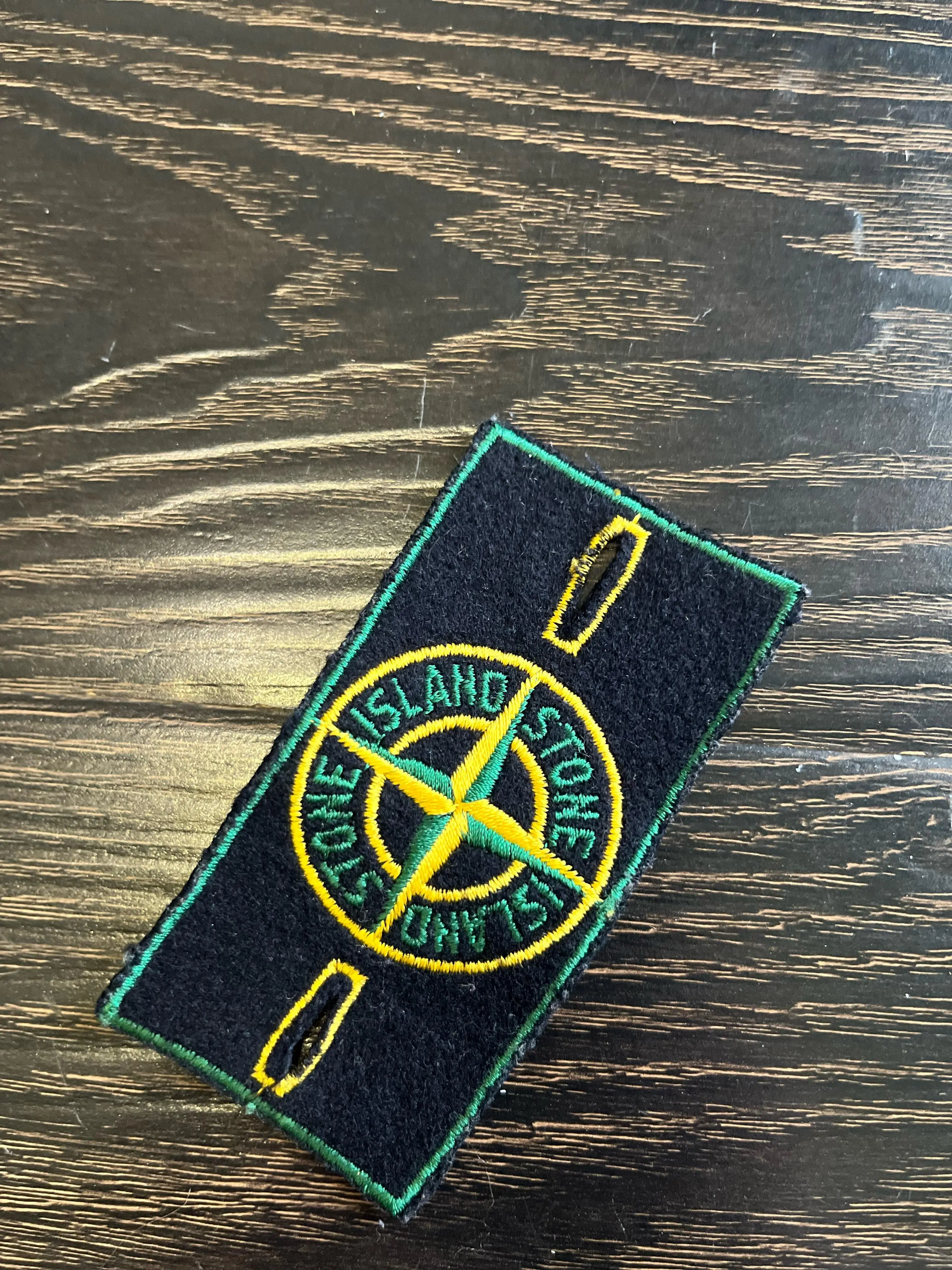
The detachable compass badge on the left sleeve is Stone Island's signature element and the single most important authentication point. It is also the element fakers focus most effort on, so you need to check it systematically.
The Seasonal Code
Every genuine Stone Island badge carries a seasonal production code embroidered on the back of the badge fabric (the inner face, not the side you see when worn). The format is:
| Era | Format | Example |
|---|---|---|
| Pre-2005 | No seasonal code | (vintage, no code) |
| 2005–2014 | Four digits: season + year | 6415 = AW 2014/15 |
| 2015–present | Six characters: season + two-digit year | 721522 = SS 2022 |
The first digit indicates the season: 6 = Autumn/Winter, 7 = Spring/Summer. For a jacket listed as AW2023, the badge code should begin with 6 and reference year 23. If the code doesn't match the claimed season and year, it's either a fake or the badge has been swapped from a different piece.
How to read it: Detach the badge (it velcros off on most pieces; early models use a press stud). Look at the inner face of the badge fabric — the code is embroidered in small numerals. On genuine badges, the embroidery is tight and legible; on fakes it's either absent or blurry.
Badge Font and Compass Execution
The "Stone Island" text on the badge uses a specific geometric sans-serif typeface. Key checks:
- Letter spacing: The spacing between characters is consistent and relatively tight. Fakes often have uneven spacing, most visibly in the gap between "STONE" and "ISLAND."
- The compass needle: On genuine badges, the needle inside the compass is a sharp, clean diamond shape pointing toward the "N" (North). On fakes, the needle is frequently rounder, tilted slightly off-axis, or disproportionately thick.
- The circle: The outer ring of the compass should be a perfect circle, consistently thick. Fakes often have a slightly oval ring or inconsistent line weight around the circumference.
- Embroidery depth: The badge face is embroidered with thread raised above the base fabric. Real badges have a consistent pile height across the lettering. Run your thumb across it — you should feel crisp raised text. Fakes often feel flat or have uneven pile.
Badge Attachment
Genuine Stone Island badges attach in one of two ways depending on era:
- Velcro (2005–present): A hook-and-loop velcro patch sewn to both the badge and the sleeve. The velcro should be neatly finished — no fraying, consistent density across the attachment area.
- Press stud (pre-2005): A metal press stud through both badge and sleeve. These should have the Stone Island logo embossed on the visible dome.
The sleeve patch (the area where the badge attaches) should be sewn with a consistent seam allowance and the same fabric as the rest of the sleeve. Fakes often have a patch that's slightly proud of the sleeve fabric — it sits up rather than lying flat.
2. The Interior Label — Serial Numbers and Garment Codes
Inside every genuine Stone Island garment, you'll find a woven label with the brand name and a numeric code system. This is the second most important check.
The Garment Code
The main interior label carries a product code — a long string of numbers and letters that encodes the garment type, fabric, color, and season. The format has evolved:
- Pre-2007: Shorter codes, typically 6–8 characters
- 2007 onward: 12-character product codes following the format: XXXXXX-YYYY-ZZ
What to look for:
- Weave quality: The label is woven, not printed. Text is embedded in the fabric structure. On fakes, text is often printed onto a label, and you can see it sitting on the surface rather than being part of the weave.
- Font consistency: The "Stone Island" text on the label uses the same geometric typeface as the badge. Any deviation in font weight or spacing is a flag.
- Care symbols: The washing/care instruction symbols should be clean and unambiguous. Fakes frequently have care symbols that don't exist in the international ISO standard, or use symbols in the wrong order.
The QR Code (2019–Present)
From the AW2019 season, Stone Island added a QR code to interior labels that links to an authentication page on the Stone Island website. Scan it with your phone camera:
- Genuine: Redirects to a product page on stoneiland.com with the specific garment details — product code, fabric, season, and a prompt to register the piece.
- Fake: Either no QR code present (on pieces claiming to be 2019+), a QR code that doesn't scan, or a code that redirects to a non-Stone Island URL.
The QR code alone isn't a guarantee of authenticity — codes from genuine labels can be photographed and reprinted — but its absence on a post-2019 garment is a strong red flag.
3. Fabric and Garment Dye Authentication
Stone Island is famous for garment dyeing — the process of dyeing a finished garment rather than dyeing yarn before construction. This produces the characteristic uneven, slightly faded-at-seams color that is almost impossible to fake convincingly.
What Genuine Garment Dye Looks Like
On a genuinely garment-dyed piece:
- Seam fading: The fabric at seams, pocket edges, and reinforced areas absorbs dye differently than the surrounding fabric. You'll see a subtle but consistent lightening along every seam. This is intentional and expected.
- Surface texture: The dye process alters the hand of the fabric slightly. Genuine pieces have a specific slightly roughened texture on cotton pieces; the surface has what dye-industry people call "bloom."
- Color consistency: Despite the intentional fading at seams, the main body color should be consistent across the whole garment — no random lighter or darker patches in the middle of a panel.
Fakes attempting to replicate garment dye typically:
- Apply even color with no seam variation (looks too clean)
- Or artificially distress specific areas unevenly, creating patches that don't follow the seam logic
Special Fabric Lines
Several Stone Island fabric innovations are frequently faked but extremely difficult to replicate:
Ghost Pieces: The SS2012-era "Ghost" fabric is a special reflective material that appears almost transparent in natural light. Fakes claiming to be Ghost pieces are usually standard fabric — hold the garment up to a strong light source and the genuine article becomes nearly translucent.
Dyneema: The Dyneema fabric used in Stone Island's highest-end technical pieces uses actual Dyneema fibers — 15x stronger than steel by weight. Genuine Dyneema has a very specific waxy, paper-like hand and a distinctive sheen. You cannot replicate this feel with a standard synthetic.
Ice Jacket: The garment-dyed nylon with thermosensitive pigment changes color with temperature. Rub your hand vigorously across a cold genuine piece — the warmth of your palm should briefly alter the color under your hand. Fakes use standard nylon with no thermosensitive treatment.
4. Zippers and Hardware
Stone Island uses YKK zippers on standard pieces and custom Stone Island-branded zippers on higher-end garments.
Main Zipper
On garments £300 and above, look for:
- YKK branding: Embossed on each zipper pull and often on the zipper tape itself. Fakes frequently use unbranded Chinese zippers or low-grade copies.
- Movement: A genuine YKK zipper runs smoothly with consistent resistance. It should not catch, skip, or require force.
- Puller quality: The metal pull should be heavy gauge with crisp edges. Fake zippers typically use thin, lightweight pulls that flex visibly when you grip them.
On pieces from SS2017 onward, some models use Stone Island-branded custom zippers with the compass logo on the pull. If a piece has a custom SI puller but the zipper tape is unbranded or non-YKK, that's a mismatch.
Press Studs and Buttons
Internal press studs (used for hood attachments, inner storm flaps, etc.) on genuine pieces are heavy gauge metal with a positive click. Fakes use lightweight plastic-backed studs that have less resistance and feel hollow when pressed.
5. Stitching Quality
Stone Island uses a consistent stitching standard across all garments. Count stitches where you can:
- Seam stitching: Approximately 8–10 stitches per centimeter on main seams. Fakes run at 6–7 stitches per centimeter, producing slightly looser seams that eventually unravel.
- Badge area stitching: The sleeve patch is attached with a seam running exactly 3–4mm from the edge. The stitching should be perfectly parallel to the edge with no wavering.
- Bartacks: Reinforcement stitches at stress points (pocket corners, strap attachments) should be dense and even. Fake bartacks are often sparse or absent.
6. Packaging and Extras
Genuine Stone Island garments above a certain price tier come with specific packaging:
- A Stone Island garment bag (usually fabric, branded with the compass)
- Swing tag attached with a plastic loop, printed on both sides with the product code
- A care booklet in English and Italian (Stone Island is Italian — the Italian section should be native-quality, not translated)
The swing tag font should match the label and badge typeface exactly. Any font variation between the badge, the interior label, and the swing tag is a red flag.
FAQ
How do I read the seasonal code on a Stone Island badge?
Detach the badge by pulling the velcro. Look at the inner face. The seasonal code is embroidered in small numerals. The first digit is the season (6 = AW, 7 = SS). The following digits reference the year. A code starting with "721" on a claimed AW2021 piece is wrong — it should start with "621."
Are all Stone Island badges detachable?
No. Pre-velcro vintage pieces (roughly pre-1990) had the badge permanently stitched to the sleeve. These are not fakes — detachability was introduced progressively. For vintage pieces, the badge is authenticated differently: look at the stitching pattern around the border, the thread color, and the badge fabric weave.
What does a genuine Stone Island label feel like?
Woven, not printed. The text has tactile depth — you can feel the raised warp threads under your fingertip. A printed label feels completely flat. Run your thumbnail across the "Stone Island" text — on a woven label you'll feel a slight texture; on printed you won't.
Can I verify a Stone Island garment online?
Yes, partially. The QR code on post-2019 garments links to Stone Island's authentication page. You can also use the product code from the interior label on the Stone Island website to verify that the code corresponds to a real product. Neither check is definitive alone — fakes increasingly copy correct codes — but a code that returns no product, or a QR code that fails to scan, is a hard fail.
Why is the color slightly different at the seams?
That's correct. Garment dyeing intentionally produces seam variation — areas of reinforced fabric absorb dye less evenly, so seams often appear slightly lighter or darker than the surrounding fabric. This is not a defect and not a fake indicator. It's diagnostic of genuine garment dye construction.
How do I authenticate a Stone Island Ghost piece?
Hold it up to strong natural light. Genuine Ghost fabric becomes nearly translucent in direct light — the material is engineered for this effect. Also check the interior label for the "Ghost" designation and the correct seasonal code. The fabric should also feel very light and have a crisp, slightly papery hand unlike typical nylon.