Luxury Jewelry Authentication Specialist
Authentication analyst covering the resale market, marketplace verification programs, and counterfeit trends.
Last updated August 2026 · Published July 2026 · Contact
Why Qeelin Requires Specific Knowledge
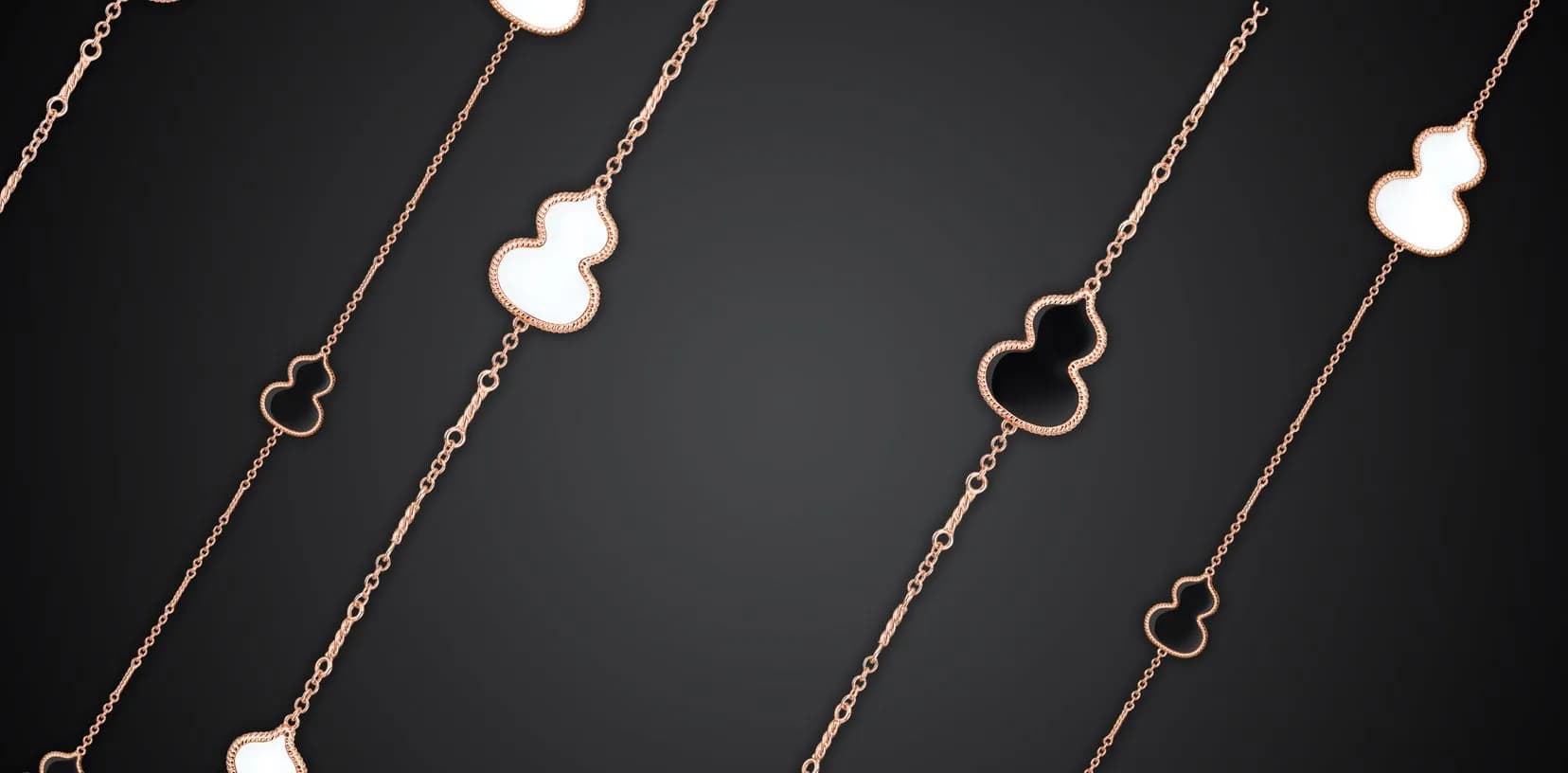
Qeelin, owned by Kering, built its identity on culturally specific motifs — the Wulu gourd and the Bo Bo panda — that are distinctive enough to be recognisable but simple enough in silhouette to be approximated by counterfeiters. Because the brand has a smaller, more specialised following than heritage houses like Cartier, fewer buyers know exactly what to check, which makes due diligence more important rather than less.
The Wulu carries meaning that matters to authentication. The double gourd is a traditional Chinese symbol of good fortune and protection, and Qeelin's designs follow proportions drawn from that tradition rather than from arbitrary styling. Counterfeiters copying from photographs rather than from the cultural reference tend to produce shapes that are close but subtly wrong — and buyers unfamiliar with the reference have no instinct for what "wrong" looks like.
This is the central authentication challenge with Qeelin: the tells are proportional rather than textual. There is no misspelled wordmark to catch. You are comparing curves against a reference, which means having a genuine reference image open while you inspect is not optional.
The Wulu Silhouette — Proportion and Symmetry
The Wulu's double-gourd shape is deceptively hard to get exactly right.
Proportions: The two lobes should follow Qeelin's specific ratio, with the upper lobe smaller than the lower and the waist between them falling at a consistent point. Genuine pieces maintain this silhouette across the collection regardless of size. A noticeably lopsided gourd, a waist sitting too high or too low, or lobes closer to equal in size are all common fake tells.
Surface finish: Smoothly polished with no visible casting seams and no rough transition between the lobes. On gold pieces the polish is even across the full curve, including the inner waist where a buffing wheel reaches least easily — counterfeiters frequently leave this area dull.
Symmetry: Viewed from the front, the left and right profiles should mirror each other. Rotate the piece and the silhouette should stay consistent — a Wulu is a body of revolution, and fakes cast from a two-part mould often show a subtle flattening on two opposing sides.
Movement: On pieces where the Wulu charm swings or rotates, the motion should be smooth and free, not stiff or catching. The bail or hinge should show the same finish quality as the body.
Fake tells: Visible mould seam running vertically through the lobes. A dull or unfinished inner waist. Lobes that read as two stacked spheres rather than a continuous gourd curve. Stiff or gritty movement on articulated pieces.
The Bo Bo Panda — Detail Precision
The Bo Bo motif relies on small, precise detailing — ears, face markings, limb proportions — that is difficult to replicate exactly at small scale.
Authentic: Facial and body detailing is crisp under magnification, with defined edges to each feature rather than soft transitions. Where enamel or lacquer provides the panda's black markings, colour is evenly applied with clean boundaries, sitting flush with the surrounding metal. Ear placement and limb proportions match documented examples of the same reference.
Fake tells: Soft or blurred detailing from imprecise casting, most visible around the eyes and ears. Enamel bleeding past its intended boundary, or sitting proud of the metal surface. Uneven colour coverage with thin patches. Ears set too high, too low, or at differing angles — a frequent error because small asymmetries are hard to see without a reference.
Enamel quality
Authentic: The enamel surface is glassy and even, with no pitting or bubbling under magnification. It sits level with the metal channel that contains it.
Fake tells: Pinholes or bubbles in the enamel surface. A matte or plasticky appearance rather than a glassy one, indicating painted lacquer substituted for fired enamel.
Hallmarks and Metal Stamps
Genuine Qeelin pieces carry standard fine jewellery hallmarks — 750 for 18k gold, plus relevant assay marks — alongside a Qeelin maker's mark, typically on the reverse or an inconspicuous edge.
Authentic: Laser-engraved with clean, sharp character walls and consistent depth. The purity stamp matches the claimed metal. Positioning is consistent with documented genuine examples for that specific style, and all marks share the same character style, indicating a single marking operation.
Fake tells: Shallow or acid-etched marks with a rough floor. A missing purity stamp, or a purity stamp inconsistent with the metal's behaviour and weight. Marks placed where the reference shows none, or absent where the reference shows them. Differing character styles between the purity mark and the maker's mark.
Gold verification
Authentic: 18k gold is non-magnetic and carries substantial weight for its size. Tone is consistent across every surface including recesses and the reverse.
Fake tells: Any magnetic response, which is conclusive. Tone shifting at edges and high-contact points, indicating plating over base metal. Weight noticeably light for the piece's visual volume.
Certification and Packaging
Higher-value Qeelin pieces, especially those with diamonds or precious stones, ship with authentication paperwork and branded packaging.
Authentic: Stone certification, where present, is issued by a recognised lab and can be verified against that lab's database. Certificate details — carat, colour, clarity, measurements — match the physical stone. Packaging print quality is sharp with correct typography.
Fake tells: Certificates from unrecognised labs, or from a named lab whose database has no matching record. Certificate details that do not match the stone in hand. Packaging with blurred printing or incorrect letter spacing.
A caution: packaging and paperwork are the cheapest elements to reproduce and circulate separately from the pieces they originally accompanied. They support a conclusion the physical checks have already reached; they never substitute for one.
Quick Authentication Checklist
- Wulu silhouette: correct lobe ratio with a smaller upper lobe, waist at the right height, symmetric under rotation, no mould seam
- Surface: even polish including the inner waist, no casting seams
- Bo Bo detailing: crisp features under magnification, enamel flush and evenly bounded, correct ear placement
- Hallmark: laser-engraved with clean walls, correct purity, consistent character style, correctly positioned
- Gold: non-magnetic, substantial weight, consistent tone into recesses
- Certification: verifiable against the issuing lab, matching the physical stone
FAQ
Is Qeelin jewellery commonly counterfeited?
Yes, particularly the Wulu and Bo Bo lines, which have strong recognition and resale demand across Asia and a growing Western market. The brand's relatively niche recognition compared with Cartier or Van Cleef means fewer buyers know the exact authentication points — which is precisely what counterfeiters rely on.
What is the hardest part of the Wulu to fake convincingly?
The exact proportion between the two lobes. It looks simple, but Qeelin's silhouette follows a specific ratio rooted in the traditional gourd form. Casual approximations look slightly off in a way that is easy to miss without a reference image and obvious once compared side by side. Always inspect with a genuine reference open.
Does Qeelin jewellery hold resale value?
Reasonably well for the more recognisable Wulu and Bo Bo pieces, particularly in gold with diamond accents. As with any resale jewellery purchase, verifying authenticity and any stone certification before buying protects the resale value you are paying for.
Can I authenticate Qeelin from photographs?
Partially. Silhouette proportion, symmetry, enamel boundaries, and hallmark positioning are assessable from good photographs taken against a reference. Polish quality in recesses, weight, magnetism, and enamel surface texture require the piece in hand. Because Qeelin's tells are proportional rather than textual, photograph quality matters more here than in most categories — request straight-on shots rather than angled ones.
How much does professional Qeelin authentication cost?
Photo-based authentication typically runs $30 for jewelry authentication with a 24-hour turnaround, which is proportionate for pieces generally trading between $1,000 and $10,000. Given how few buyers know this brand's specific tells, third-party verification carries more practical value here than in better-documented categories.