Luxury Handbag Authentication Specialist
Handbag authentication specialist. Has reviewed submissions across Hermès, Chanel, Louis Vuitton, and Dior since 2019.
Last updated October 2026 · Published February 2026 · Contact
The Celine Luggage: Context Before Authentication
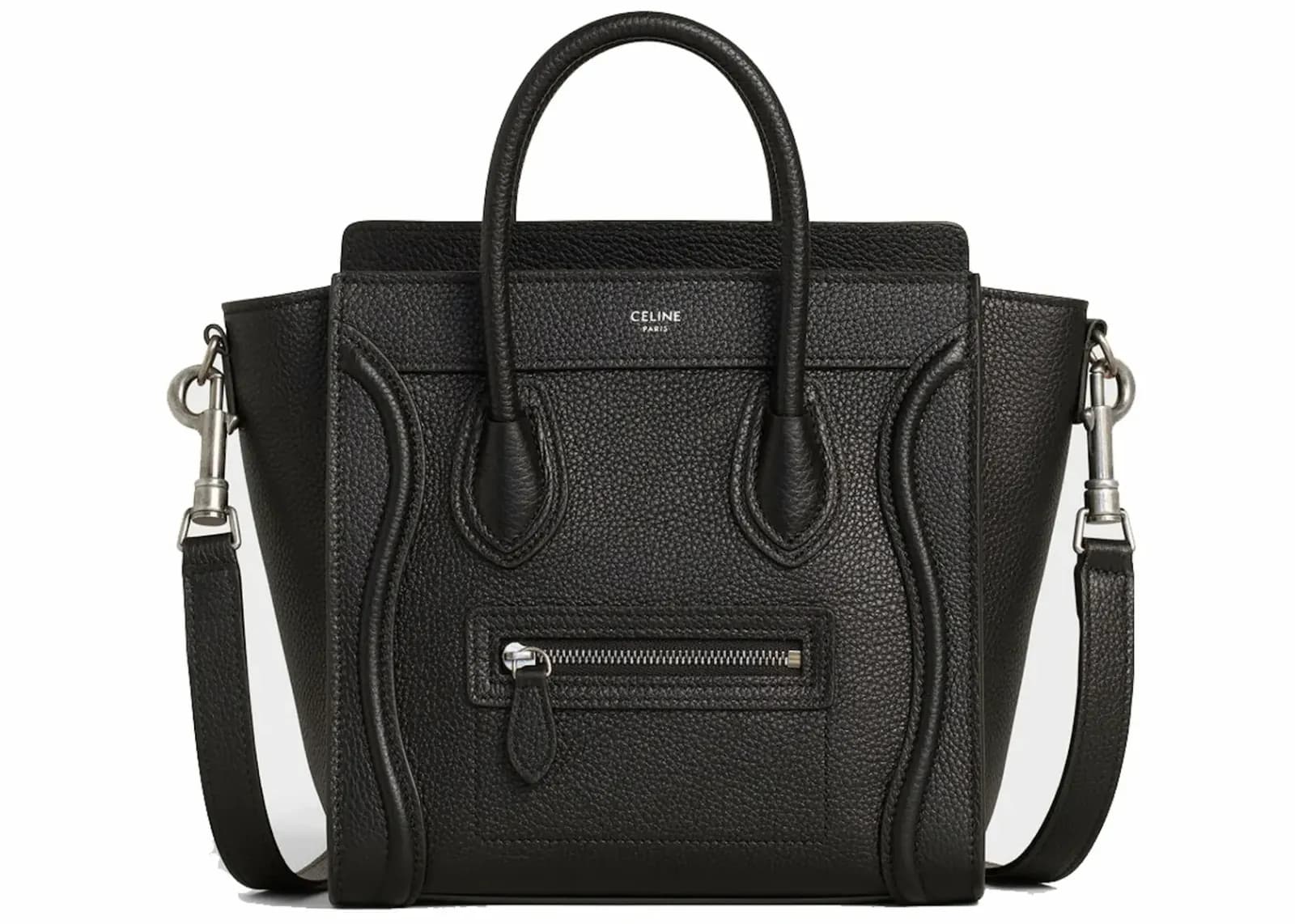
First presented by Phoebe Philo at Céline in 2009 (with retail availability from 2010), the Luggage Tote became one of the defining bag designs of the 2010s. Its signature feature, the front panel that forms what buyers nicknamed the "face" or "smile," was genuinely novel at the time and remains distinctive. The angle that matters for authentication: the Luggage is one of the most heavily counterfeited bags of the last fifteen years, and the better fakes now get the silhouette and even the wing symmetry right. What they still struggle to fake consistently is the small stuff: foil-stamp weight, the format and date of the interior code, and whether the zipper pull carries a third-party hardware maker's mark it shouldn't. If minimalist structured totes are your focus, our Polène bag guide covers a newer house working in a similar vein.
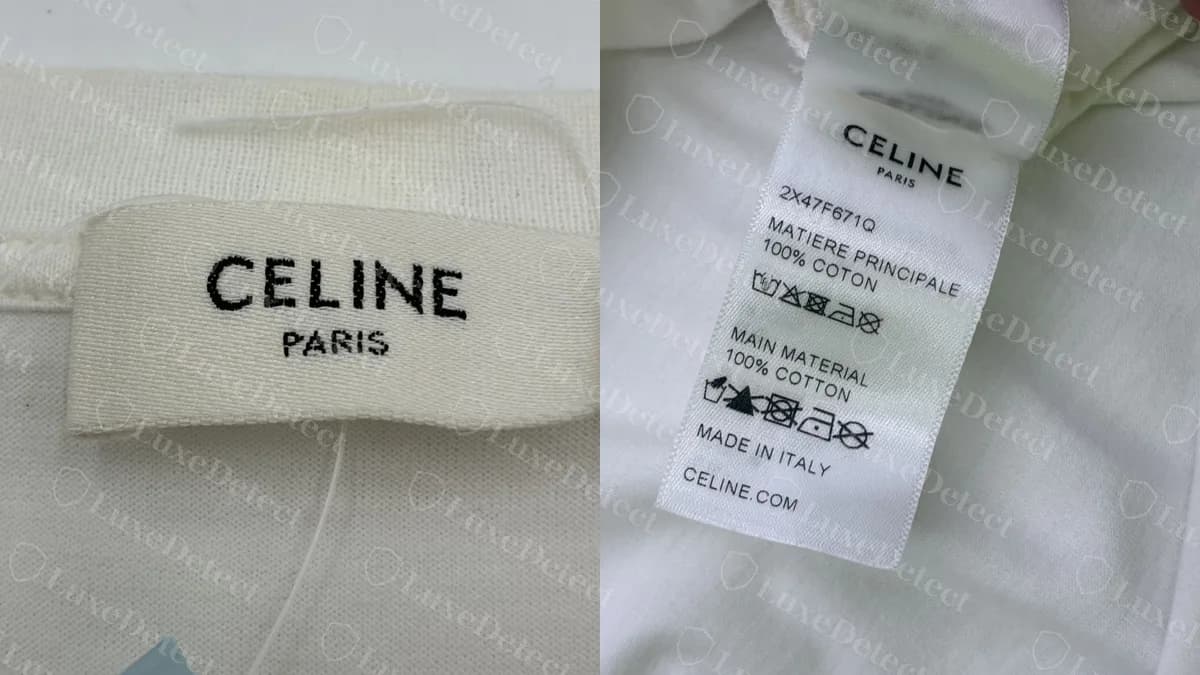
One crucial detail before any authentication: Céline (with the accent) changed its brand name to Celine (no accent) in 2018 under new creative director Hedi Slimane. A bag marked "CÉLINE PARIS" with an accent is either pre-2018 or worth a second look if you're examining a bag sold as 2018-or-later stock. The two eras are both authentic; what's wrong is when the name doesn't match the claimed era. But don't treat a correct accent as proof on its own — convincing fakes copy the accent correctly too, as the checkpoint below shows.
What to check, ranked by reliability
| Checkpoint | Reliability | What it tells you |
|---|---|---|
| 3. The Interior Serial / Date Code Tag | ★★★★★ | A malformed code or an impossible date is a strong flag; most fakes carry a believable code, so a clean one clears nothing. |
| 1. The Interior "CÉLINE PARIS" / "CELINE PARIS" Stamp | ★★★★★ | Foil weight and edge crispness catch fakes that already copy the accent correctly. |
| 2. The Zipper Pull Tab and Hardware | ★★★★★ | A branded third-party mark on the pull is a strong flag, but confirm with the other checks first. |
| 4. Leather Grain, Base Feet, and Stitching | ★★★★★ | Useful for cross-referencing quality; wear changes grain and stitching, so compare against a verified pair. |
| Model Reference Before You Start | ★★★★★ | Rules out a mislabelled Phantom, Belt, or Triomphe; will not catch a well-made Luggage fake. |
| What the Box and Dust Bag Do and Do Not Prove | ★★★★★ | Packaging is context only — useful for cross-referencing, never as evidence. |
Model Reference Before You Start
Authentic Luggage Totes were produced in several sizes and material combinations. Confirm the listing matches a recognized configuration before going further:
- Nano / Micro: roughly 20 cm wide — the smallest version
- Mini: roughly 28 cm — the most common collector's size
- Small: roughly 33 cm
- Medium / Large: roughly 36–41 cm
- Leathers: smooth calfskin, grained (pebbled) calfskin, suede, and various exotic or seasonal colorways in limited runs
The Luggage is also frequently confused with the Phantom (exterior zip pockets on the sides, a flatter front panel) and, on later listings, the Belt or Triomphe bags, which share almost none of the Luggage's construction. If a seller calls a Phantom a "Luggage," that's either a mislabel or worth double-checking the rest of the listing. The construction details below apply to genuine Luggage bags across sizes and leathers, though proportions scale accordingly. For another structured tote with its own frequently-confused sibling models, see our Bottega Veneta Jodie guide.
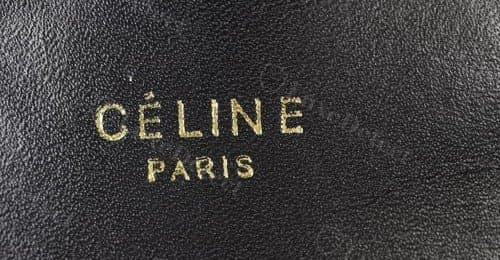
The Interior "CÉLINE PARIS" / "CELINE PARIS" Stamp
This is the first thing to check and the hardest for a counterfeiter to get exactly right, because it isn't about which accent is present, it's about how the foil is applied.
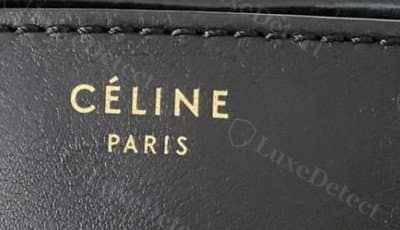
On an authentic bag the gold foil stamp is thin, evenly weighted, and crisp at the edges of every letter, whether it's reading "CÉLINE PARIS" (pre-2018) or "CELINE PARIS" (2018 onward). Letter spacing is even and each character sits at the same baseline and height. The proprietary typeface (based on a 1930s Nebiolo face called Semplicità) has a distinctive "N" with a sharp, angled diagonal leg rather than the soft curve you'd see in a generic sans-serif.
| Element | Authentic | Counterfeit |
|---|---|---|
| Foil weight | Thin, even stroke width across every letter | Noticeably thicker or heavier, especially on curves |
| Edge quality | Crisp, clean edges, no bleed into the leather grain | Grainy or slightly smudged foil edge |
| Letter spacing | Even, generous | Often tighter or cramped |
| The "N" | Sharp angled diagonal leg | Frequently a plain, rounded N |
| Accent (pre-2018 stock) | Present and correctly placed over the É | Can be present and correct on a good fake — don't rely on it alone |
Red flag
A stamp where the letters look noticeably heavier or "bolder" than a verified reference, with rough or smudged foil edges under macro photography, even if the accent and wording are otherwise correct. Convincing fakes now copy the accent correctly, so font weight and foil crispness, not the accent alone, is the more reliable tell.
The Zipper Pull Tab and Hardware
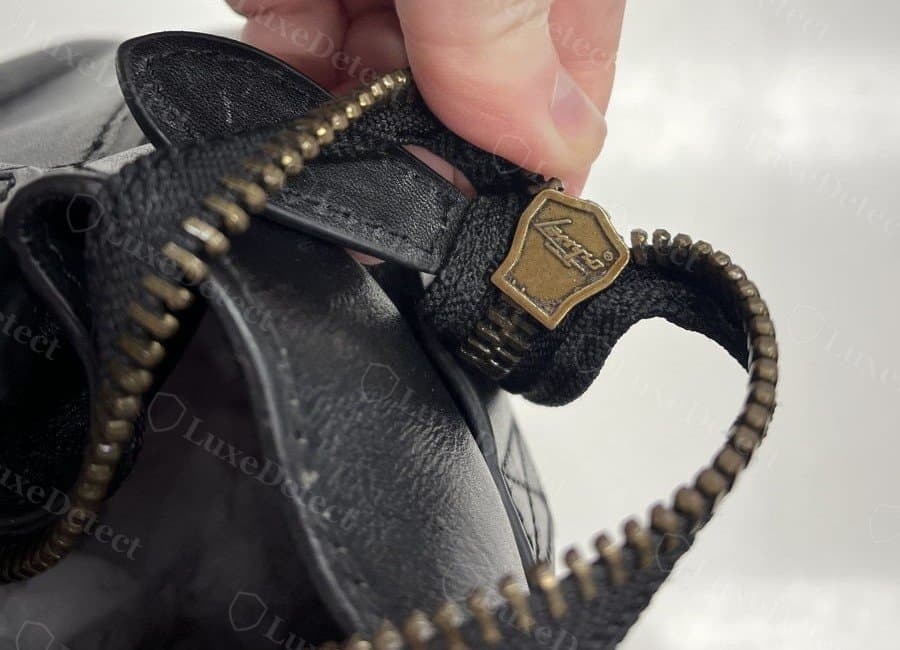
The Luggage's main zipper pull is a rounded, mushroom-shaped leather tab attached with a small metal loop. On genuine production, that tab and the hardware around it carry no visible third-party branding — Celine's own hardware suppliers stamp their marks in places you don't see when the bag is closed, not on the pull tab itself.
Red flag
A zipper pull where the metal loop or slider is stamped with a visible hardware manufacturer's logo (for example, a shield-shaped "Lampo" mark, a legitimate Italian zipper maker used across the industry). Seeing a third-party zipper brand exposed on the pull itself is inconsistent with how Celine finishes this bag — genuine pulls show plain, unbranded metal at this position.
Worth knowing
Lampo and similar manufacturers (YKK, Riri, Opti) supply zippers to many legitimate luxury houses, so a Lampo-marked zipper is not automatically fake on every brand. The tell here is specific to the Luggage: an unbranded pull is the norm, so a branded one at this exact spot is worth treating as a flag pending closer inspection, not an instant condemnation on that mark alone.
The Interior Serial / Date Code Tag
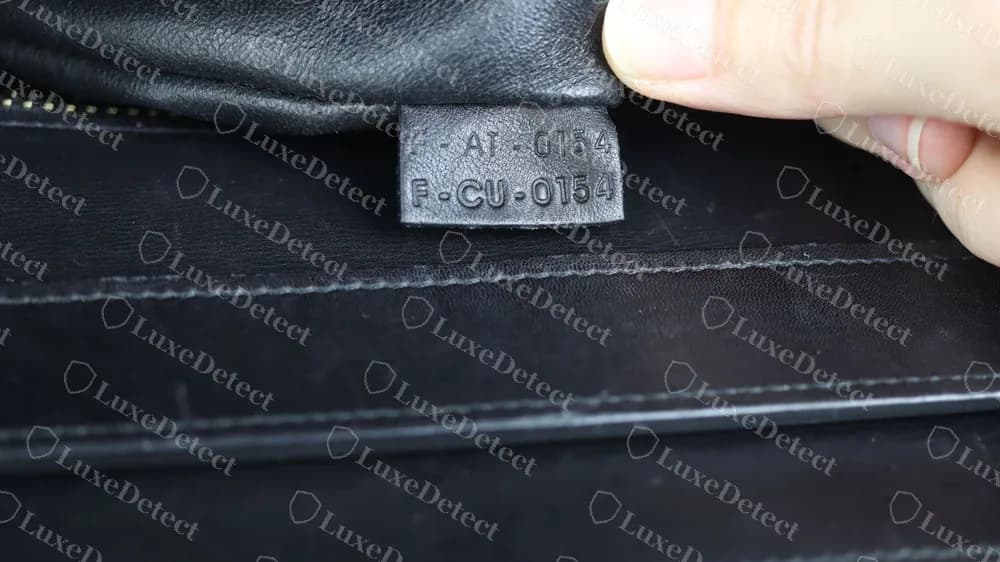
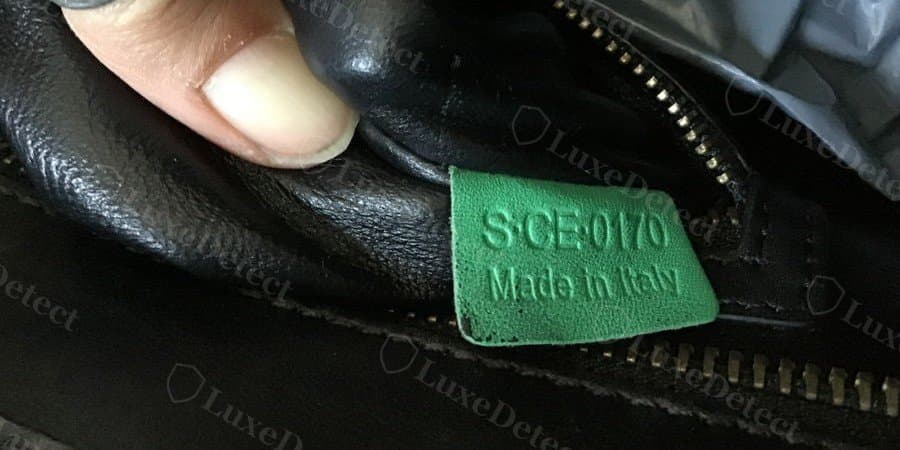
Since about 2009, Celine date codes follow the format one letter, dash, two letters, dash, four digits (e.g. S-CU-3196). Every modern code in our own orders uses it, from older Luggage totes through recent Nano Luggage bags (S-GA-4104) and post-2018 Triomphe bags (F-RG-2252). Treat any claim that newer bags use a bare four-digit code with caution; we have not seen one on a genuine bag. Older Céline bags, made before about 2009, carry a different marking such as MC97/2, CE00/15 or M14, so a vintage piece without the X-XX-#### shape is not failing this check.
On a Luggage the code is usually embossed on a small leather tab sewn inside the main compartment. The tab is often the exterior colour rather than the lining colour (a blue tab on a khaki lining on a genuine Micro Luggage, for example), and some genuine bags have the code pressed straight into the lining, or even printed in ink on a suede lining, with no tab at all. So the tab's colour or material is not a tell. The code itself is.
The four digits are a production date. Digits 1 and 3 give the week (the month before mid-2014) and digits 2 and 4 the year: S-CU-3196 is week 39 of 2016, S-GA-4104 is week 40 of 2014, and F-RG-2252 is week 25 of 2022. On the genuine bags we checked, the date matched the bag's era: every Phoebe Philo-era Luggage read 2010 to 2018. A fake can carry a perfectly plausible date, though.
| Element | Authentic | Counterfeit |
|---|---|---|
| Code format | X-XX-#### (letter, two letters, four digits), the dashes often short enough to look like dots | An extra character after the digits, the wrong digit count, the groups in a different order, or no separator at all |
| Date | Week 01 to 53 (or month 01 to 12 before mid-2014) of a year the model existed | A period of 00 or above 53, a year before about 2009 or in the future, or a date before the model launched |
| Embossing | Soft, consistent depth, debossed into the leather | Shallow, uneven, or "printed" look rather than pressed |
Red flag
A code that breaks the X-XX-#### shape (a trailing letter, three digits, the groups in the wrong order) or whose digits give no possible date. A malformed code is a strong sign of a fake on its own. A tab in a different colour or material from the lining is not: genuine tabs are often cut from the exterior leather.
Worth knowing
Celine codes are batch codes, not serial numbers. Identical codes on two bags are normal, and fakes copy codes from genuine bags. Most fakes we see carry a well-formed code with a believable date, so a clean decode is supporting evidence at best. Use the code to rule a bag out, never to clear it, and check it with our [Celine date code checker](/celine-date-code).
Leather Grain, Base Feet, and Stitching
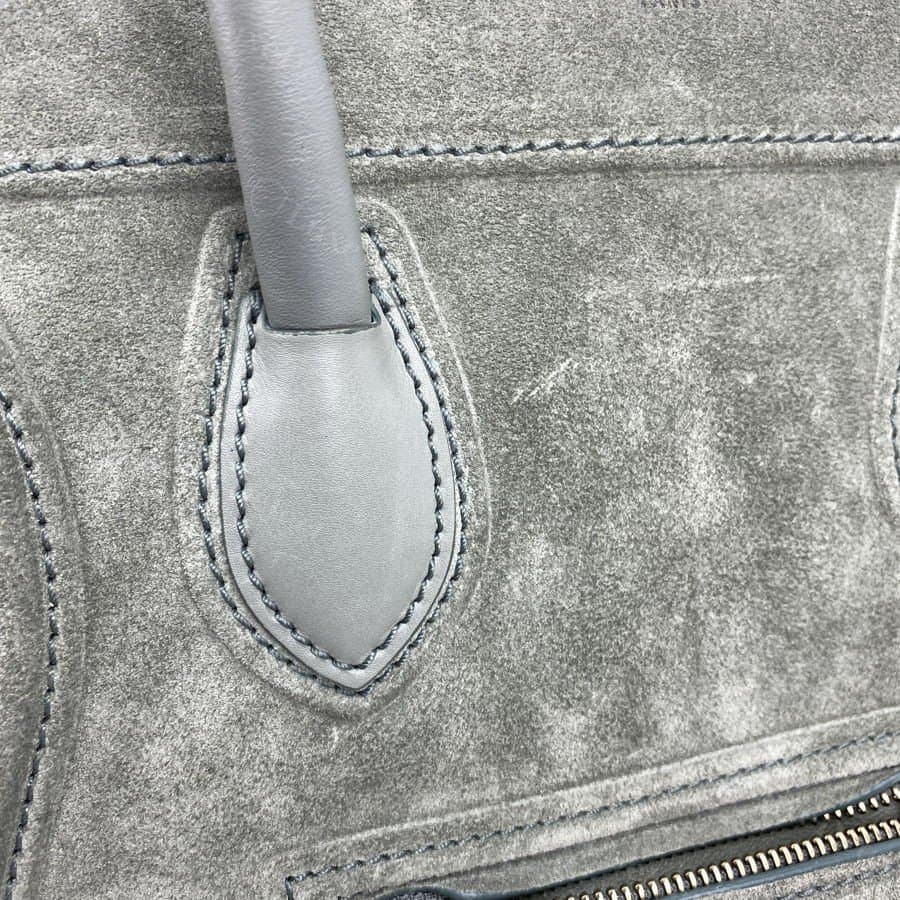
Authentic Luggage bags use structured calfskin (smooth or pebbled/grained) or suede, with a consistent grain pattern across every panel — no patch should look flatter, shinier, or more textured than its neighbor. The four base studs are bare metal, gold or palladium plated to match the rest of the hardware, set into leather corners with clean, even stitching and no visible adhesive squeeze-out along the seam.
Stitch density and spacing should be identical from panel to panel: roughly even gaps, straight lines that don't wander, and thread that matches the leather color (or is a deliberate, clean contrast on colorblocked seasonal pieces). Loose threads, visibly uneven stitch length, or glue residue along a seam are all inconsistent with factory-finished construction, though a heavily used bag can show some of this from wear alone, so weigh it alongside the other checkpoints rather than in isolation.
Worth knowing
Grain and stitching differences are easiest to spot up close; wear and lighting also change how they look, so compare them against a verified Luggage in the same leather rather than judging one panel on its own.
What the Box and Dust Bag Do and Do Not Prove
Packaging is context, not evidence. A correct dust bag, box, and care card tell you the seller has (or had) access to genuine packaging, which is easy to source separately from a genuine bag. They're useful for cross-referencing a story (does the packaging generation match the bag's claimed production era?) but prove nothing about the bag inside on their own.
Quick Authentication Checklist
- Check the interior stamp under strong light or a macro photo — look at foil weight and edge crispness, not just the accent.
- Inspect the zipper pull for any exposed third-party hardware branding.
- Confirm the interior code follows the X-XX-#### Celine format and decodes to a possible date for a Luggage.
- Compare leather grain and stitching consistency across every panel.
- Confirm the model, size, and leather against a recognized configuration.
- Treat box and dust bag as context only.
Two or more failures means walk away. A single clear failure on the interior stamp, or a malformed date code, is on its own sufficient to reject the bag.
When to Get a Professional Opinion
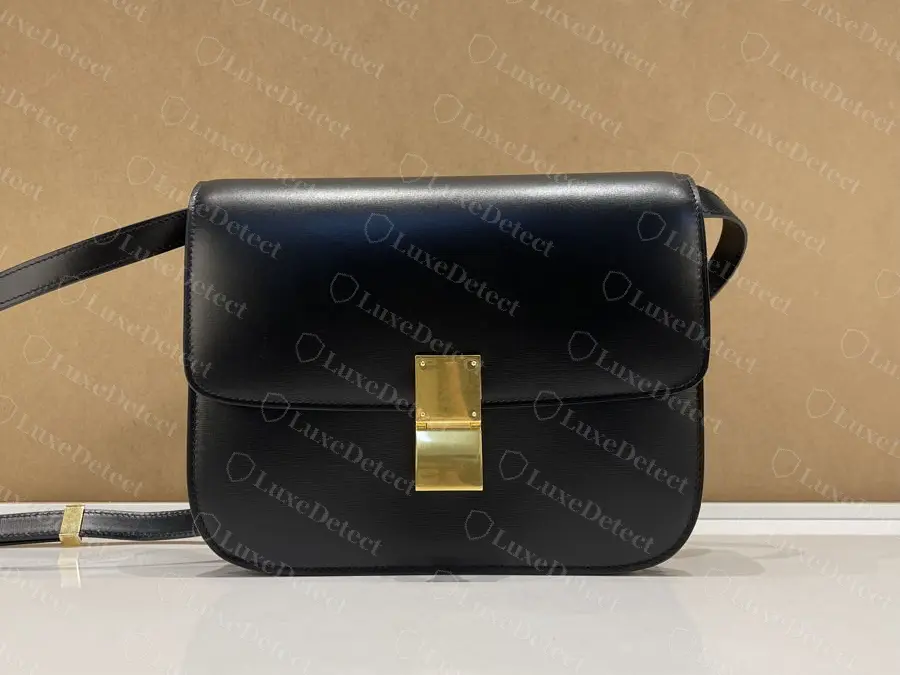
On the Luggage the silhouette itself is no longer a reliable tell: the best fakes nail the wings, the smile curve, and the overall proportions, so a matching shape proves nothing on its own. Where this guide is limited: it's built around a limited set of verified examples pulled from a larger archive, not a database of every leather colorway and hardware finish Celine has produced since 2010, so an unusual combination deserves extra scrutiny rather than an automatic pass or fail. The same is true of The Row's minimalist bag lineup, where our The Row bag model guide covers how to tell similarly understated models apart.
Photo-based authentication suits this bag well. Our handbag authenticators review submissions from $25 with 24-hour turnaround and return a Certificate of Authenticity. Send a macro shot of the interior stamp, the zipper pull and hardware, the serial tag, and the bag's overall shape from the front and side.
FAQ
Why did Céline change to Celine in 2018?
When Hedi Slimane became creative director in 2018, the brand dropped the accent and changed the logo design as part of a broader rebranding. A genuine pre-2018 bag has the accent; a genuine post-2018 bag does not. Neither is "more authentic" than the other, and the accent alone isn't a reliable tell since well-made fakes copy it correctly too.
Where is the serial number on a Celine Luggage bag?
It's usually on a small leather tab inside the main compartment, near a seam. The tab is often the exterior colour rather than the lining colour, and on some bags the code is pressed straight into the lining instead. Since about 2009 the code follows the X-XX-#### format (letter, dash, two letters, dash, four digits), and its four digits give the production week and year. Older Céline bags use a different marking, such as MC97/2.
Is a Celine Luggage without a visible serial number automatically fake?
Not necessarily. Some very early production pieces from 2010–2011 have minimal interior markings. Most bags on the secondary market today were made after serial numbering was standardized, though, so a missing code on a more recent-looking piece warrants extra scrutiny and ideally a professional opinion.
What is the difference between a Luggage and a Phantom?
The Phantom is a variation on the Luggage with visible zip pockets on the exterior sides and a flatter front panel. The authentication points are largely the same, but a Phantom sold as a "Luggage" (or the reverse) is either a genuine mislabel or an attempt to obscure which model is actually being sold.
Does a Lampo-branded zipper always mean a bag is fake?
No. Lampo is a real Italian zipper manufacturer used across the luxury industry, and its branding appears legitimately on many designer bags. The issue on a Celine Luggage specifically is that the pull tab shouldn't show a visible third-party logo at all; genuine pulls are plain. Seeing a Lampo (or similar) mark exposed on the pull is a flag for this specific bag, not a universal counterfeit rule.
What leather types are used for the Luggage?
Smooth calfskin, grained (pebbled) calfskin, suede, and limited exotic or seasonal colorways. The surface texture should be consistent across the entire bag; Phoebe Philo-era pieces are particularly sought after for their supple calfskin quality.
How should I store a Celine Luggage to prevent damage?
Stuff it with tissue paper (not newspaper) to maintain shape, and store it upright in the dust bag, standing on its feet rather than lying on its side, which stresses the handle attachment points over time. Keep it away from direct light and moisture, and treat any water exposure on the calfskin immediately with a soft dry cloth.