Luxury Handbag Authentication Specialist
Luxury leather goods specialist. Works on Italian house construction, hardware, and interior stamping.
Last updated October 2026 · Published February 2026 · Contact
Miu Miu: Prada's Sister Brand with Its Own Authentication Rules
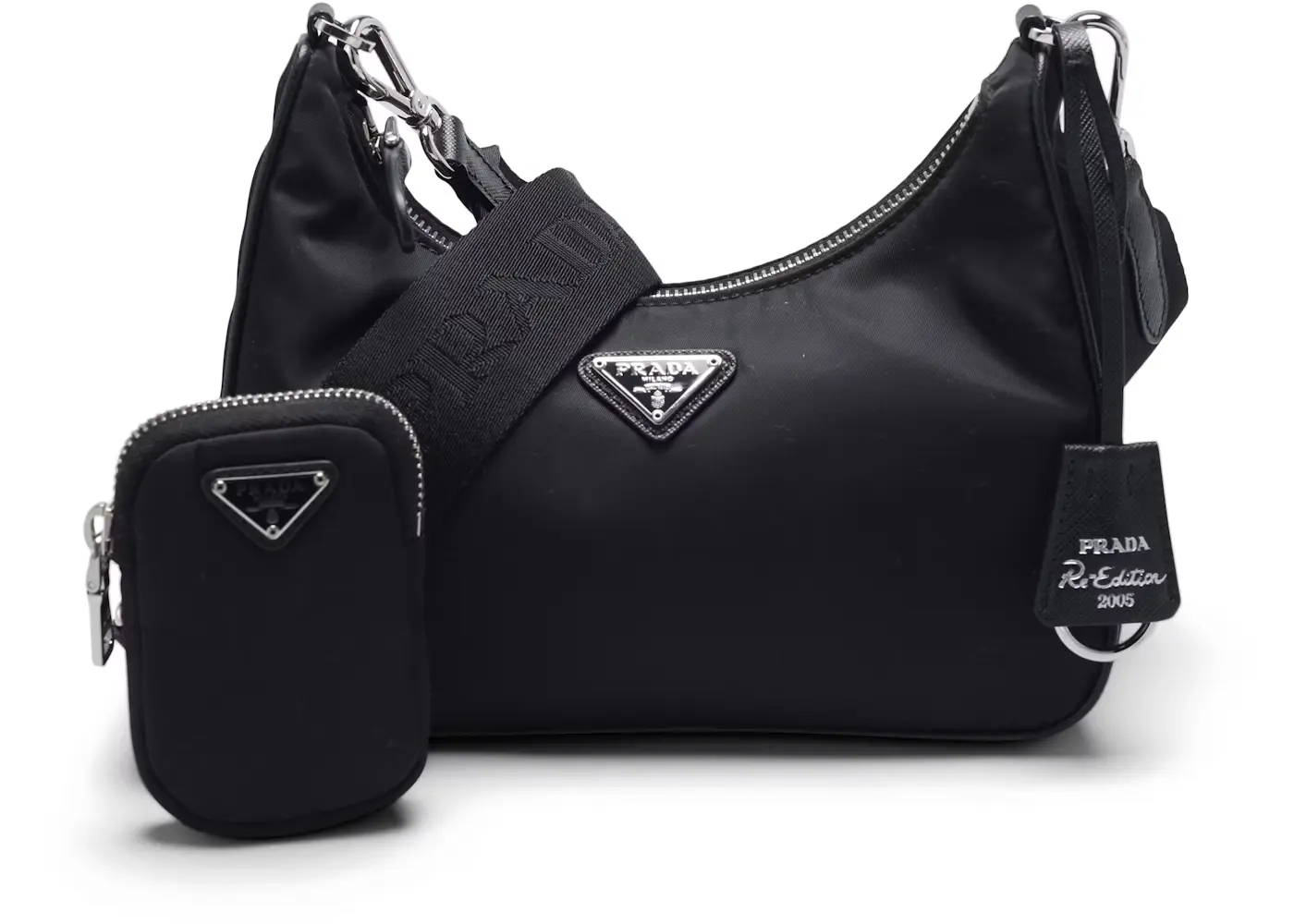
Miu Miu is Miuccia Prada's second label, introduced in 1993. It shares Prada's manufacturing infrastructure and quality standards but operates as a distinct brand with its own design language: softer, more playful, and often more accessible in price point than Prada's mainline. For the mainline equivalent of this shared infrastructure, our Prada Re-Edition 2005 guide covers Prada's own take on the same hardware and stitching standards.
The authentication framework for Miu Miu differs from Prada in several important ways. Most notably, Miu Miu uses a white factory number tag system that Prada doesn't — and the list of legitimate manufacturing countries is longer. Understanding both brands' systems separately prevents confusion.
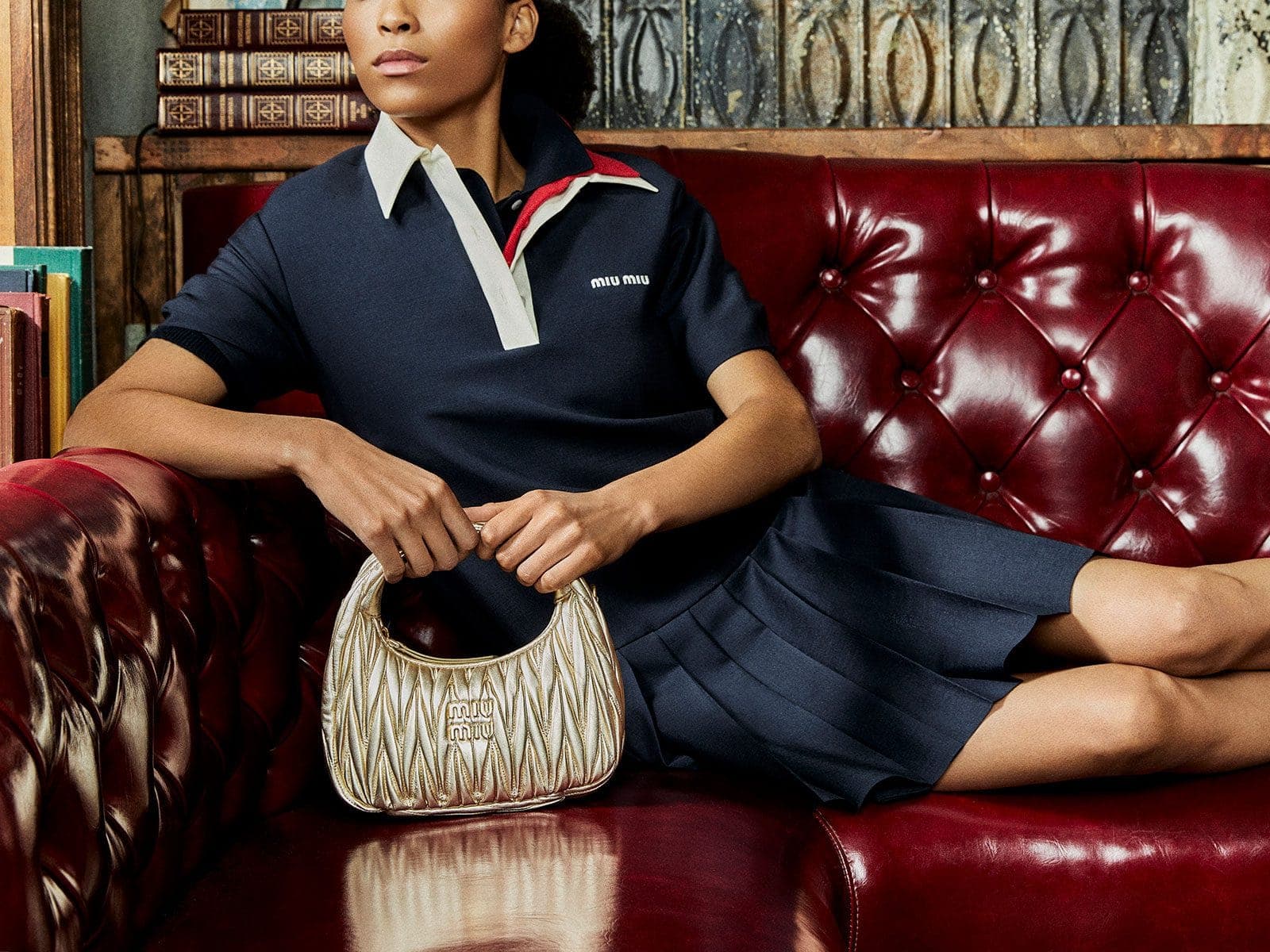
The most commonly faked Miu Miu pieces: the Matelassé shoulder bag, the Arcadie, the Belle bag, and the various nappa leather clutch styles that photograph well for social media. The fakes range from obvious (wrong logo font, plastic smell) to increasingly convincing (correct logo proportions, quality leather, but failing on interior tags).
What to check, ranked by reliability
| Checkpoint | Reliability | What it tells you |
|---|---|---|
| Interior: The Factory Number System | ★★★★★ | A crude woven "MADE IN ITALY" tag in place of the metal logo plate, or "Made in China", settles it. |
| The Miu Miu Logo: Typography Specifics | ★★★★★ | Two "miu"s at different sizes or spacing, or a shallow wandering emboss where raised metal letters belong, is decisive. |
| Hardware | ★★★★★ | A casting seam down the spine, file marks, or hollow weight contradicts Prada-infrastructure hardware. |
| Leather Quality | ★★★★★ | A stiff, plasticky or chemical-smelling hide, or uneven colour at the folds, supports a fake verdict. |
| Stitching | ★★★★★ | Loose or missing stitches at the handle roots and base corroborate, but a good fake gets the seams close. |
| The Matelassé Bag: Model-Specific Notes | ★★★★★ | Saggy, irregular ruching with a hard coated shine flags a fake Matelassé; even plump gathers are expected. |
The Miu Miu Logo: Typography Specifics
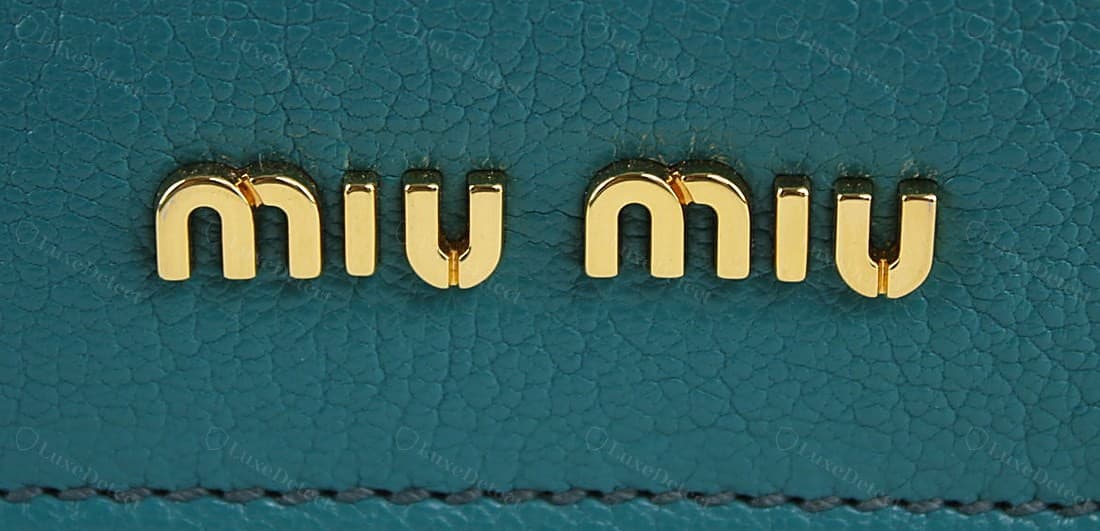
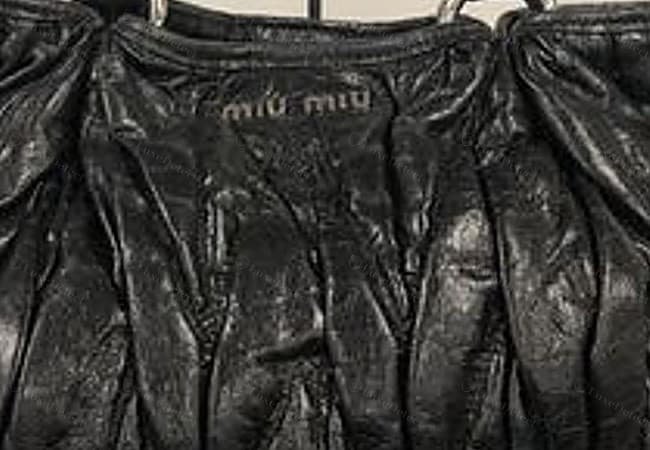
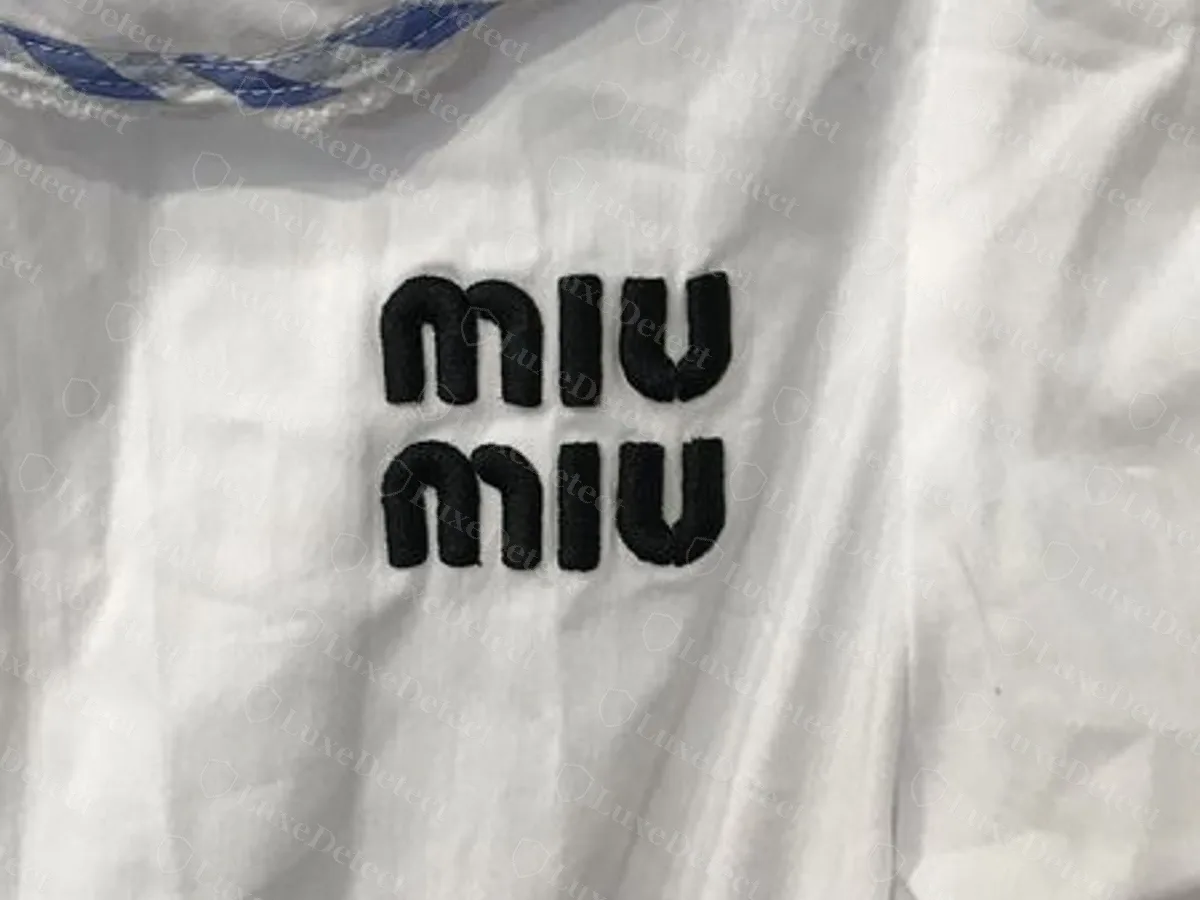
The Miu Miu logo consists of "miu miu" in a distinctive lowercase typeface — the brand name repeats twice. This is the most immediately visible authentication marker, and the place where most fakes fail.
Font characteristics: The authentic Miu Miu typeface has specific proportions. The letters are relatively wide and open, with consistent stroke weight. The two Miu Mius are the same size and spaced with a consistent gap between them.
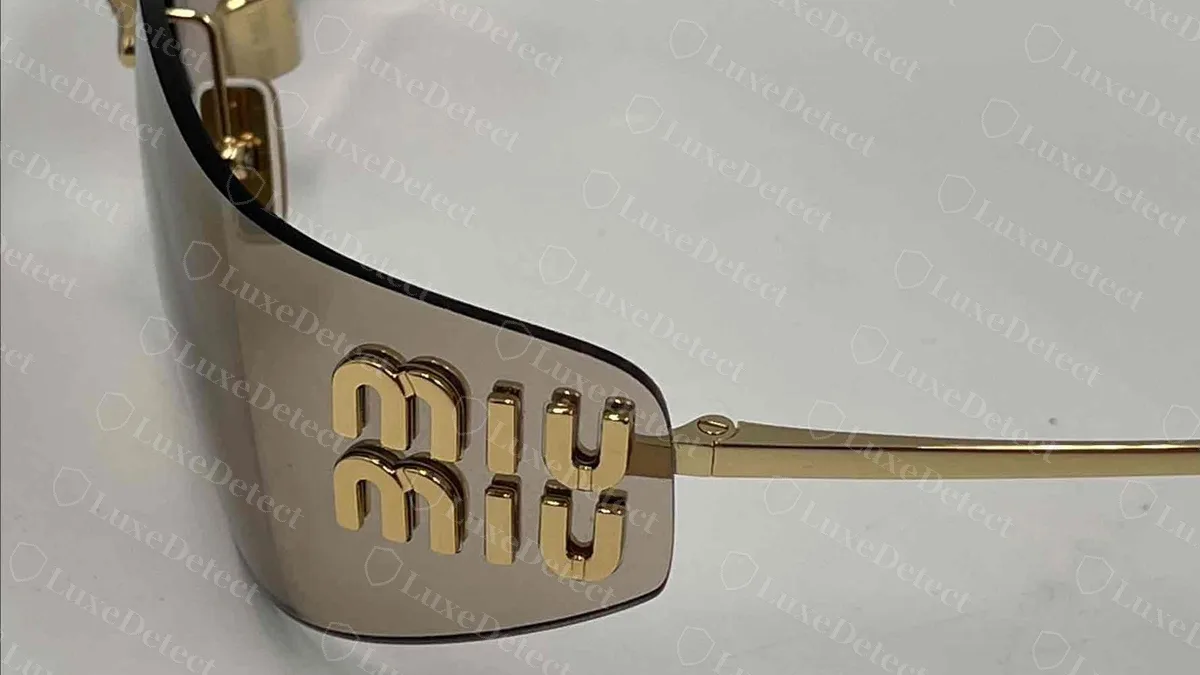
Engraving or embossing depth: On hardware (clasps, plates, zipper pulls), the logo is engraved. The engraving is refined — present and readable but not heavily cut. On leather (interior tags, embossed panels), the impression is clean with consistent depth across all letters.
Common fake failures: Letters at slightly different sizes or angles. "miu" and "miu" with inconsistent spacing between them. Engraving that's too deep and aggressive, or so shallow it's barely visible. The typeface proportions being slightly wrong — letters that are too narrow or too condensed.
Red flag
A logo where the two "miu"s are different sizes, spaced unevenly, or where a raised-metal-letter style has been swapped for a shallow, wandering blind emboss. Miu Miu sets this mark to one specification per bag style; a wrong or sloppy execution is decisive.
Leather Quality
Miu Miu uses natural calfskin leather across most of its bag collection. The quality is consistent with the brand's Prada manufacturing infrastructure — which means it's notably higher than what you'll find on fakes.
Touch test: Authentic Miu Miu leather is soft and has a natural warmth to it. It has a fine, even grain. Fake leather is typically stiffer, feels plasticky or waxy in an artificial way, or has an obvious chemical smell.
Surface consistency: The leather color should be even across the entire bag, without visible lighter or darker patches. Any color inconsistency — particularly visible at stress points or folded areas — indicates a lower quality material.
Nappa leather (for softer styles): Nappa leather on authentic Miu Miu bags is supple and flexible, and the bag moves naturally when you handle it. Fake nappa often doesn't have the same drape and flexibility.
| Element | Authentic | Counterfeit |
|---|---|---|
| Touch | Soft, natural warmth, fine even grain | Stiff, plasticky or waxy, chemical smell |
| Surface color | Even across the whole bag | Visible lighter or darker patches, especially at stress points |
| Nappa drape (softer styles) | Supple, flexible, moves naturally | Stiffer, lacks natural drape |
Hardware
Miu Miu hardware is consistent with Prada manufacturing quality — solid, weighty, and precisely finished.
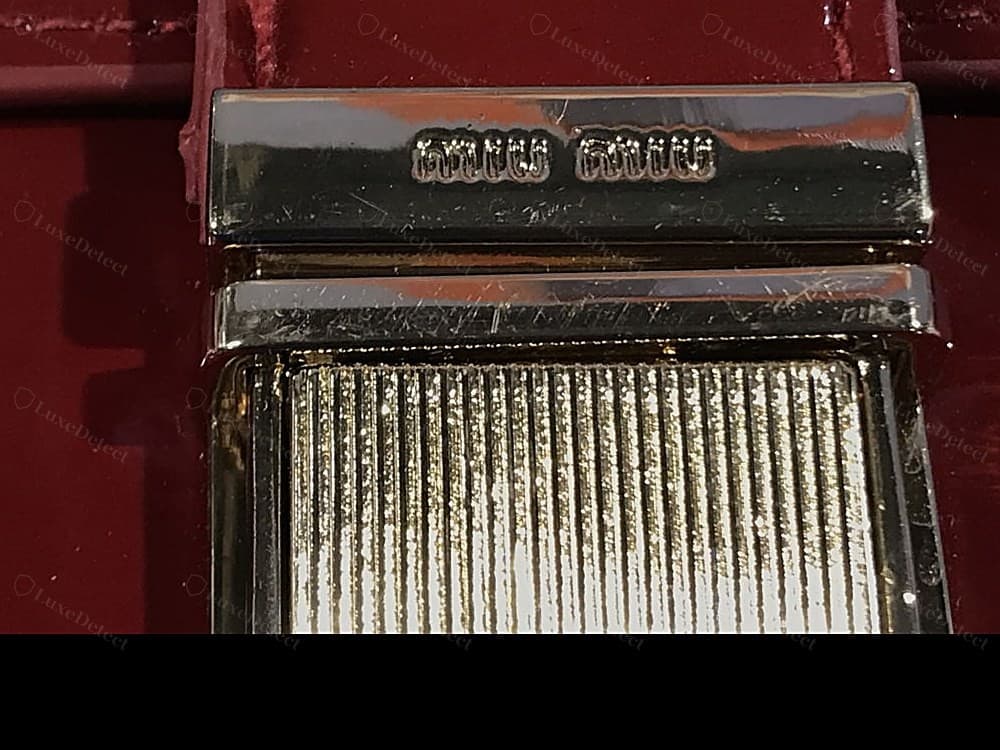
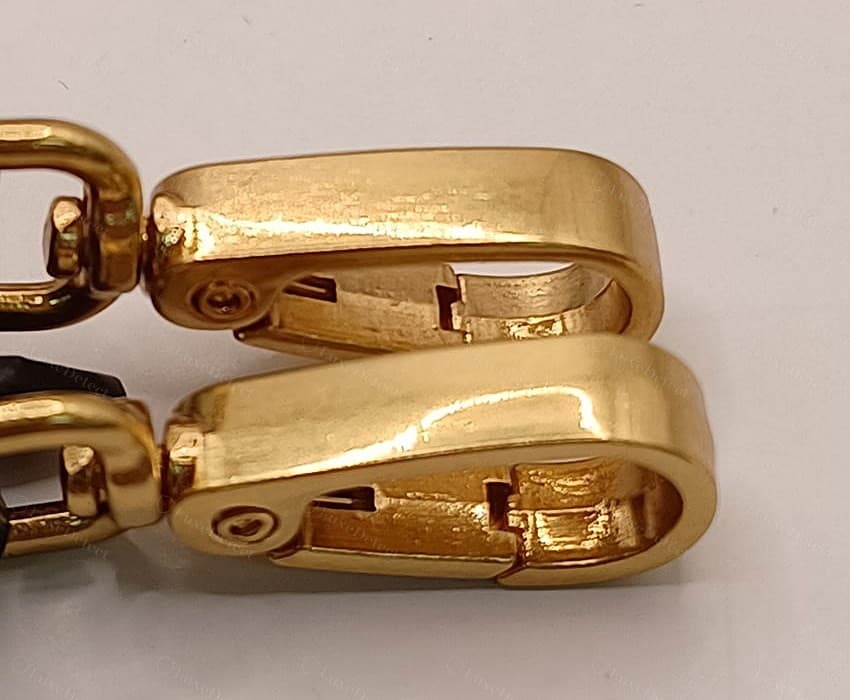
Weight test: Pick up any hardware element — a clasp, a D-ring, a buckle. Authentic hardware is noticeably heavier than fake hardware of the same visual size. Fake hardware often feels hollow.
Logo engraving on hardware: The "miu miu" appears on hardware elements. The engraving should be legible and properly formed. Misshapen letters, blurry edges, or illegible text are fake indicators.
Casting quality: Turn each piece and look at the edges and inner faces. Authentic Miu Miu hardware is cleanly finished all over — no casting seam running down the spine, no file or tool marks, no rough patches. Fakes are cast in cheaper moulds and finished only where a quick glance lands.
Finish consistency: All hardware on the bag should be the same finish — all gold, all silver, or all palladium. Mixed finishes are not an authentic Miu Miu production choice (except for intentional two-tone designs, which are explicitly designed that way). Finish should look even and consistent, not patchy.
Zippers: Zippers should glide smoothly without catching. The zipper pull is branded and consistent with the rest of the hardware.
Stitching
Stitching on authentic Miu Miu bags is tight and consistent. Count the stitches per centimeter along any straight seam — you should find approximately 4–6 stitches per centimeter depending on the leather weight.
Thread color matches the leather it's stitching — no color that visibly contrasts more than intended. Thread should lie flat against the leather surface — not raised, not sinking in.
Check the stitching at stress points: handle attachments, zipper ends, the base of the bag. These are where construction quality is most visible. Loose or missing stitches at stress points indicate a fake.
Interior: The Factory Number System
This is Miu Miu's most distinctive authentication marker. Authentic Miu Miu bags carry these interior markings:
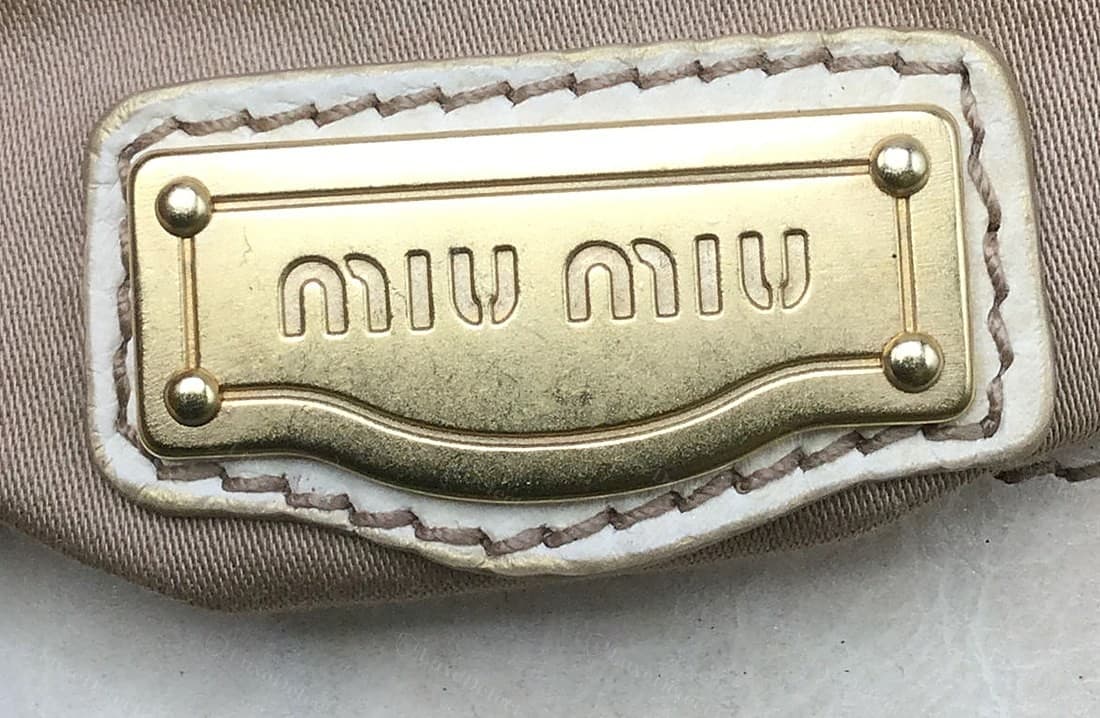
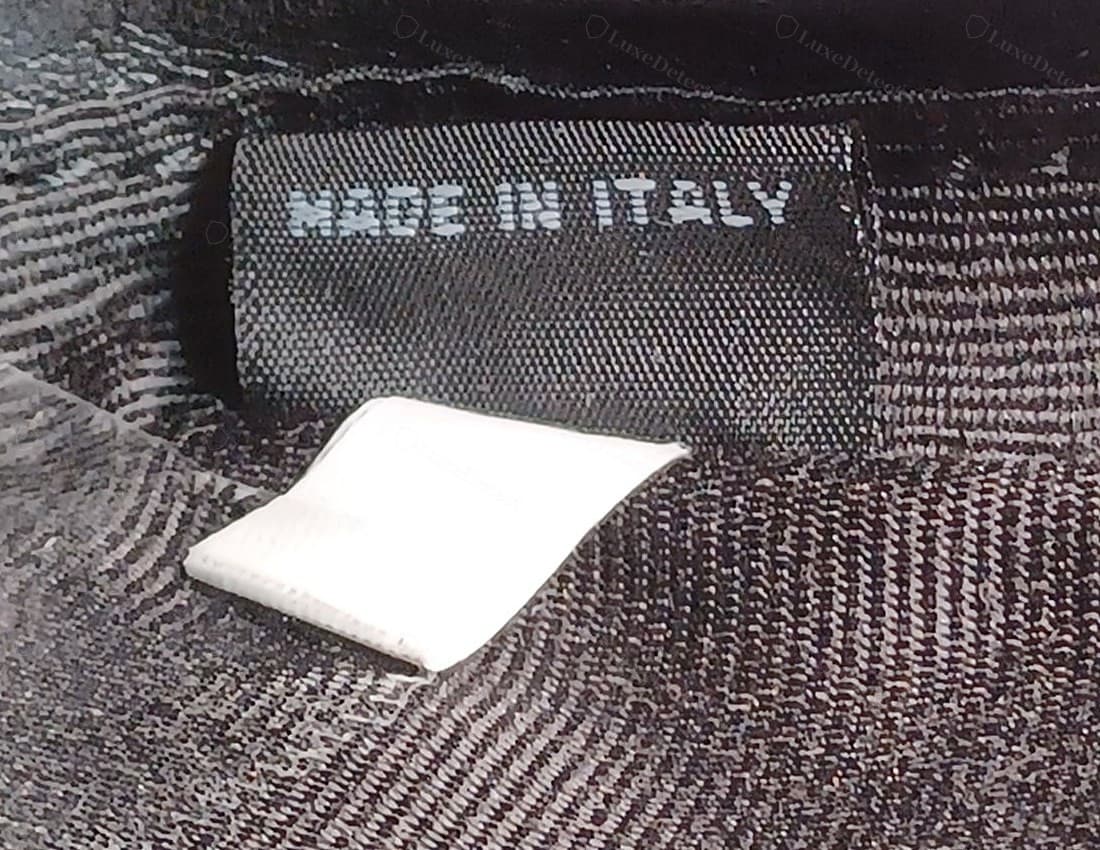
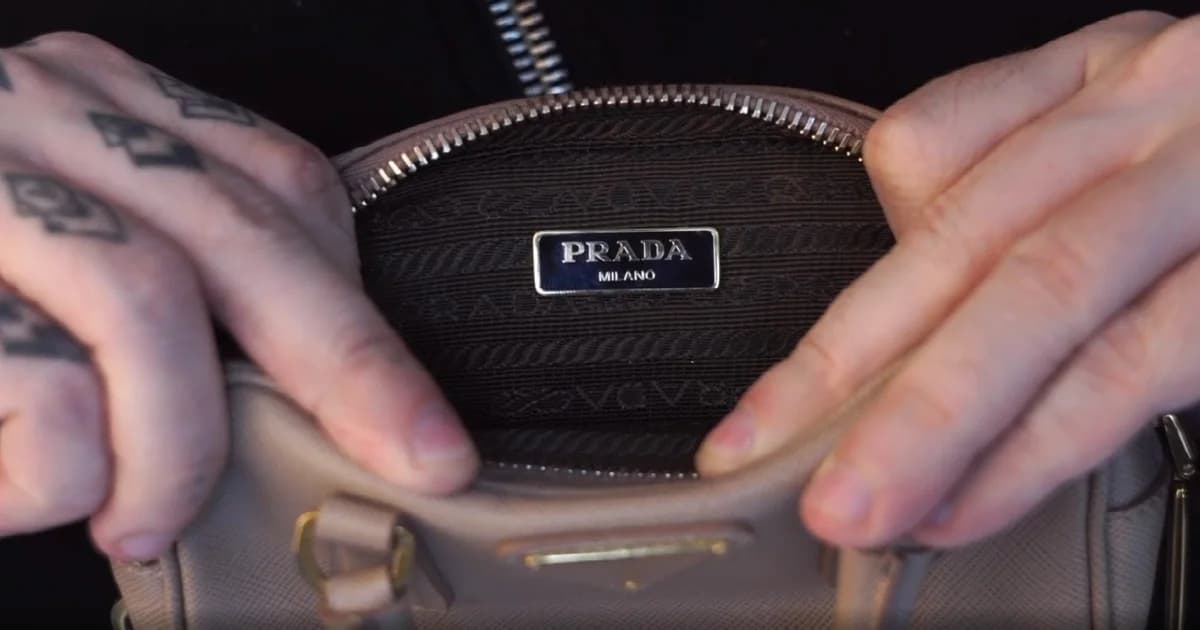
Interior logo plate: Most Miu Miu bags carry a shaped metal plaque on the lining — an engraved border, ball rivets at the corners, "miu miu" embossed into it — sewn onto a small leather patch. The plate is solid, cleanly finished, and the embossing is crisp. A bag that has only a printed or woven cloth tag where the plate should be, or a plate with a soft wrong-font logo and sloppy rivets, is a fake.
White factory number tag: A small white rectangular tag, typically attached near a seam or on the interior lining. It carries a 1–3 digit number only — no other text. This is a factory production number. The tag is clean, straight, and the number is legible. Some fakes don't include this tag at all; others include it but with an incorrect format (too long, wrong material).
Black "Made in" label: A separate label reading the brand name and country of manufacture. Authentic Miu Miu is produced in Italy, Turkey, India, Romania, and Vietnam — all legitimate manufacturing locations. "Made in China" is not an authentic Miu Miu country of origin.
Red flag
An interior "MADE IN ITALY" rendered as a thin, pixelated woven tag with broken letters, in place of the metal logo plate. Genuine Miu Miu bags carry a properly made plate and a cleanly woven or printed origin label; a crude woven substitute is a fake tell.
The lining itself should be a quality material — consistent in color and texture throughout the interior. Cheap or thin lining fabric inconsistent with the bag's exterior quality is a tell.
The Matelassé Bag: Model-Specific Notes
If you're authenticating a Matelassé style (the most popular Miu Miu bag), additional specifics apply:
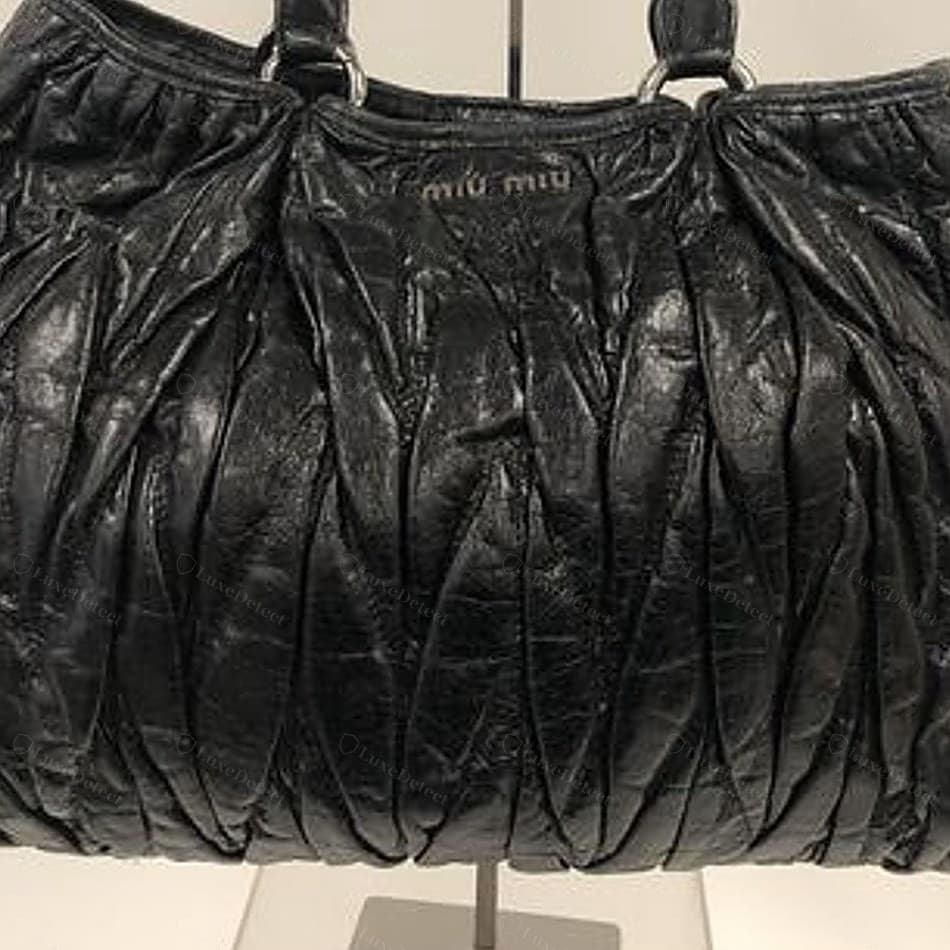
Quilting pattern: The Matelassé uses a soft ruched-leather effect with a plump, even, regular gather. On a genuine bag the ruffles are consistent in scale and the leather is a supple matte-to-soft-sheen nappa. Fakes come out saggy and irregular, with a hard coated shine and deep creasing rather than a controlled ruffle.
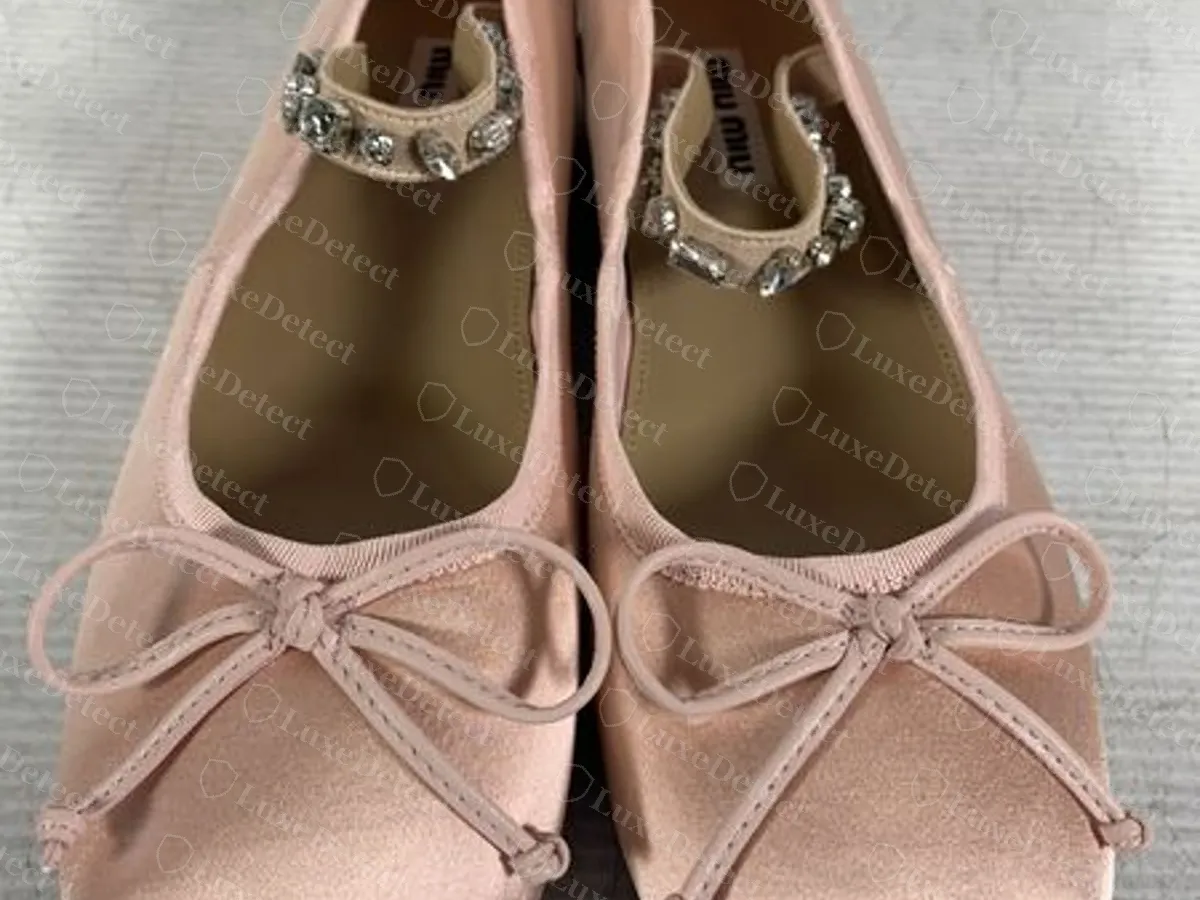
Crystal/rhinestone trim (where present): Some Matelassé versions have crystal embellishments. On authentic bags, the crystals are set precisely and all face the same direction. On fakes, crystals may be slightly tilted, differently sized, or set at inconsistent depths.
Worth knowing
The ruched leather is hard to judge on its own — a good fake in decent leather can look close, so compare it against a verified pair. Weight the interior logo plate and the hardware casting, which counterfeiters get wrong more often, and use the Matelassé texture as corroboration.
Packaging
Authentic Miu Miu bags come with a dust bag bearing the Miu Miu logo in the same typeface as the bag's own branding. The dust bag fabric is typically a light beige or off-white cotton.
A care card is included. Some bags include a numbered certificate — but the numbering should correspond to the bag's factory tag. Pre-printed generic "certificate of authenticity" cards that aren't specific to the individual bag provide no authentication value.
Quick Authentication Checklist
- Logo — "miu miu" in correct lowercase typeface, even sizing and spacing
- Leather — soft natural calfskin, no plastic smell, even grain
- Hardware — heavy, consistent finish, legible logo engraving
- Stitching — 4–6 per cm, thread matches leather, no loose ends
- White factory number tag — present, 1–3 digits only
- "Made in" label — Italy, Turkey, India, Romania, or Vietnam
- Zipper — smooth operation, branded pull
- Lining — quality material, consistent throughout
FAQ
Does Miu Miu make bags outside of Italy?
Yes. Miu Miu's authentic manufacturing countries include Italy, Turkey, India, Romania, and Vietnam. This is broader than many buyers expect. "Made in Turkey" or "Made in Romania" on a Miu Miu bag is not a red flag — it's authentic. The key tells are the white factory number tag (which Miu Miu uses even for bags made outside Italy), the overall construction quality, and the hardware.
What is the white factory number tag for?
It's Miu Miu's internal production tracking system. The number on the tag corresponds to the production facility or run. It's not a serial number that can be looked up; its value for authentication is its presence (fakes often don't include it), correct format (1–3 digits only), and positioning (attached near a seam or on the interior lining, not floating randomly). Prada bags carry the same kind of small numbered tag, and counterfeiters of both brands copy it, so treat it as context rather than proof; our Prada serial number guide covers it in detail.
How does Miu Miu authentication differ from Prada?
Both share manufacturing infrastructure and similar quality markers. The key difference is that Miu Miu has a longer list of legitimate manufacturing countries. Both brands use the same kind of small white factory number tag and neither uses a unique serial number: a Prada card lists the article code, colour and material, not a serial. Prada's list of manufacturing countries skews more toward Italy. Applying Prada's authentication framework to a Miu Miu bag can produce incorrect conclusions; see our Prada Galleria guide for the mainline brand's own system.
Is it normal for Miu Miu hardware to tarnish over time?
Some tarnishing of gold or silver plating is normal with regular use. What's not normal on authentic Miu Miu hardware is rapid peeling, flaking, or discoloration within the first year. If hardware shows obvious degradation on a recently purchased or lightly used bag, that indicates lower-quality plating inconsistent with authentic production.
What Miu Miu styles are most commonly faked?
The Matelassé shoulder bag is by far the most counterfeited Miu Miu style. Also frequently faked: the Arcadie, Belle, and various crystal-embellished versions of the Matelassé. When authenticating these specific models, pay particular attention to the quilting symmetry (Matelassé), the crystal setting precision (embellished versions), and the hardware weight across the board.