Chanel Authentication Specialist
Handbag authentication specialist. Has reviewed submissions across Hermès, Chanel, Louis Vuitton, and Dior since 2019.
Last updated September 2026 · Published June 2026 · Contact
The Classic Flap vs the 2.55: Get This Right First
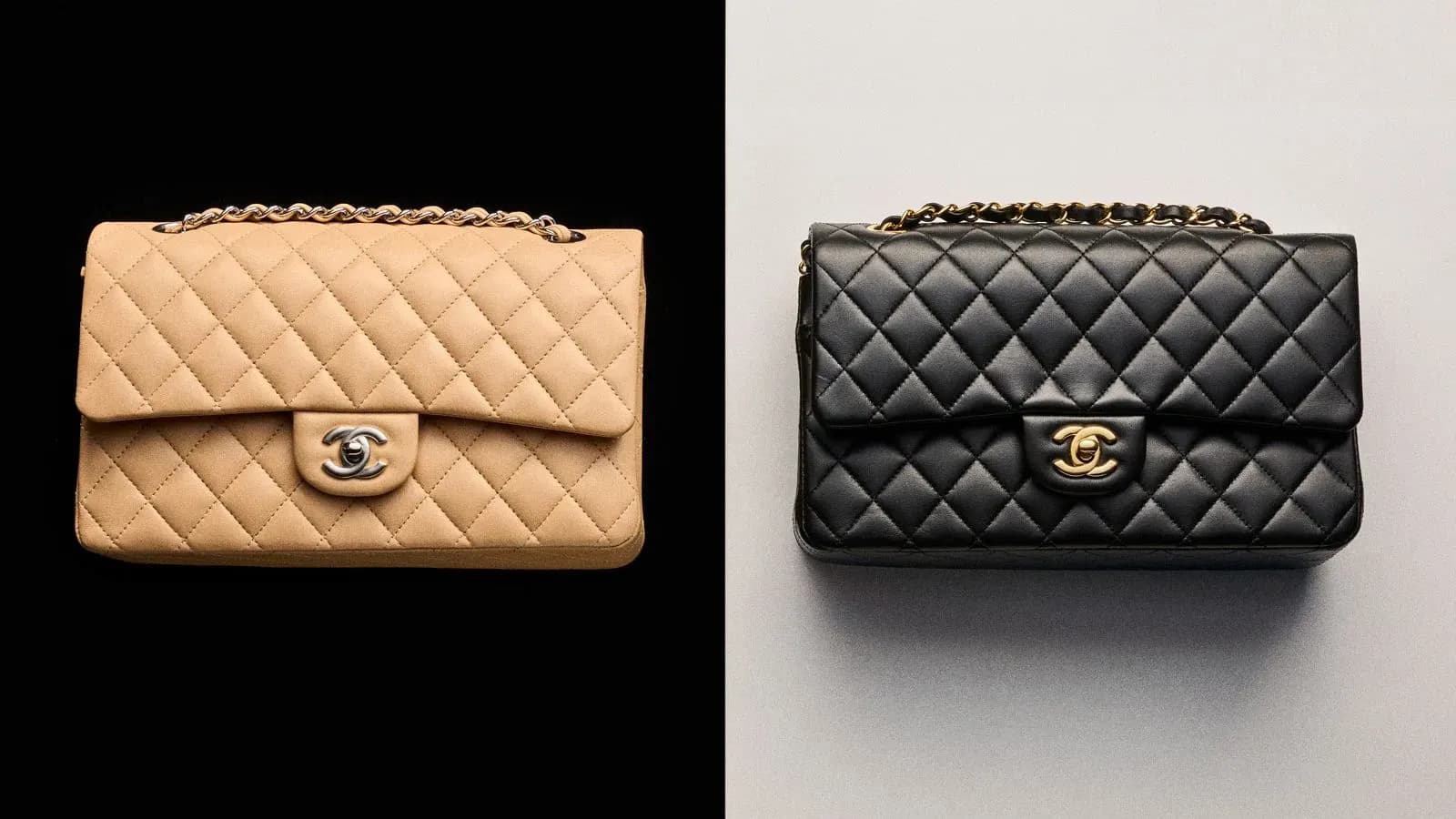
The Chanel Classic Flap and the 2.55 are distinct bags that sellers and buyers routinely confuse. The 2.55 was designed by Coco Chanel in February 1955 (hence the name) and features a rectangular Mademoiselle double-C lock and a burgundy jersey interior. The Classic Flap was Karl Lagerfeld's 1983 reinterpretation — it uses the interlocking CC turn-lock and typically has a red or beige leather interior. If the bag you're examining has the Mademoiselle lock (a flat rectangular push-button clasp), you're looking at a 2.55. If it has the interlocking CC logo as the clasp, it's a Classic Flap. Counterfeits of both exist, but Classic Flap fakes dominate the market because the bag commands higher prices.
Because the Classic Flap is the most photographed bag in luxury, counterfeiters have the visual proportions close. The reliable tells have moved to the things a reference image cannot carry: the tactile qualities (lambskin give, chain weight) and the manufacturing precision (the hologram's actual holographic shift, saddle stitching that sits in a groove). Rank your checks accordingly.
What to check, ranked by reliability
| Checkpoint | Reliability | What it tells you |
|---|---|---|
| The CC Turn-Lock | ★★★★★ | Interlocked Cs that are not mirror images fail a fixed geometry and settle it. |
| Origin | ★★★★★ | Any country other than France or Italy ends the inspection immediately. |
| The Chain | ★★★★★ | A light chain is the one weight tell a photo cannot fake and a factory rarely matches. |
| Quilting | ★★★★★ | A flat quilt with no padding plus misaligned seams is a decisive construction shortcut. |
| Leather | ★★★★★ | Springy or plasticky lambskin and uniform caviar pebbling both expose the material. |
| Stitching | ★★★★★ | Surface stitching that does not sink into a groove is a machine shortcut. |
| Hologram Sticker | ★★★★★ | Gives the era and catches card mismatches, but static stickers are convincingly printed. |
| Hardware Engraving | ★★★★★ | A missing or shallow "CHANEL" on the lock back plate is a useful supporting tell. |
The CC Turn-Lock
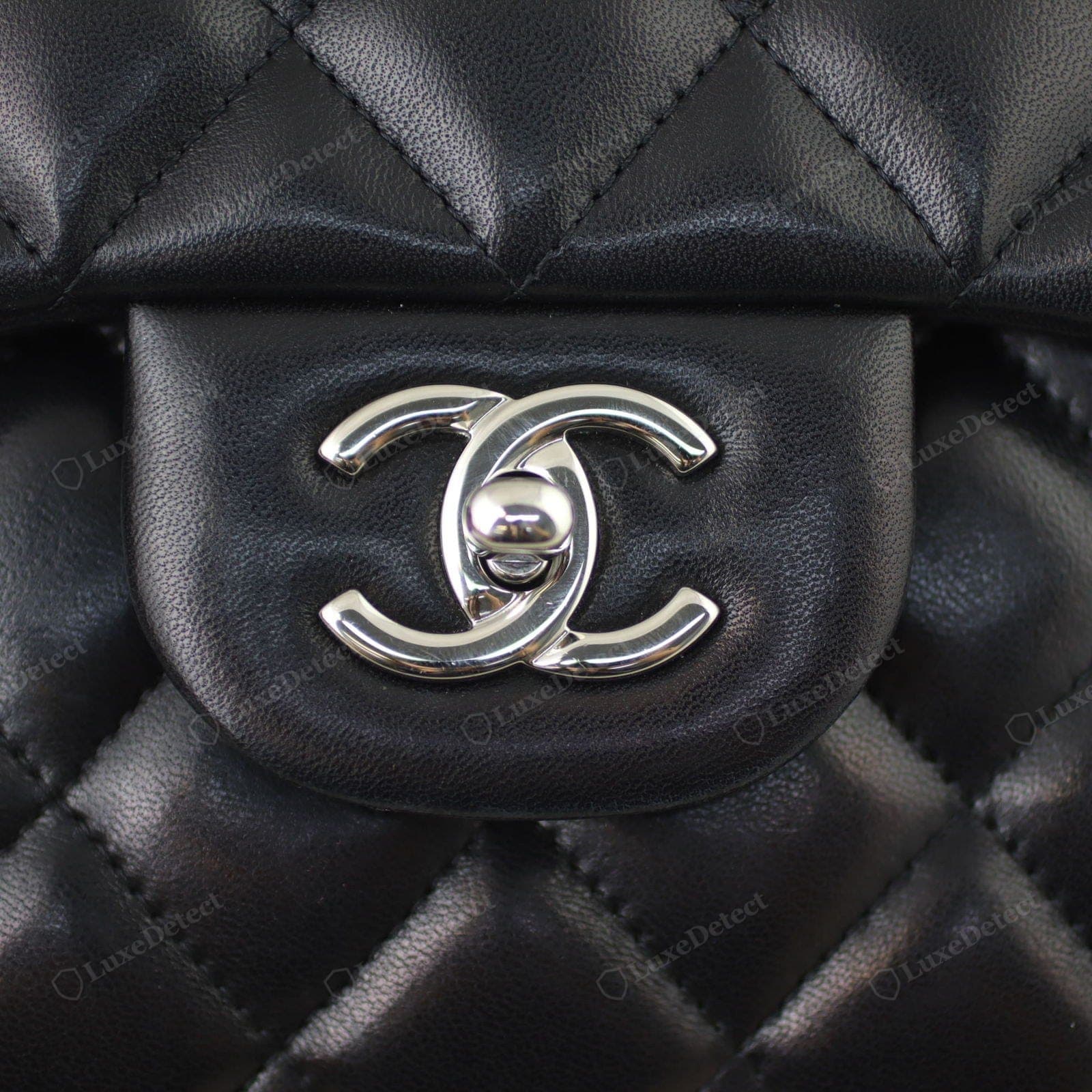
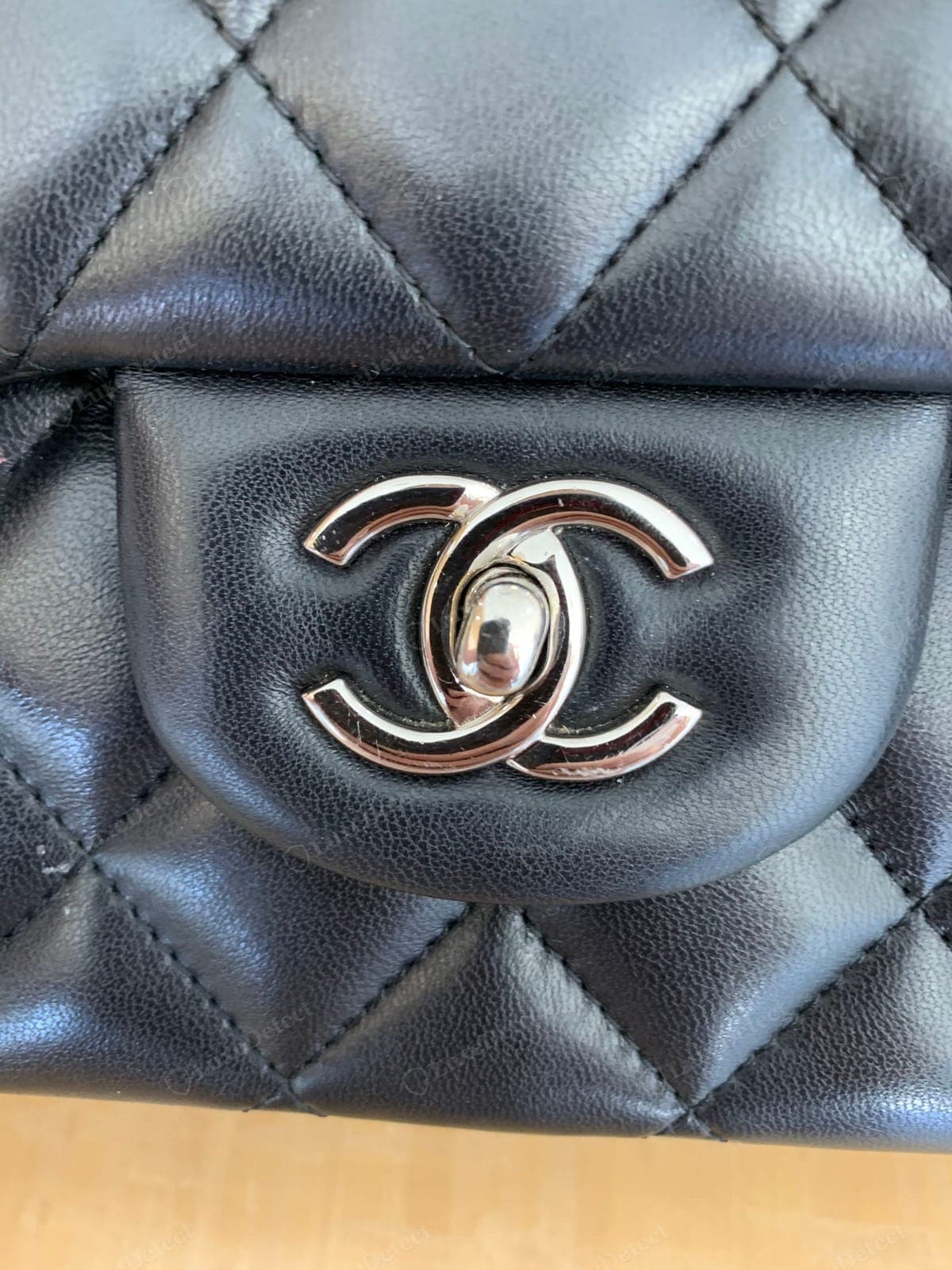
The interlocking CC logo is the bag's most visible authentication point and the most frequently wrong element on fakes.
Symmetry: The two interlocked Cs are mirror images of each other. The top C faces right; the bottom C faces left. They interlock precisely — neither C extends beyond the other. On fakes, one C is often larger, more open, or sits higher than the other.
Proportion: The lock should be proportionate to the bag. On a medium Classic Flap (26 cm), the CC turn-lock is approximately 3 cm wide. Oversized or undersized locks relative to the bag body are a tell.
Movement: The lock turns smoothly with light pressure and clicks closed firmly. It should not feel loose or wobble when closed. Cheap mechanism = fake.
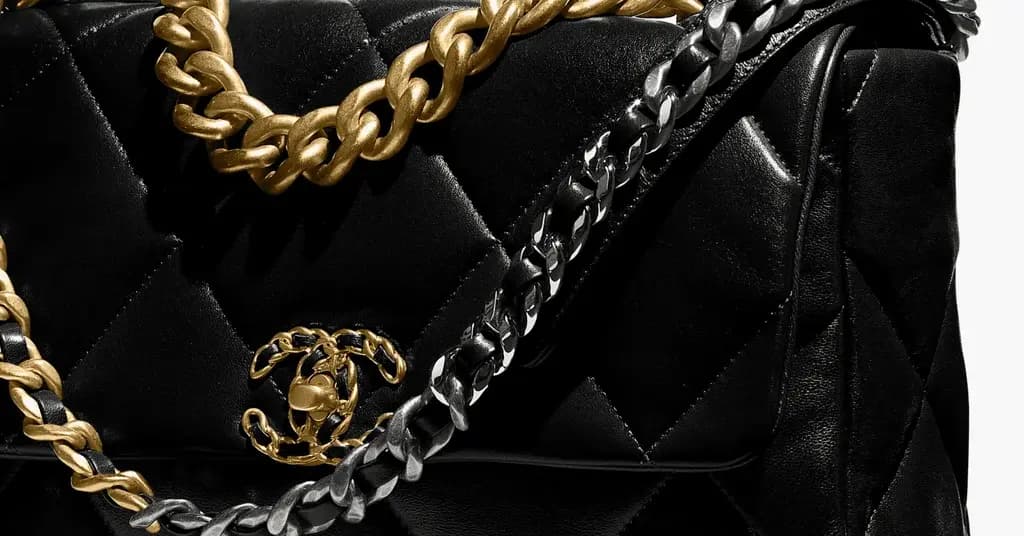
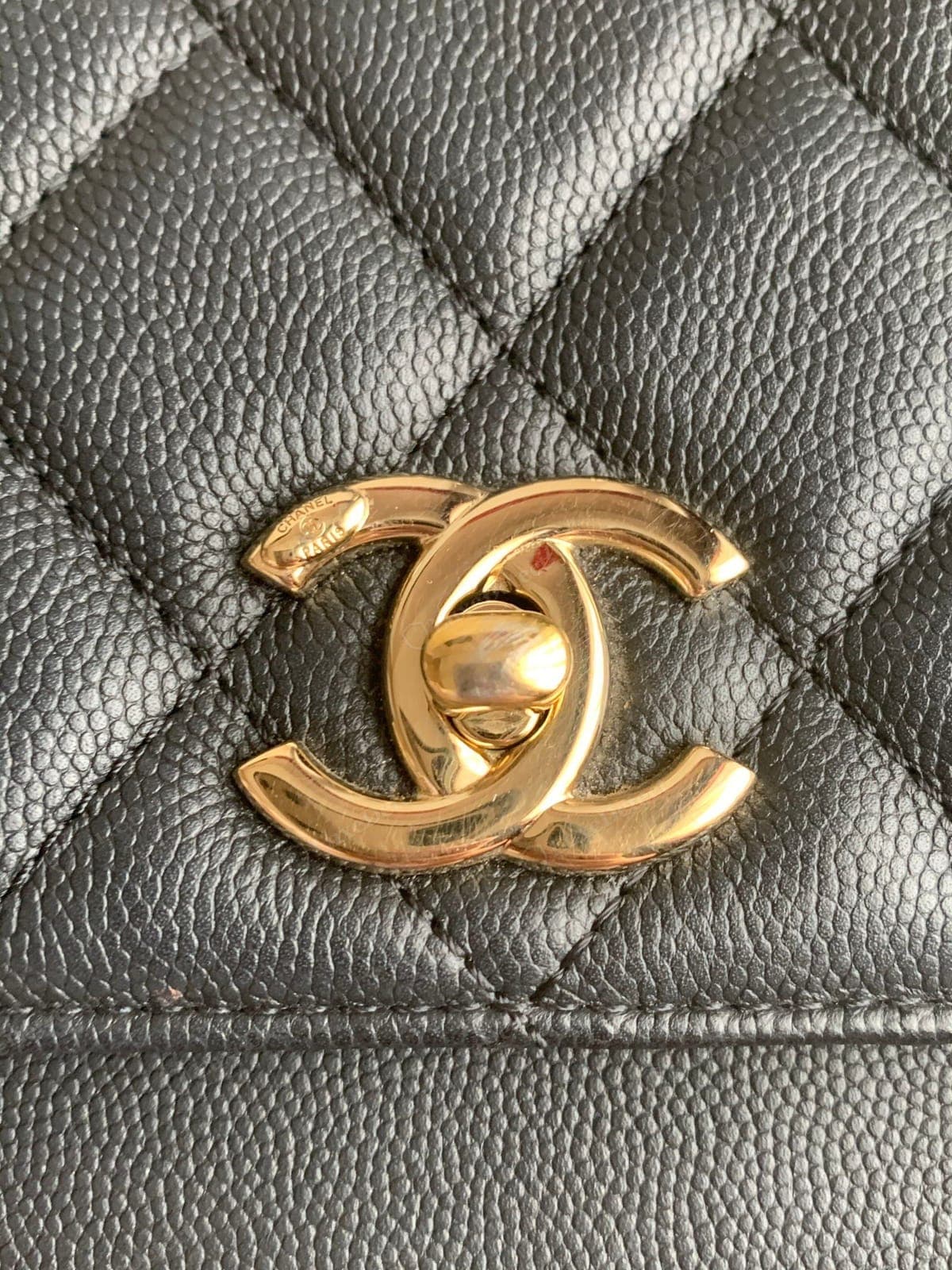
Hardware finish: Gold-tone hardware on authentic bags is 24K gold-plated with a matte-bright finish — not shiny yellow chrome. Ruthenium (dark gunmetal) hardware exists on some Classic Flap editions. Silver hardware (bright silver chrome) is used on others. Within a single authentic bag, all hardware elements should be the exact same tone — chain, CC lock, and interior hardware must match.
| Element | Authentic | Counterfeit |
|---|---|---|
| The two Cs | Mirror images, interlocked precisely, neither extends past the other | One C larger, more open, or sitting higher |
| Proportion | ~3 cm wide on a medium (26 cm) flap | Oversized or undersized against the body |
| Operation | Turns with light pressure, clicks closed firm, no wobble | Loose, gritty, or wobbles when closed |
| Finish | Matte-bright 24K plating, or ruthenium / silver per edition | Shiny yellow chrome, bright and brassy |
| Tone match | Chain, lock and interior hardware identical | Mixed tones across the bag |
Red flag
Interlocked Cs that are not mirror images — one wider, one higher, or the overlap uneven. The lock is the bag's signature and its geometry is fixed; a lopsided CC is decisive on its own.
Quilting
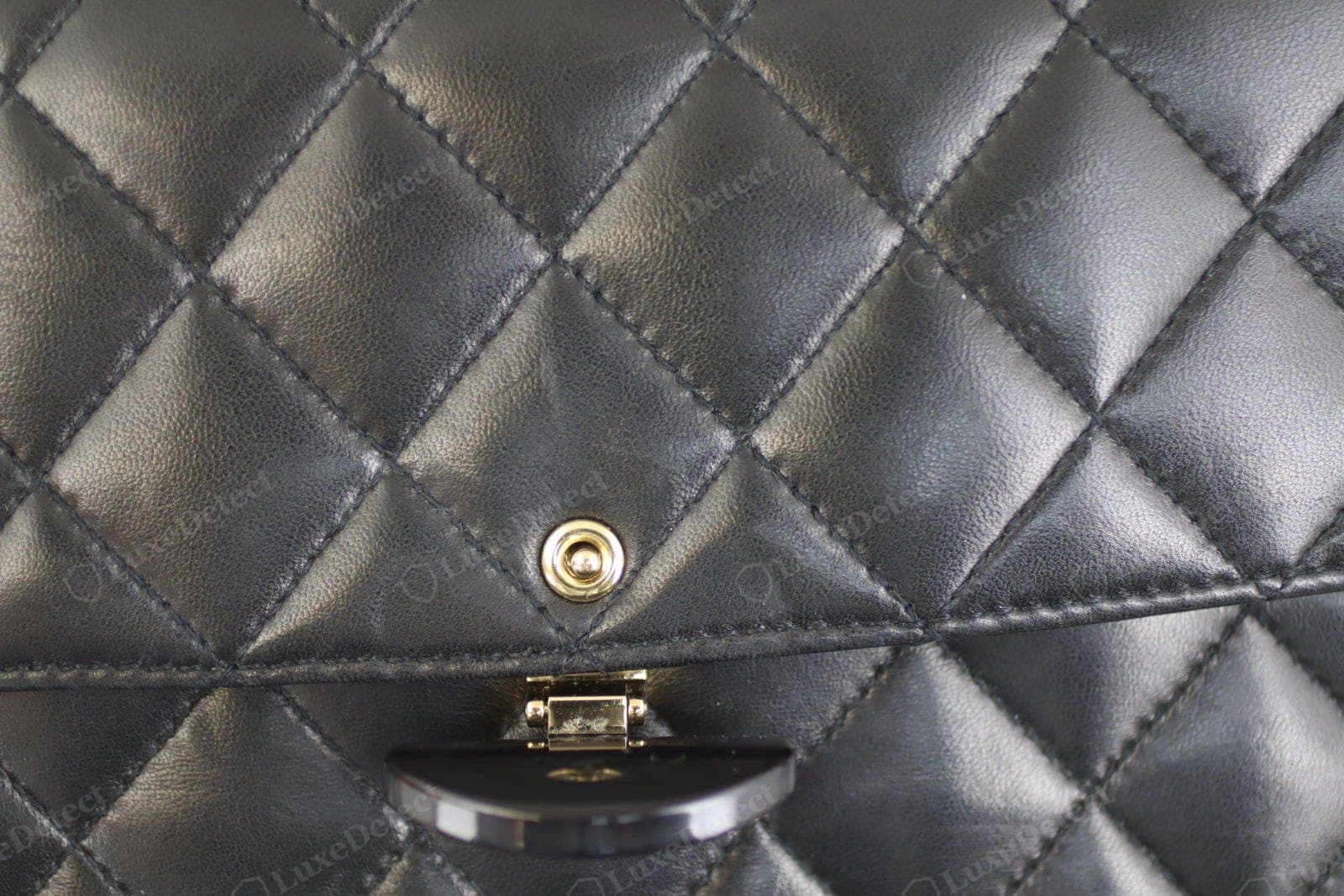
Pattern: The Classic Flap uses diamond quilting (square grid rotated 45°). This is distinct from the 2.55's rectangular quilting. The diamonds on an authentic bag are precise and identical in size across the entire surface — from the center to the edges and corners.
Filling: Authentic Chanel Classic Flaps are padded with cotton or foam between the leather and lining. The diamonds feel puffy when you gently press them — there's cushioning underneath. Fakes often have either no padding or very thin foam that makes the quilting feel flat.
Alignment at seams: Where quilted panels meet (at the sides, flap edge), the diamond pattern continues or mirrors cleanly. Misaligned quilting at seams indicates factory-grade production standards, not Chanel's.
| Element | Authentic | Counterfeit |
|---|---|---|
| Diamond size | Identical from centre to edges to corners | Diamonds shrink or stretch toward the edges |
| Padding | Puffy, cushioned under the leather when pressed | Flat, thin foam, or no padding at all |
| Alignment at seams | Pattern continues or mirrors cleanly across joins | Diamonds step or shift where panels meet |
| Flap-to-body match | Quilt lines meet across the flap edge | Flap quilting offset from the body |
Red flag
Quilting that loses padding — the diamonds press flat with nothing underneath. Genuine flaps are cushioned between leather and lining; a flat quilt is a construction shortcut and, with misaligned seams, settles it.
Leather
The Classic Flap is produced in two primary leathers:
Lambskin: Very soft, smooth, and supple — it scratches and marks easily, which is authentic to the material. If you press it gently, it yields and recovers slowly. Fake lambskin is either too stiff or too plasticky.
Caviar leather: Pebbled texture, more durable. The pebbles on authentic caviar are dense and random in size — not uniformly round or spaced. Large, overly uniform pebbles indicate PVC or low-grade leather.
Both should feel luxurious and cool to the touch, not synthetic or warm.
| Element | Authentic | Counterfeit |
|---|---|---|
| Lambskin | Soft and supple, yields and recovers slowly, marks easily | Stiff, or plasticky and springy |
| Caviar pebbling | Dense, random pebble size | Uniformly round, evenly spaced (PVC or low-grade) |
| Thermal feel | Cool to the touch, warms slowly | Warm and synthetic straight away |
| Recovery after a press | Slow, natural rebound | Snaps back, or holds the dent |
The Chain
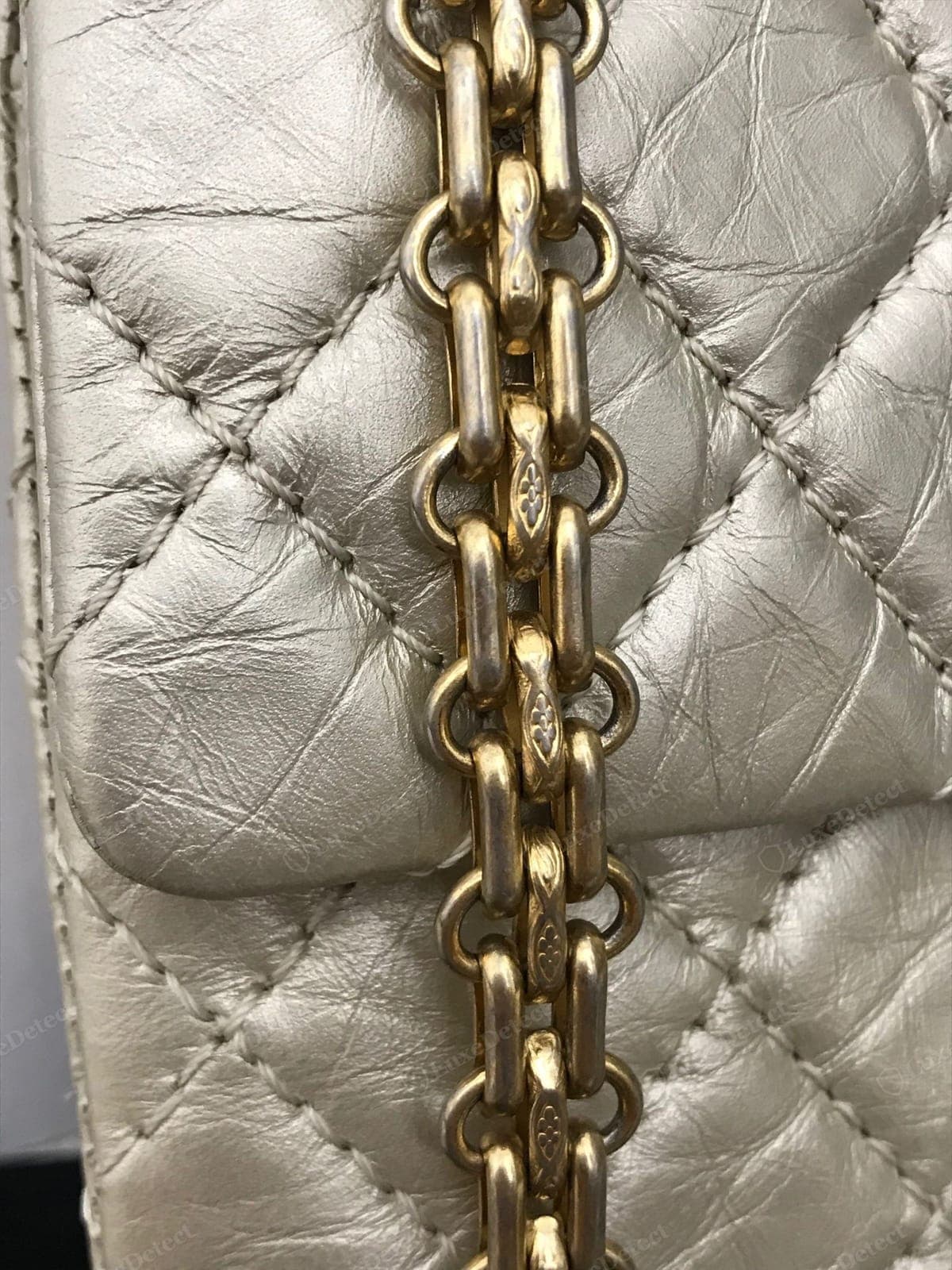
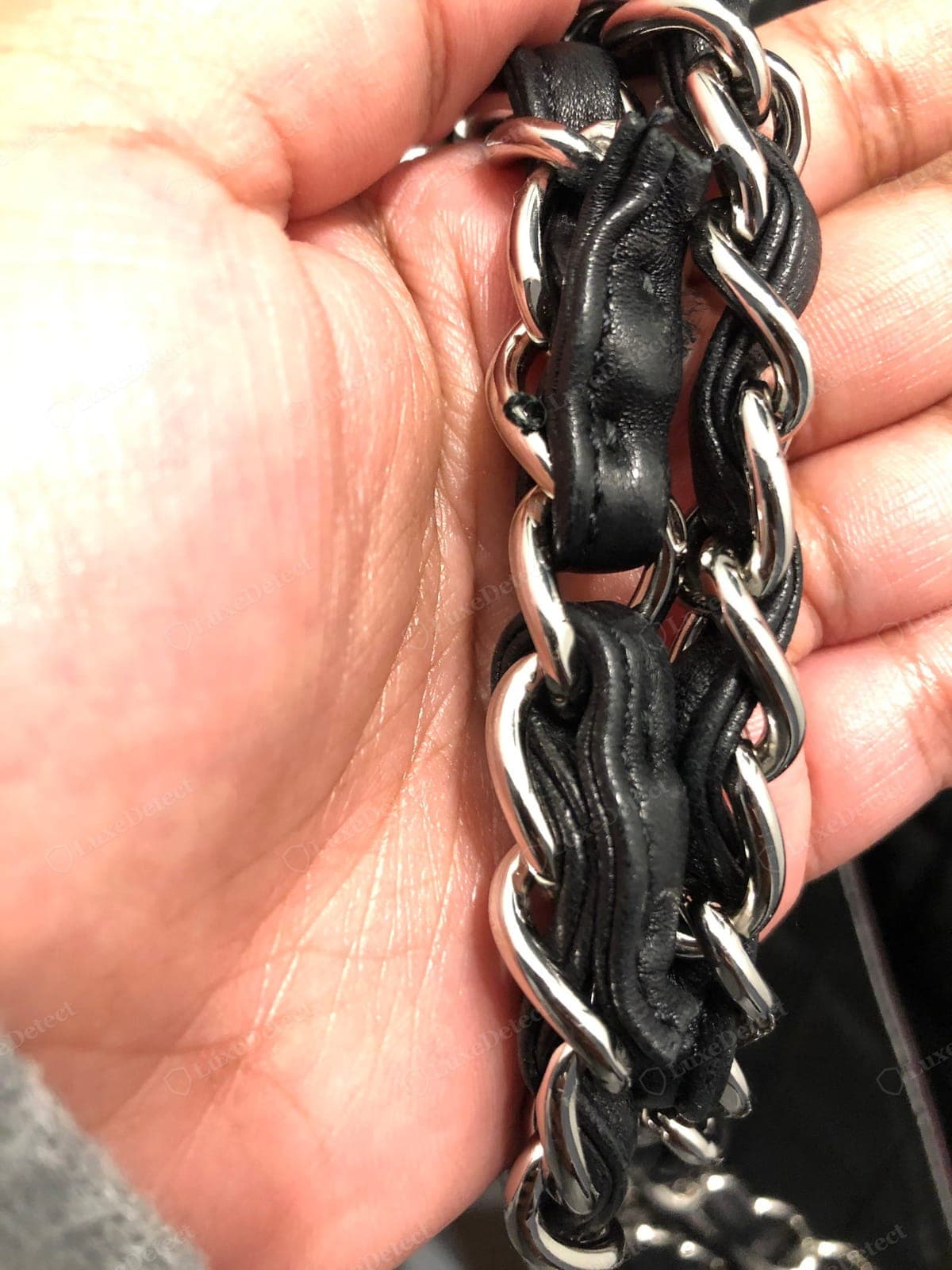
Weight: The chain on an authentic Classic Flap is substantial — it feels heavy relative to its visual size. Lift the bag by the chain; the weight should feel significant. Lightweight chains are a red flag.
Construction: The chain is metal with leather woven through each link. On authentic bags, the leather threading is the same leather as the body — consistent color and texture. The threading lies flat through the links without bunching.
Link uniformity: Every link is the same shape and size with invisible solder points. Run your fingers along the chain; you should not feel rough burrs or visible seams where links were closed.
| Element | Authentic | Counterfeit |
|---|---|---|
| Weight | Heavy relative to its visual size | Light; the bag feels underweight lifted by the chain |
| Leather threading | Same leather as the body, lies flat through the links | Different colour or texture, bunches through links |
| Links | Uniform shape and size, solder points invisible | Rough burrs, visible seams where links were closed |
Red flag
A light chain. Weight is the one chain check a photo cannot fake and a factory rarely matches; lift the bag by the chain and a genuine Classic Flap feels substantial for its size.
Interior and Lining
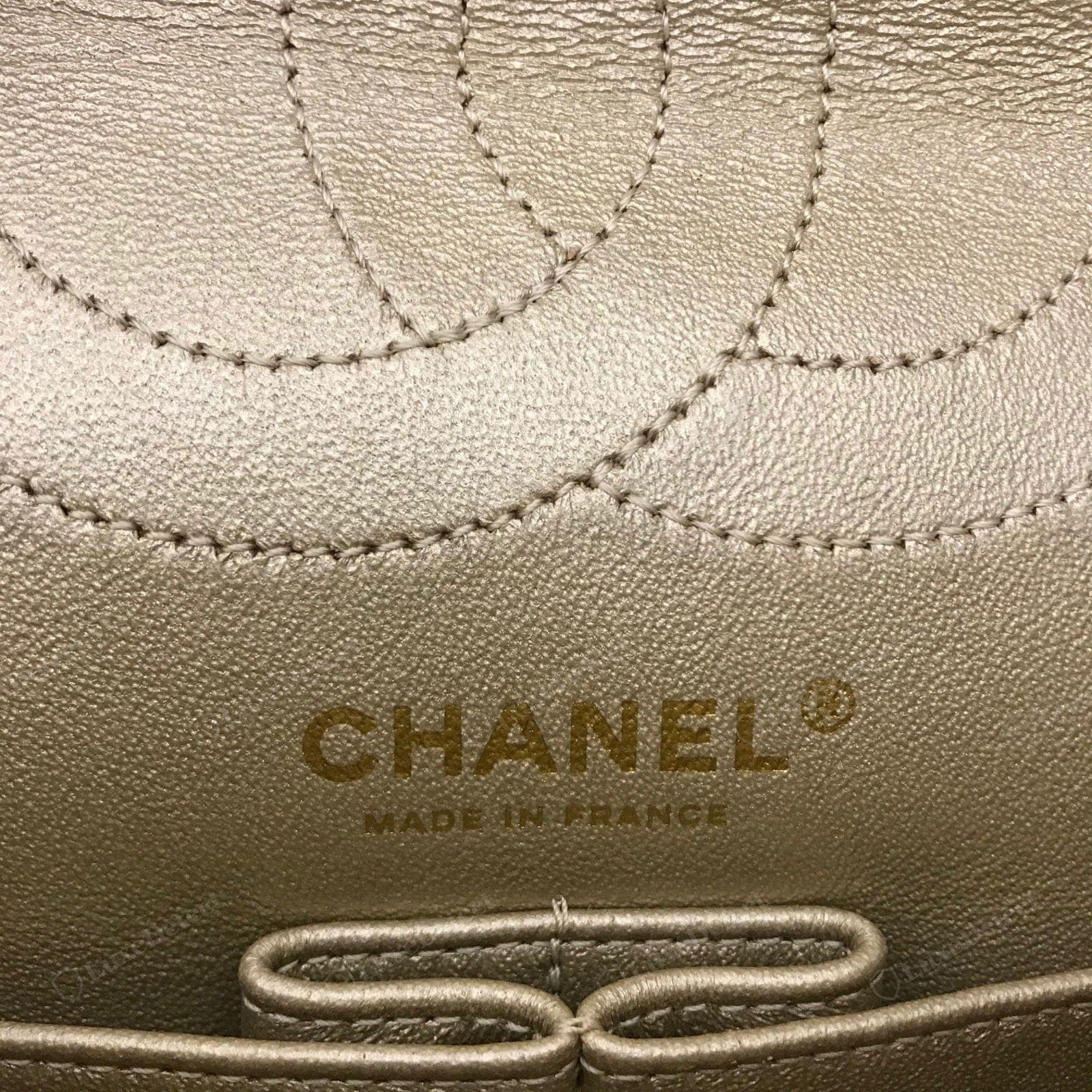
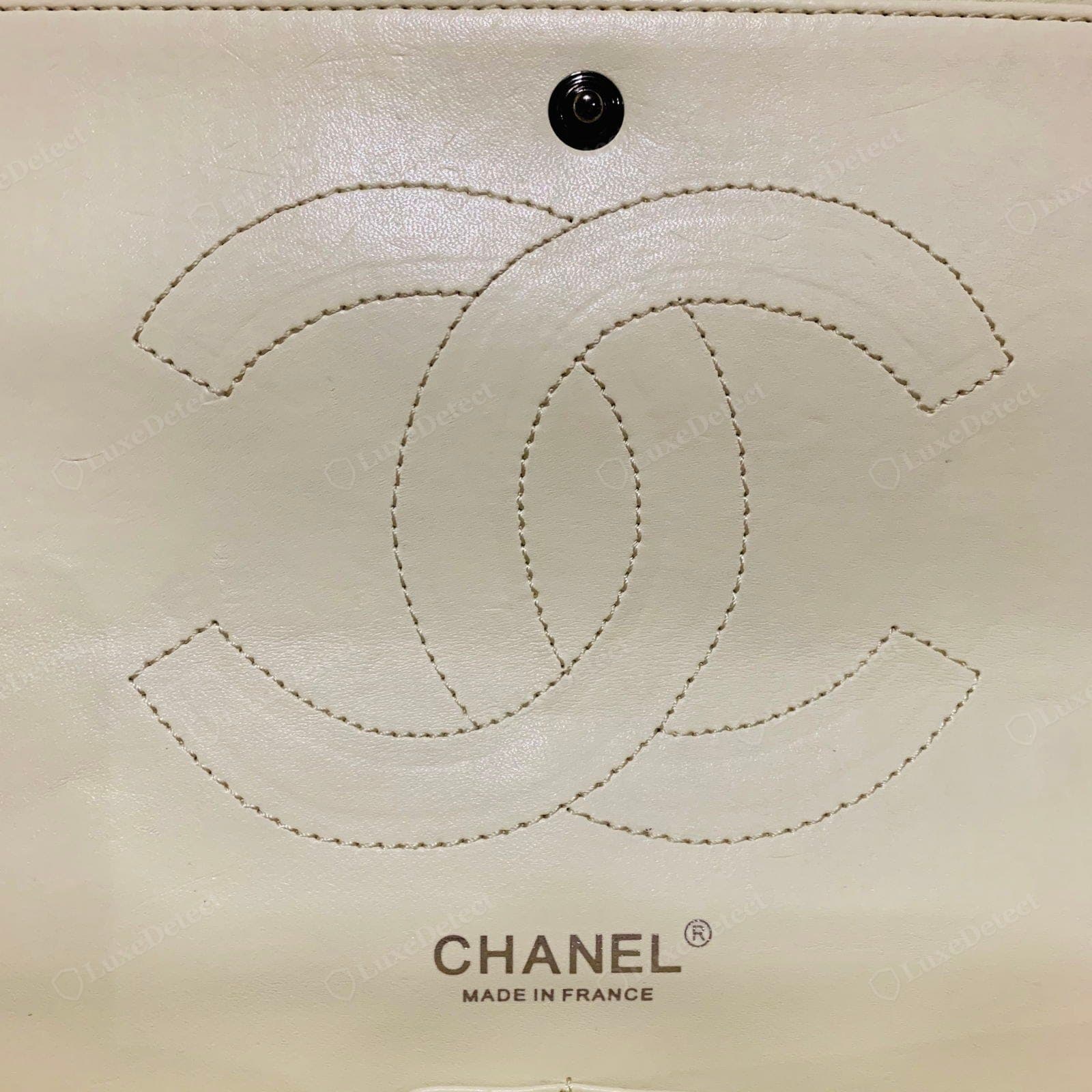
Color: Classic Flap interiors are typically red (the most common in the modern era), beige, or black leather. The interior leather quality should match the exterior — soft, well-finished, not sticky or synthetic.
Interior pocket: There's a zip pocket inside the flap and a slip pocket on the interior back. Stitching around these pockets follows the same standard as the exterior.
Zip pull: The interior zip has a metal pull stamped "CHANEL" — legible with correct font.
| Element | Authentic | Counterfeit |
|---|---|---|
| Lining colour | Red, beige or black leather per era | Off-shade, or a synthetic-feeling lining |
| Lining quality | Matches the exterior leather, well finished | Sticky, thin, or plastic-feeling |
| Pocket stitching | Same standard as the exterior seams | Loose or uneven around the pockets |
| Zip pull | Metal, "CHANEL" in the correct font | Light pull, wrong font, or unstamped |
Hologram Sticker
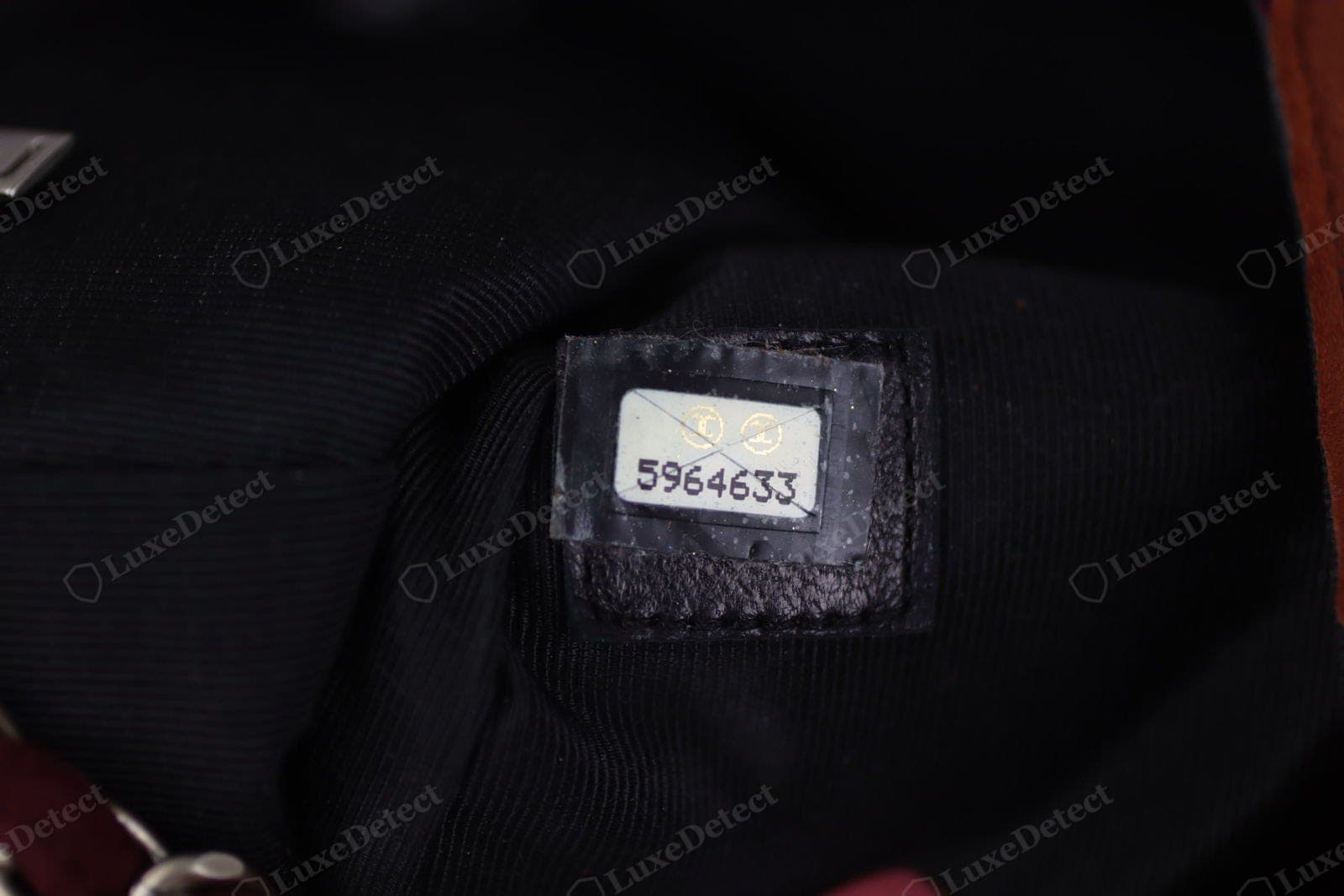
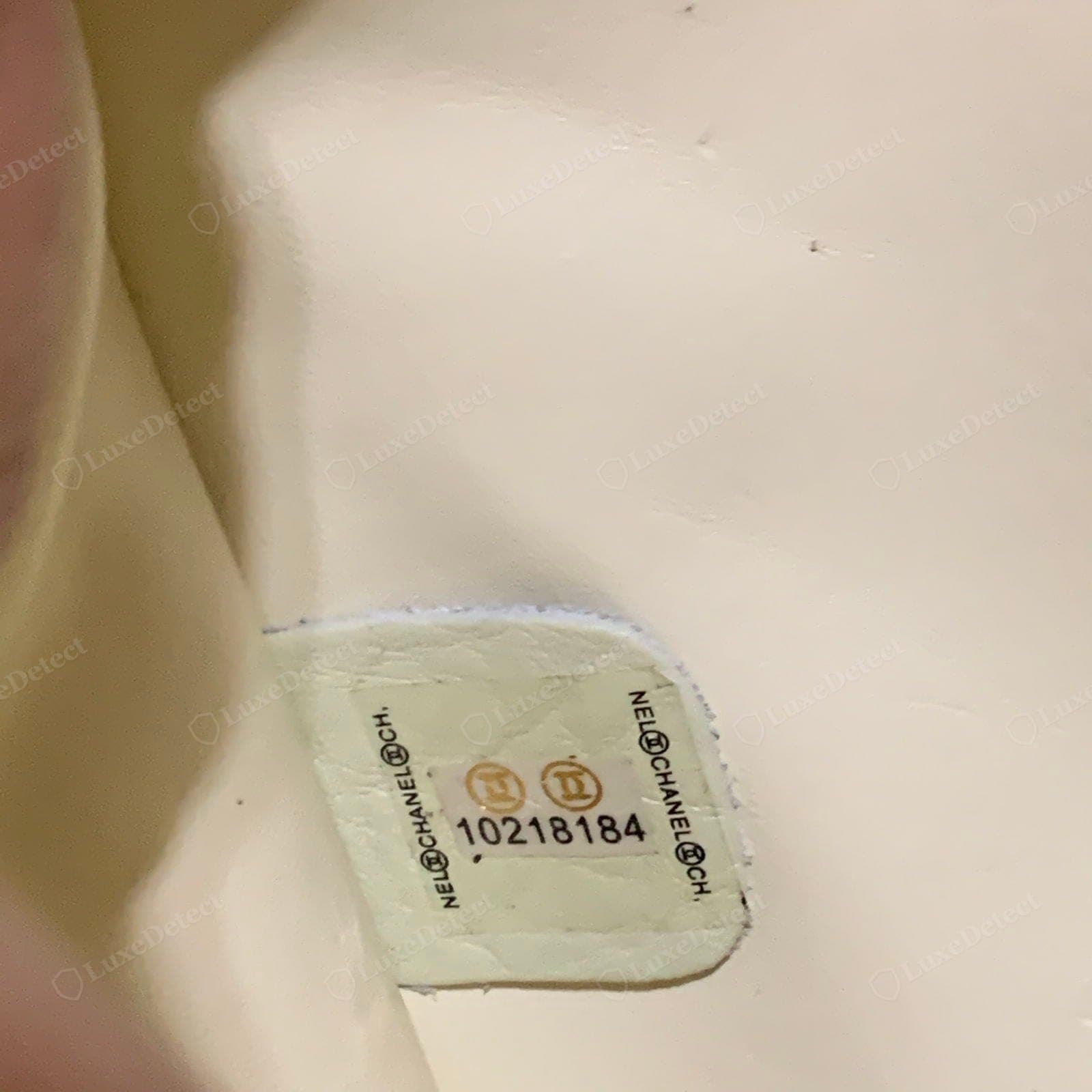
Since 1986, Chanel has placed a hologram authentication sticker inside every bag. The sticker is:
- Located on the interior lining, typically inside the back slip pocket or on the interior back wall
- A small metallic sticker displaying a seven-digit serial number
- The number appears to shift or move as you change the viewing angle — this is the hologram effect
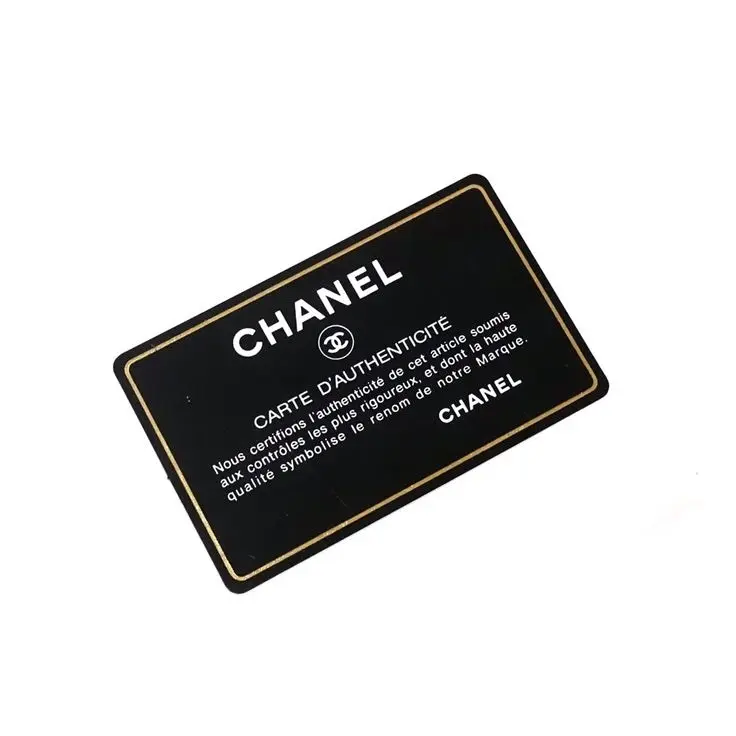
- A matching authenticity card with the same serial number is included with the bag
What to check: The hologram shifts visibly under light. A sticker that looks flat, printed, or doesn't shift is fake. The serial number on the sticker should match the number on the authenticity card exactly.
Era identification from serial prefix: The first digit of the serial number indicates the production era. This is well-documented — for example, numbers beginning with 1 date to the late 1980s, while numbers beginning with 3 date to the mid-2000s. Current production uses 8-digit serials starting with a letter.
| Element | Authentic | Counterfeit |
|---|---|---|
| Holographic effect | Number appears to shift and move as the angle changes | Flat, printed, no shift |
| Sticker edge | Fine irregular border, sits flush in the lining | Thick even border, or peeling / re-applied |
| Serial vs card | Sticker number matches the authenticity card exactly | Mismatched, or no card at all |
| Prefix vs claimed era | First digit / letter agrees with the stated production year | Prefix impossible for the year the seller claims |
Worth knowing
The hologram gives the production era, not the verdict. Counterfeiters print convincing static stickers, so its real value is the shift effect under moving light and whether the serial survives cross-referencing against the card and the claimed year.
Use our free Chanel Serial Number Checker to instantly decode your bag's production era and see exactly what the sticker should look like.
Check My Serial Number →Stitching
Chanel uses saddle stitching by hand on all Classic Flap bags. Characteristics of authentic stitching:
- Even and consistent spacing — approximately 4–5 stitches per centimeter
- No loose ends, fraying, or uneven tension
- Thread color matches the leather (white thread on light bags, black or beige on dark bags)
- Stitching is slightly sunken into the leather — it sits in a groove, not riding on top
| Element | Authentic | Counterfeit |
|---|---|---|
| Density | ~4–5 stitches per centimetre, even | 6+ and crowded, or 3 and loose |
| Tension | Consistent, no loose ends or fraying | Puckering, loose loops, frayed ends |
| Thread colour | Matched to the leather | Bright white on a dark bag, or a clashing tone |
| Seating | Sunken into a groove in the leather | Riding on top of the surface |
Red flag
Stitching that rides on top of the leather rather than sitting in a pressed groove. Genuine saddle stitching sinks into the hide; surface stitching is a machine shortcut and, with uneven density, is decisive.
Hardware Engraving
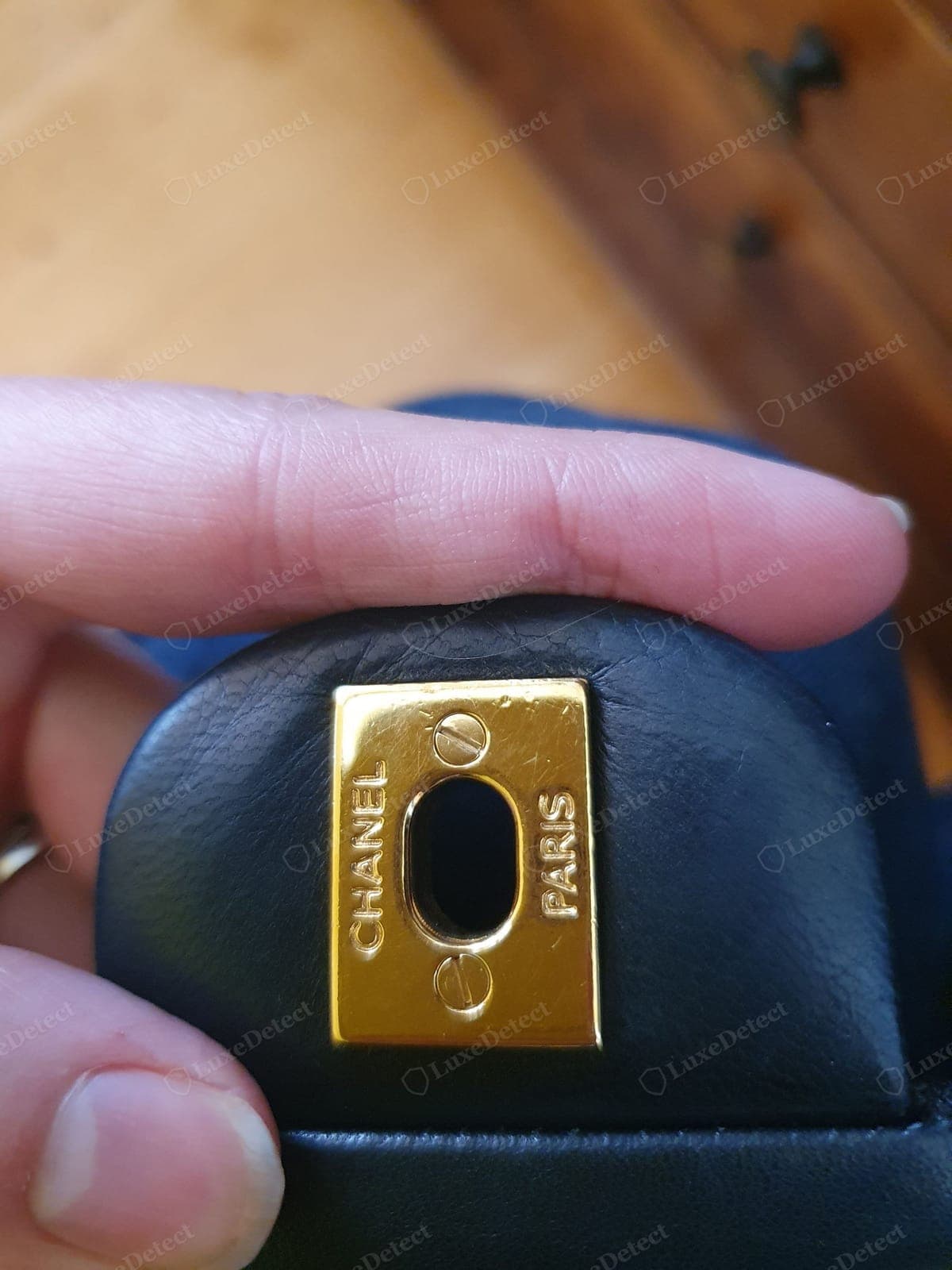
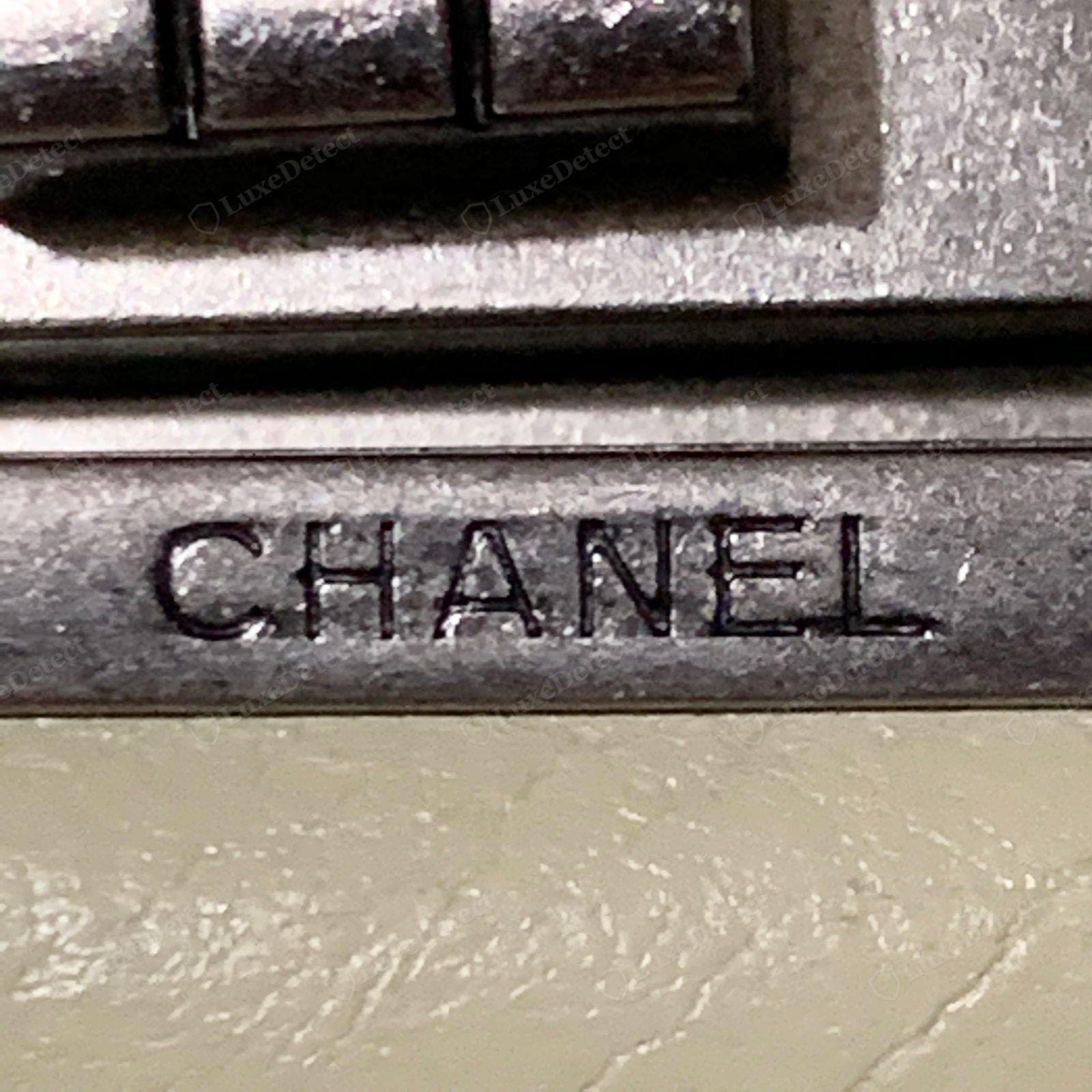
Turn over the CC lock and look at the back plate. "CHANEL" should be engraved on the reverse — deep, consistent, and legible. Fakes either omit this entirely or use a shallow stamp that's barely visible.
The zippers are another engraving tell. Modern Classic Flaps use a Lampo or an "EP"-marked zipper (older bags may use others); the pull is a teardrop or CC-stamped tab and the slider carries a cleanly cut maker's mark on the underside.
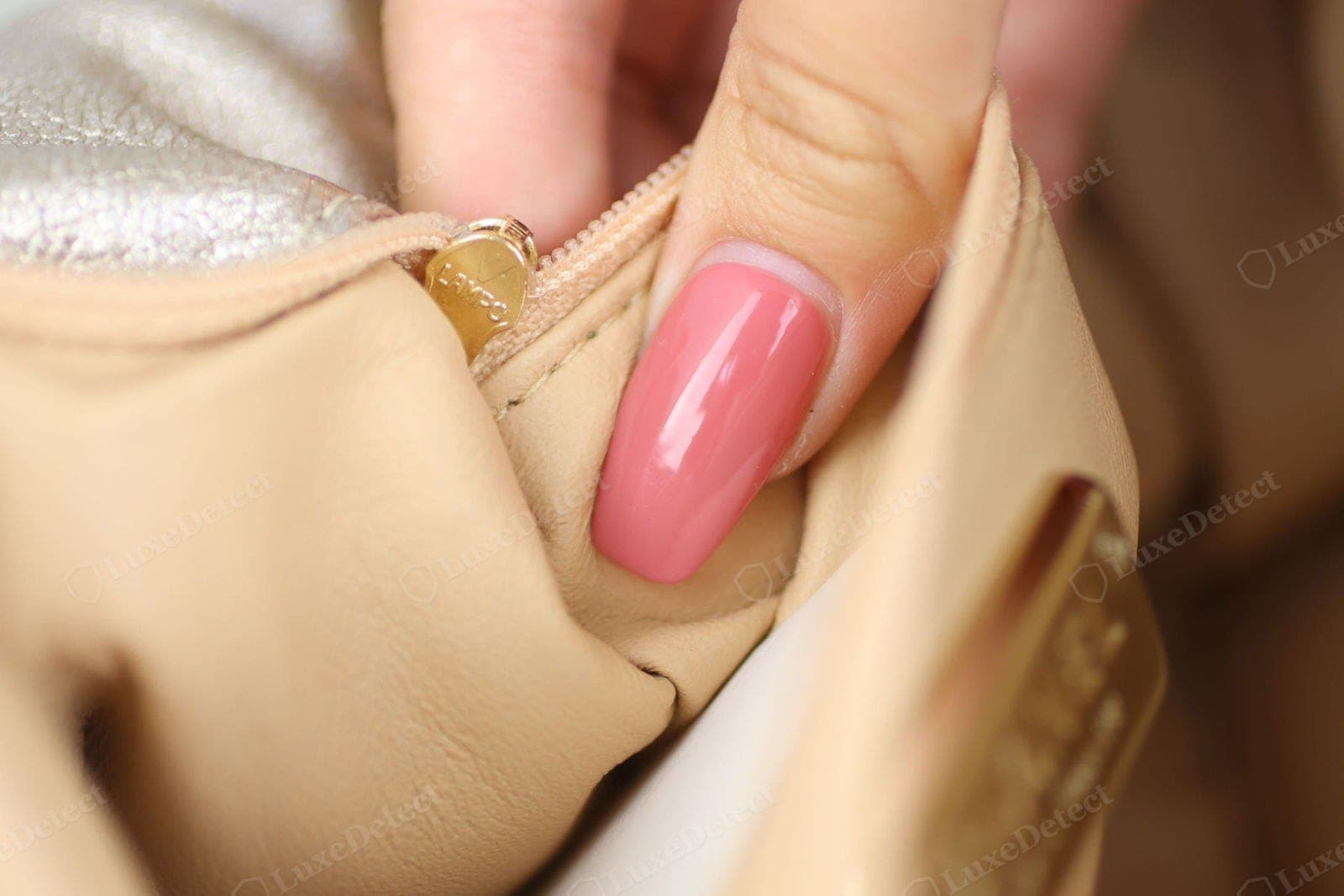
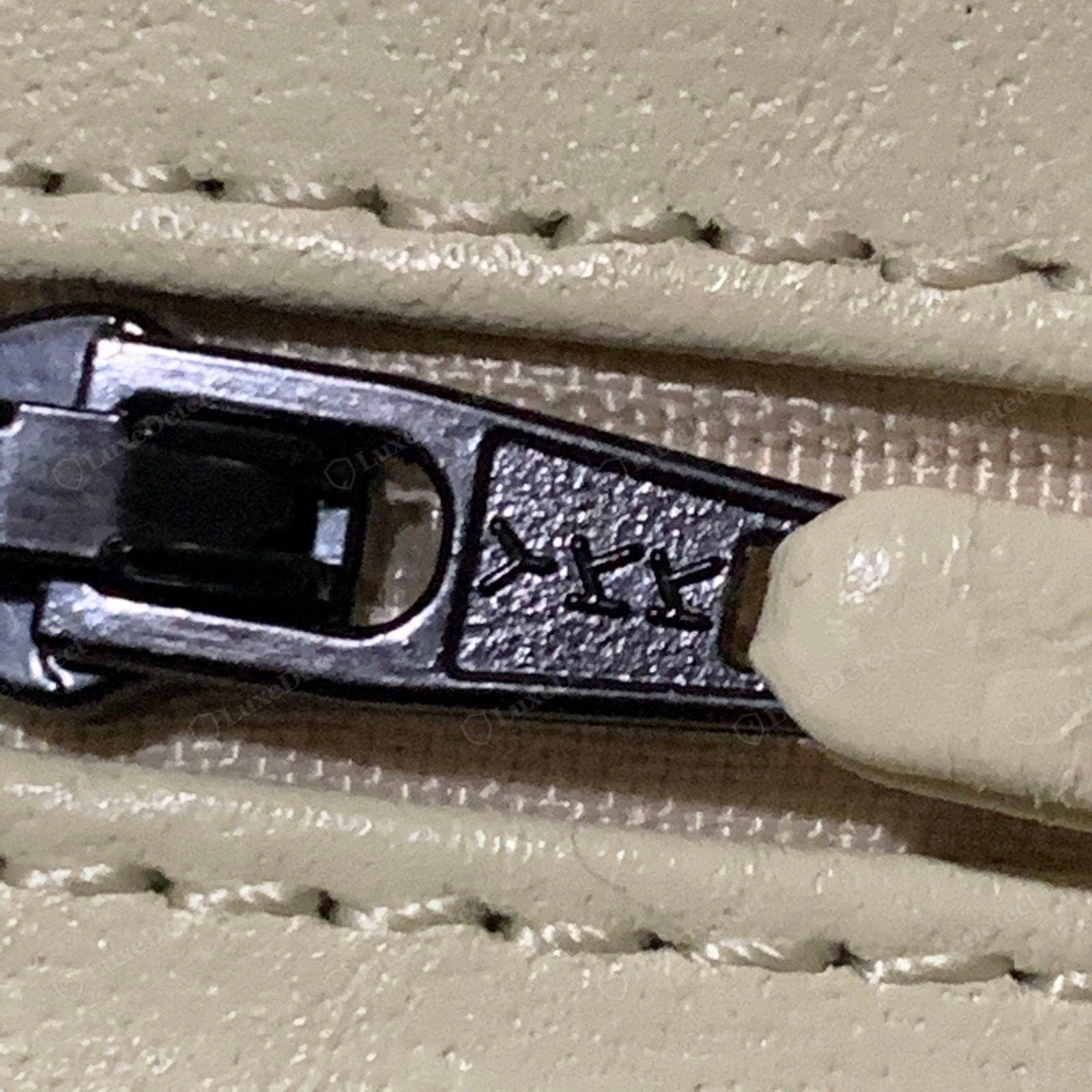
The chain attachment points (where the chain connects to D-rings at the bag) also have "CHANEL" engraved on the rings or hardware. Check with a loupe.
| Element | Authentic | Counterfeit |
|---|---|---|
| CC lock back plate | "CHANEL" engraved deep, consistent, legible | Omitted, or a shallow stamp barely visible |
| Chain D-rings | "CHANEL" engraved on the rings or attachment hardware | Unmarked, or crude lettering |
| Cut quality | Clean walls, even depth | Ragged or acid-etched look |
Origin
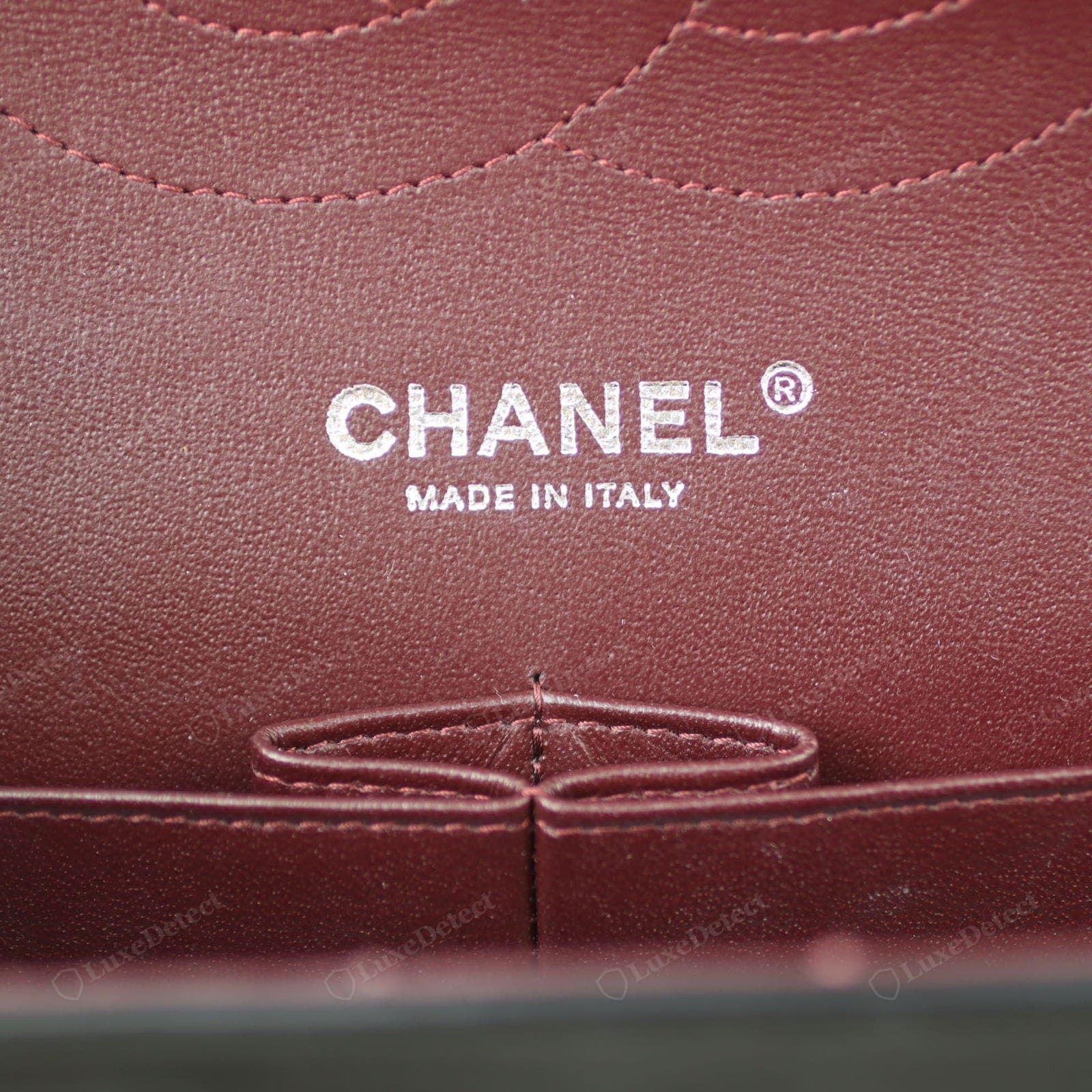
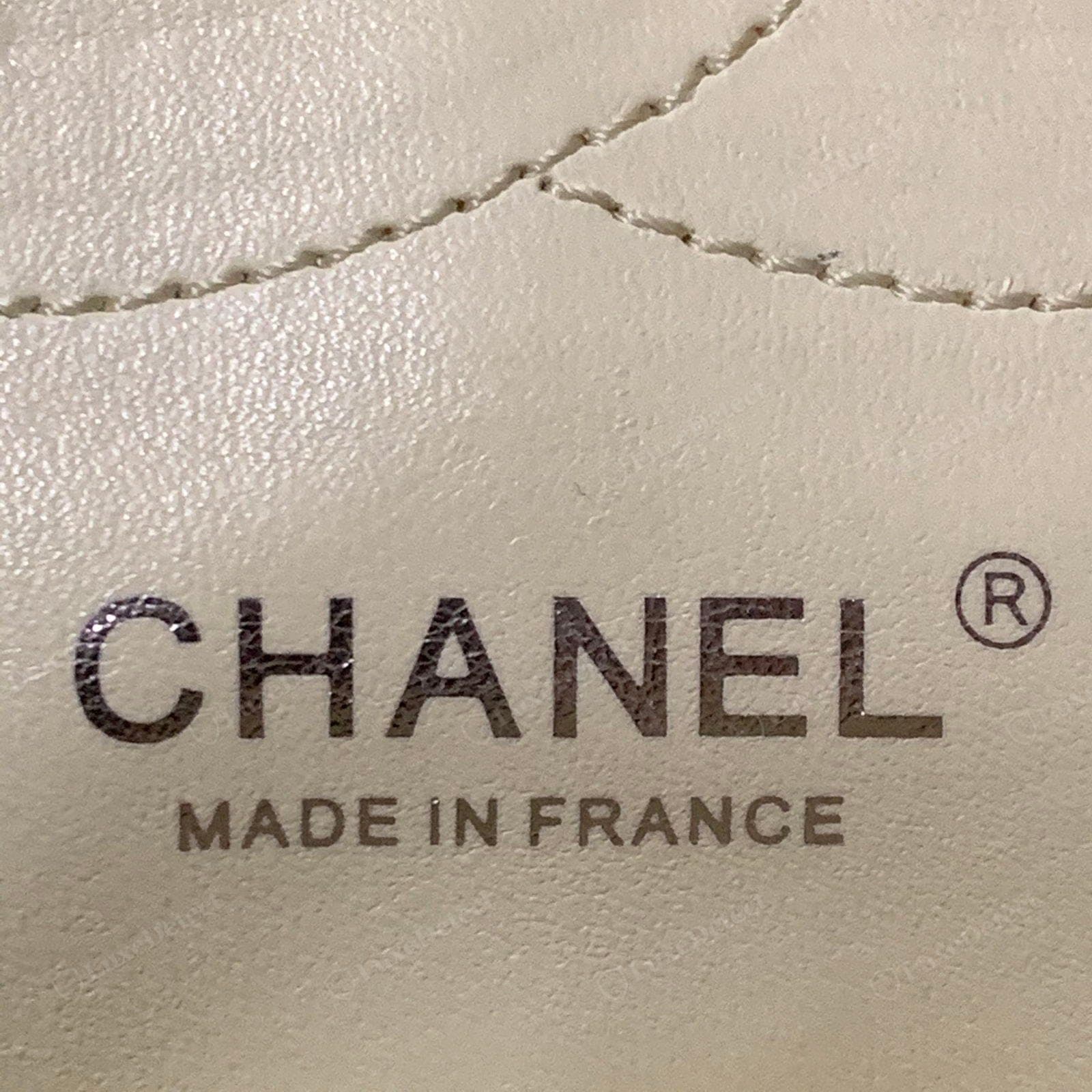
All authentic Chanel bags are Made in France or Made in Italy. "Made in France" appears on the interior in most Classic Flap bags. If you see "Made in China," "Made in Korea," or any other country, it's not an authentic Chanel.
| Element | Authentic | Counterfeit |
|---|---|---|
| Country | "Made in France" or "Made in Italy" | Any other country |
| Placement | Interior, consistent position for the era | Odd placement, or missing entirely |
Red flag
Any origin other than France or Italy. No authentic Chanel Classic Flap has ever been made anywhere else; a "Made in" line naming another country ends the inspection immediately.
Quick Authentication Checklist
- CC turn-lock: symmetrical Cs, correct proportion, smooth operation
- Quilting: precise diamonds, real padding underneath, clean alignment at seams
- Leather: genuinely soft/pebbled, cool to touch, not synthetic
- Chain: heavy, leather-threaded, invisible solder points
- Interior: correct lining color, quality leather finish
- Hologram sticker: shifts under light, matches authenticity card
- Stitching: even, saddle-stitched, sunken into leather
- Hardware engraving: "CHANEL" on reverse of CC lock
- Origin: Made in France or Made in Italy
Two or more failures means walk away. A single failure on the CC lock symmetry, a light chain, or any origin other than France or Italy is on its own sufficient.
When to Get a Professional Opinion
The Classic Flap is the hardest bag in this series to call from photos, and it is not close. The visual proportions are so extensively documented that a good fake matches them, and the reliable tells — lambskin give, chain weight, the hologram's actual shift under moving light, stitching that sits in a groove — are precisely the ones a listing image cannot carry. A convincing counterfeit at $1,500 against a $10,000 bag is a live risk, not a theoretical one.
For anything above resale entry level, a professional check is a rounding error against the exposure. Photo-based authentication typically runs $25 for handbag authentication with a 24-hour turnaround; borderline cases are better served by a video session where the chain and hologram can be shown moving. Either way you receive a Certificate of Authenticity you can use in a dispute.
FAQ
Does Chanel include an authenticity certificate?
Chanel includes a numbered authenticity card that matches the hologram sticker serial number. It is not a "certificate" — it's a card with the Chanel logo and serial. A third-party certificate is not a Chanel product and has no authentication value.
Is the Chanel Classic Flap made in France or Italy?
Both. Chanel manufactures bags in both France and Italy. "Made in France" is more common for the Classic Flap, but Italian production is also authentic. The key is that neither China nor any other country should appear.
What size is the Chanel Classic Flap?
The Classic Flap comes in Mini (20 cm), Small (23 cm), Medium/M/L (25.5 cm), Large (30 cm), and Maxi (33 cm). Verify that the bag you're examining matches the stated size — a bag marketed as a "Medium" but measuring 30 cm is actually a Large, which affects both resale pricing and authenticity assessment.
Can I authenticate a Classic Flap from photos?
For most authentication points — CC lock proportions, quilting, hardware finish, hologram sticker — yes. What's hardest to assess remotely: leather softness, chain weight, and the hologram's shift effect. These require physical inspection. For borderline cases, an in-person or video authentication session is recommended.
Why are Chanel Classic Flap fakes so convincing?
The bag's design is well-documented and extensively photographed, which gives counterfeiters detailed reference material. High-quality fakes replicate the visual proportions accurately — the tells are in the tactile qualities (leather softness, chain weight) and manufacturing precision (hologram holographic effect, stitching consistency) that photos can't fully capture.