Senior Watch Authenticator
Last updated August 2026 · Published June 2026 · Contact
The Bottleneck Isn't Knowledge — It's Time
The counterfeit luxury market is a $4.5 billion annual problem. For resellers working at volume — whether running a boutique consignment shop or processing dozens of listings a week — the bottleneck is rarely knowledge. It's time. Taking precise, well-lit photos of a Louis Vuitton date code, a Chanel hardware stamp, or a Rolex bezel insert requires putting down whatever you're doing, picking up your phone, framing the shot, and hoping the lighting holds. Multiply that across 30 items and you've lost most of your morning.
Snap's new Specs AR glasses, announced at Augmented World Expo 2026 and set to ship this fall, point toward a genuinely different workflow. And when paired with LuxeDetect's authentication algorithm — already running at 99.3% accuracy across 250+ brands — the combination has real implications for how professional resellers can operate.
What Snap Specs Actually Are
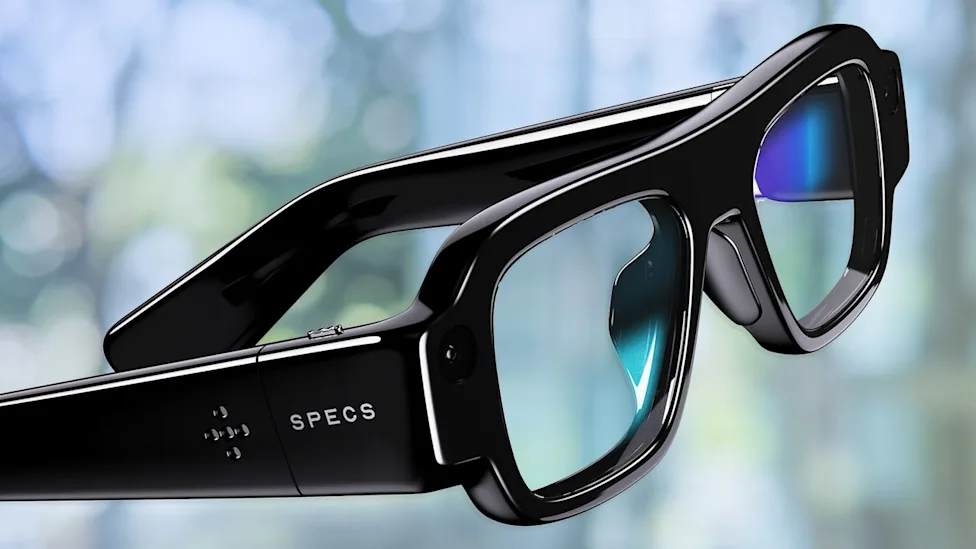
Specs are Snap's first consumer-facing AR glasses, the product of more than a decade of R&D. They're standalone — no phone, no compute puck required — and run on Snap OS with dual Qualcomm Snapdragon processors: one dedicated to computer vision, one to rendering AR overlays.
The hardware specs are notable. The glasses weigh 132–136 grams depending on frame size. They offer a 51-degree field of view with 16 million colors via Snap's proprietary LCoS (liquid crystal on silicon) display. Motion-to-photon latency sits at 7 milliseconds. Battery runs to 4 hours of mixed use, extending to 20 hours with the included charging case.
The key capability for authentication use cases is the computer vision processor. Specs are built for real-time spatial tracking and object recognition. They also carry deep integrations with OpenAI and Google's Gemini, and Snap's developer platform exposes a Camera Kit SDK and Depth Module API that can anchor AR information accurately in three-dimensional space.
In other words: Specs can look at a physical object, understand what they're seeing, and overlay relevant information — in real time, hands-free.
The Problem Specs Solve for Resellers
Any reseller who has authenticated more than a handful of items knows where friction accumulates.
You're handling an item. You need to photograph the date stamp, the stitching pattern, the zipper pull, the serial number. Each shot requires you to set the item down carefully, pick up your phone, unlock it, open the camera, zoom in, check focus, tap to shoot — and repeat across six to twelve reference points per item.
Then you upload. Then you wait.
The authentication workflow is sound. The friction is in capturing the evidence in the first place.
Specs change that equation in two meaningful ways.
First: hands-free photo capture. With the camera built into the glasses, a reseller examining an item can trigger a capture — at the right angle, in focus, framed correctly — without ever breaking their grip on the piece. The muscle memory of how you handle an item while inspecting it becomes the photography workflow.
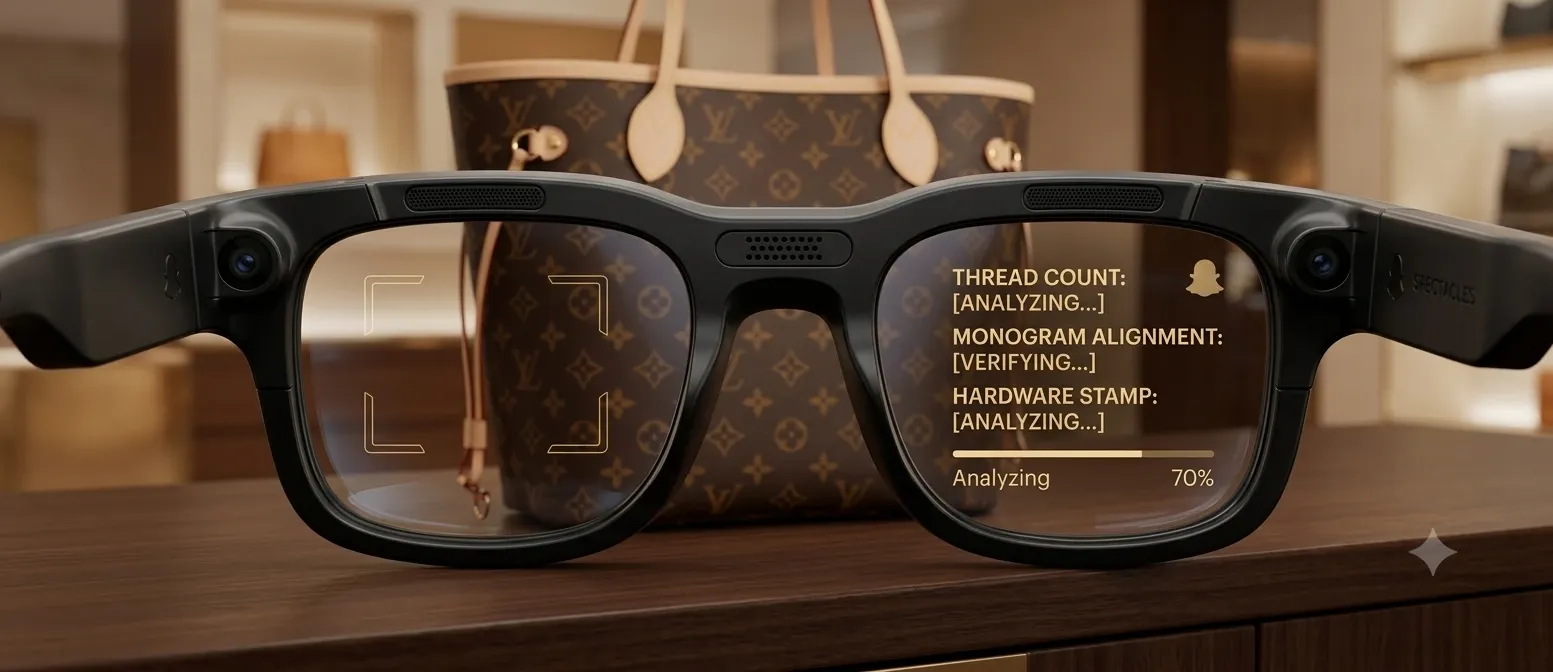
Second: AI-assisted real-time visual analysis. Because Specs run computer vision natively on-device, a lens built for authentication could surface red flags in the field of view as you examine an item. Misaligned stitching highlighted. A date code format inconsistent with the production year flagged. A font weight on a heat stamp that doesn't match brand standards annotated before you've even set the bag down.
Where LuxeDetect Comes In
LuxeDetect's authentication algorithm has been trained across 250+ brands and is built specifically to evaluate photos at the level of detail authentication requires. The 99.3% accuracy rate isn't a general object-recognition benchmark — it reflects the kind of precision that distinguishes an authentic LV date code from a convincing counterfeit one.
The integration path is straightforward to describe, even if the implementation requires proper technical groundwork: photos captured via Specs pass to LuxeDetect's API for analysis, with authentication results — and flagged red flags — returned to the reseller's field of view or connected device within seconds.
The practical outcome for a reseller:
- Pick up the item
- Specs capture the required reference images as you inspect
- LuxeDetect's algorithm processes the captures and returns a confidence score with specific red flags annotated
- The reseller has a preliminary verdict before the item ever hits their listing workflow
- A formal Certificate of Authenticity is issued through the standard LuxeDetect process for documentation
This is not a replacement for professional authentication — it's a front-line triage layer that makes the professional authentication process faster and better-evidenced.
The Red Flags That Matter Most in Real-Time
Not every authentication signal is equally time-sensitive. Some — like provenance documents, purchase receipts, or comparison against authenticated reference images — benefit from a deliberate, desk-based review. Others are visible on inspection and benefit from being caught immediately.
The red flags most valuable to catch in real-time, using a camera-equipped AR layer:
Stitching and thread count — Counterfeit handbags frequently get thread density wrong. Real-time visual analysis can flag stitch-per-inch inconsistencies without a loupe.
Hardware and engravings — Font weight, letter spacing, and engraving depth on zipper pulls, clasps, and studs vary between authentic pieces and counterfeits. These are measurable from high-resolution close-up capture.
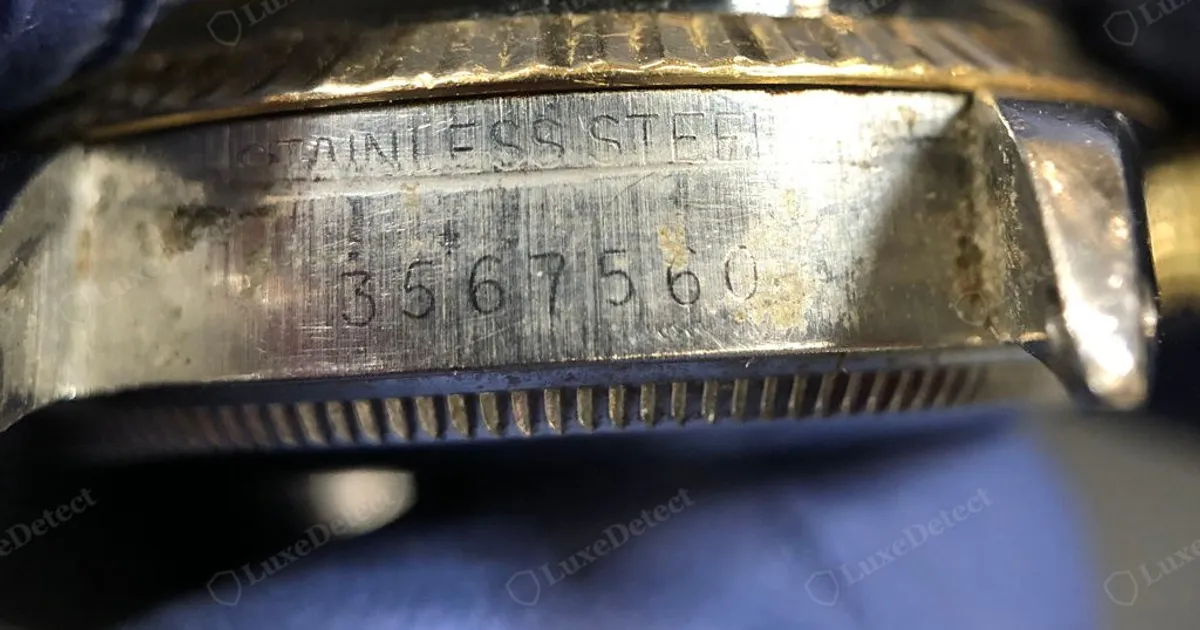
Date codes and serial number formatting — LuxeDetect's algorithm has been trained on brand-specific date code conventions across production eras. Feeding a glasses-captured image of a date stamp into the algorithm immediately surfaces whether the format is consistent with the claimed provenance.
Logo placement and geometry — Monogram pattern alignment, logo proportions, and heat stamp positioning are consistent across authentic items and frequently inconsistent on counterfeits.
Label typography — Interior labels, care tags, and brand stamps have specific typography standards that counterfeits routinely approximate but rarely replicate exactly.
These are the signals a skilled authenticator checks in the first two minutes of handling an item. AR-assisted real-time analysis accelerates exactly that phase.
What This Means for Reseller Operations at Scale
The compounding effect for a reseller processing volume is significant.
A shop authenticating 20 items a week currently spends meaningful time on photo capture alone — conservative estimates put it at 10 to 15 minutes per item to capture adequate reference photos for a proper authentication submission. At 20 items, that's 3 to 5 hours of photo work weekly, separate from any authentication review time.
Glasses-based capture, integrated with LuxeDetect's workflow, compresses that to the time it takes to physically inspect the item — which you're doing anyway. The photos are a byproduct of the inspection, not an additional step.
At the same time, the real-time red flag layer means obvious counterfeits get caught earlier. A piece that would have spent an hour moving through intake before being rejected surfaces as a likely issue in the first 60 seconds. That protects inventory, preserves authentication budget for genuine candidates, and speeds the overall processing cycle.
For resellers who offer authentication-backed listings — using a Certificate of Authenticity as a sales differentiator — faster authentication turnaround translates directly to faster time-to-listing and faster sell-through.
An Honest Caveat
Snap Specs are shipping to consumers this fall at $2,195. They're a premium device at a premium price point, and the developer ecosystem — including any authentication-specific lens built for LuxeDetect integration — is still maturing.
The use case described here is technically viable given the hardware capabilities and LuxeDetect's existing API infrastructure. It's not a product you can download today. It represents where the tool set is heading, and resellers building operations for the next two to three years would be right to factor it into their planning.
For now, the fastest path to reliable, documented authentication remains the same: capture clear reference photos of the key authentication points and submit through LuxeDetect. Results arrive in 24 hours with a formal Certificate of Authenticity. The Specs integration accelerates the photo capture phase of that workflow and adds a real-time pre-screening layer — it doesn't change the underlying authentication standard.
Related comparisons
If you're weighing options, these related breakdowns cover adjacent ground:
FAQ
Can Snap Specs actually perform authentication on their own?
Not independently. Specs provide the camera hardware and computer vision layer to capture and analyze images in real time. The authentication decision comes from LuxeDetect's trained algorithm, which evaluates those images against brand-specific standards built across 250+ luxury brands. The glasses handle capture and real-time red flag flagging; LuxeDetect handles the formal verdict.
What brands does this workflow support?
LuxeDetect covers 250+ brands across handbags, sneakers, streetwear, fashion, and eyewear. The algorithm performs strongest in these categories. Watches and fine jewelry present additional complexity given the limitations of photo-based authentication — LuxeDetect assesses these with appropriate caveats.
Is a Specs-LuxeDetect integration live today?
Snap Specs are currently in pre-order, shipping fall 2026. The integration pathway exists at the API level — the practical product for resellers is still in development as the Specs developer ecosystem matures.
How does this affect the Certificate of Authenticity?
The formal Certificate of Authenticity issued by LuxeDetect remains unchanged. The Specs layer adds a real-time pre-screening capability and accelerates the photo capture workflow; it doesn't alter the authentication standard or the documentation provided to buyers.
What's the best way for resellers to start with LuxeDetect now?
Submit via luxedetect.com/services. Capture clear photos of the key authentication points for your item type and submit for a professional review. Results arrive within 24 hours with a Certificate of Authenticity ready for your listing.
The Bottom Line
Snap Specs represent the most capable AR glasses hardware available to consumers when they ship this fall. For luxury resellers, the combination of hands-free camera capture, real-time computer vision, and on-device AI creates a direct application: faster, more consistent photo capture integrated with LuxeDetect's authentication algorithm, surfacing red flags in real time without adding steps to the inspection workflow.
Authentication has always been about applying expert pattern recognition to physical evidence. The tools that accelerate how that evidence is collected — without compromising the standard it's held to — are the tools worth watching. Snap Specs, paired with LuxeDetect's 99.3% accuracy across 250+ brands, are exactly that.
*Authentication guidelines evolve as counterfeit techniques improve. When in doubt, always seek professional authentication. Contact partnerships@luxedetect.com for B2B reseller pricing and integrations.*